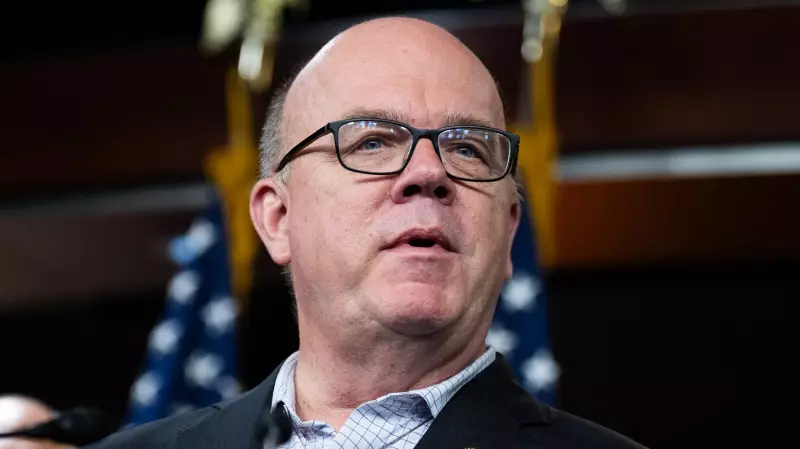
In a fiery speech on the House floor, Democratic Representative Jim McGovern of Massachusetts confronted Republican claims about health care alternatives, cataloguing a long history of failed promises from former President Donald Trump to deliver a replacement for the Affordable Care Act (ACA).
A History of Unfulfilled Pledges
The exchange was prompted by remarks from Republican Representative Virginia Foxx of North Carolina, who asserted that the GOP has "always proposed alternatives" to the ACA framework. McGovern forcefully countered this narrative, stating the truth is that Republicans have consistently claimed to have a plan but have never actually produced one.
McGovern took the chamber back to February 2016, when then-presidential candidate Trump vowed to repeal and replace Obamacare with "something so much better." The congressman then highlighted a string of similar assurances made by Trump over the subsequent years, where he described a forthcoming plan as "really terrific," "great," "fantastic," "phenomenal," and "full and complete."

Timelines for this promised plan shifted constantly, ranging from "very soon" to within the next two to four weeks. McGovern even noted that during a 2024 debate against Kamala Harris, Trump claimed to have "concepts of a plan" that Americans would learn about "in the not-too-distant future."
"Nothing Happened," McGovern Declares
"Nothing happened," McGovern stated bluntly, summarizing the outcome of all these pledges. He expressed frustration on behalf of American citizens, saying, "People are sick and tired of the empty rhetoric. They’re sick and tired of you saying you have a plan and you never produce one. All you want to do is undermine health care for hardworking, average Americans."
Legislative Action and Subsidy Uncertainty
The debate unfolded against the backdrop of concrete legislative action. On the same Wednesday, the House passed a GOP-sponsored health care bill. Notably, this legislation did not include an extension for enhanced ACA subsidies that are set to expire soon.
The Senate is considered unlikely to take up this particular bill. In a separate move highlighting bipartisan concern, four moderate House Republicans joined a Democratic discharge petition. This effort aims to force a vote on a bill that would extend the crucial ACA subsidies for three years, although that vote may not occur until the next year.
This legislative maneuvering leaves the future of these health care subsidies, which affect coverage affordability for millions, in a state of uncertainty as the expiration date approaches.