Canada's Euthanasia Controversy: A Global Warning Signal
The international debate over medically assisted dying has reached a critical juncture, with Canada's experience serving as both a model and a warning for other nations considering similar legislation. Recent developments in Alberta and Scotland highlight the profound ethical and practical challenges surrounding end-of-life decisions.
Scotland's Conservative Approach
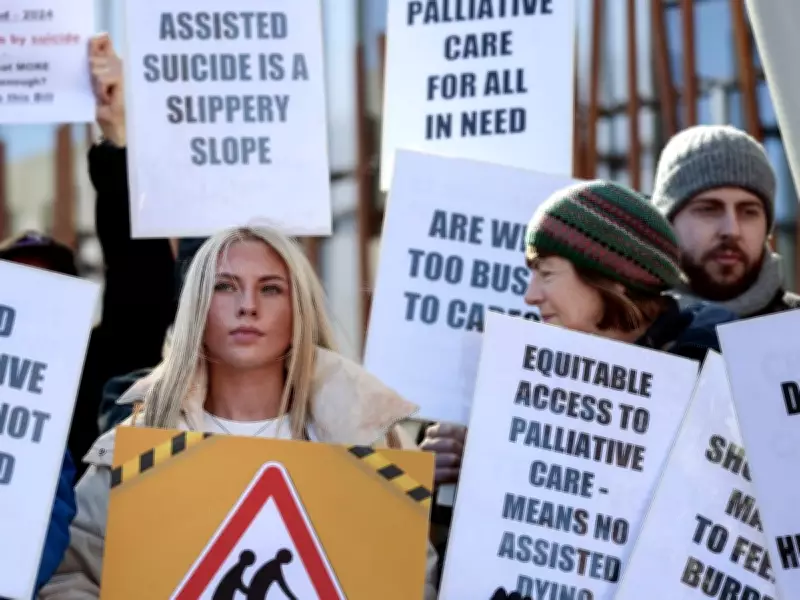
In a significant parliamentary decision, Scottish lawmakers voted 69 to 57 against legalizing medically assisted suicide, even for terminally ill, mentally competent adults. This conservative approach stands in stark contrast to Canada's more expansive system, which has become a central reference point in global euthanasia debates.
As National Post commentator Colby Cosh observed earlier this year, the international discussion often boils down to a fundamental question: "Do we want to become Canada or not?" This framing reflects how Canada's Medical Assistance in Dying (MAID) program has become a polarizing example in legislative chambers worldwide.

Alberta's Safeguard Legislation
While Scotland moves cautiously, Alberta has taken decisive action with Bill 18, the Safeguards for Last Resort Termination of Life Act. This legislation represents a significant pushback against what many see as Canada's overly permissive approach to euthanasia.
The bill establishes multiple important restrictions:
- Prohibition of advance directives for euthanasia
- Ban on "track two" MAID for patients whose death isn't reasonably foreseeable within 12 months
- Restrictions on medical practitioners initiating MAID discussions
- Limitations on displaying MAID information in healthcare facilities
- Explicit prohibition of euthanasia for children, individuals without decision-making capacity, and patients whose sole condition is mental illness
The Mental Illness Dilemma
The question of MAID for mental illness represents perhaps the most contentious aspect of Canada's euthanasia debate. The federal government has repeatedly delayed making a definitive decision, pushing the deadline to March 2027 while a special parliamentary committee begins its work.
"If we had a high-functioning mental health-care system and social safety net, it would be one thing," notes the original analysis. "But we don't. Killing people is a horrifyingly practical and economical solution, which is a big part of why it's not in any respect a moral or ethical one."
This perspective highlights the fundamental tension between individual autonomy and systemic responsibility in end-of-life care decisions.
International Perspectives and Personal Stories
The debate isn't purely abstract. Scottish Green MSP Lorna Slater, who grew up in Calgary, shared her personal experience with colleagues, describing her father's "beautiful" death by euthanasia in Alberta last November. "It was genuinely beautiful, honestly, with my mom's arms wrapped around him," she told STV News in January.
Yet such positive individual experiences compete with broader concerns about systemic implications. The portrayal of Canada's euthanasia program in British media and legislatures has generally worked against legalization efforts in Scotland and throughout Britain.
The Slippery Slope Argument
Canada's experience has given new weight to the "slippery slope" argument against euthanasia legalization. What began as a program for terminally ill patients suffering terrible pain has expanded to include discussions about children, the mentally ill, and others.
Alberta's Bill 18 essentially attempts to draw a line under Canada's original euthanasia law, establishing boundaries that many believe should have been maintained from the beginning. This provincial approach contrasts sharply with federal indecision, creating a patchwork of regulations across the country.
The global community continues to watch Canada's euthanasia experiment with intense interest. As nations like Scotland consider their own paths forward, Canada's experience serves as both a cautionary tale and a case study in the complex intersection of medical ethics, individual rights, and social responsibility.