Jack Mintz: Why Prime Minister Mark Carney Should Visit Israel to Strengthen Ties
Prime Minister Mark Carney has been actively building strategic partnerships with various middle powers and even China as part of a broader policy to strengthen Canada's position amid global trade tensions, particularly those involving former U.S. President Donald Trump. However, one significant middle power remains conspicuously absent from his itinerary: Israel. This key ally plays a crucial role in Western security and serves as an important trading partner in technology and defense systems.
A Missed Opportunity in Leadership
Following the horrific Hamas attacks on Israelis on October 7, which included acts of slaughter, rape, and torture, former Prime Minister Justin Trudeau was one of the only G7 leaders, alongside Japan's, who did not visit Israel in 2023. This omission sent a troubling signal at a time when antisemitism in Canada was surging. While some Canadian politicians may argue that Zionism and antisemitism are unrelated, antisemites often perceive them as intertwined, with Jew hatred and Zionphobia—hatred of Israel—going hand in hand.
Correcting the Course
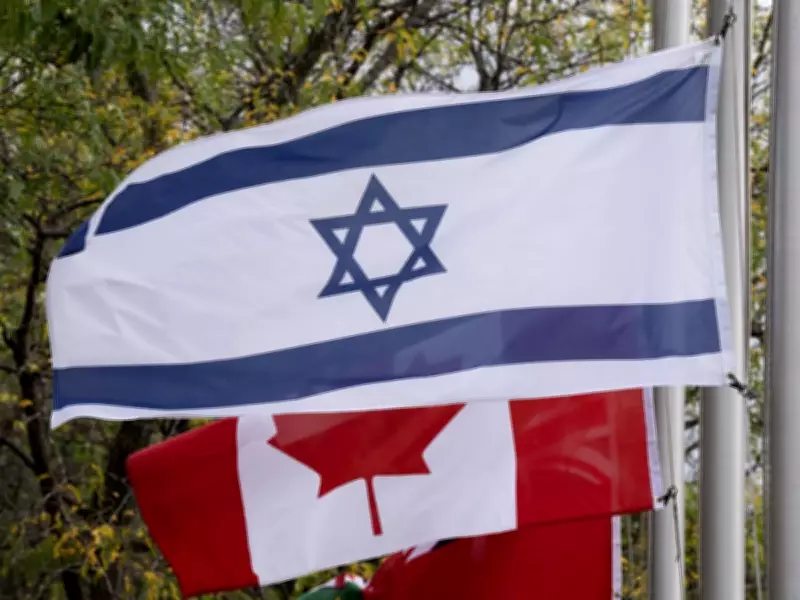
It is time to correct this oversight. Mark Carney should plan a visit to Israel once the U.S.-Israel confrontation with Iran concludes. By engaging with Israel and potentially making a parallel visit to the Palestinian Authority, Carney could enhance Canada's historic international standing as a peace broker in global affairs. Such a move would also be a crucial step in combating growing antisemitism domestically, clearly signaling that Israel is not a pariah state but a significant economic and security partner in today's turbulent world.

Canada's Limited Role in the Middle East
Currently, Canada's involvement in the Middle East is primarily confined to trade and humanitarian aid. The country has even lost influence over Gaza's rebuilding efforts after its invitation to join the Board of Peace was rescinded due to Canada's refusal to pay a US$1 billion fee and in reaction to Carney's Davos speech. Canada maintains 200 military personnel in the region, some embedded at U.S. bases, to assist with training against ISIS and other security objectives. Notably, the Ali-Al-Salem military base in Kuwait, which was attacked by Iran on March 1, remains a point of concern. Despite the threat, this attack was kept secret by the Carney government until revealed by La Presse on March 12.
Strategic Partnerships and Soft Power
While nations like France and the U.K. deploy planes and ships to Qatar and Cyprus to defend their interests, Canada lacks the capacity to do so. Consequently, it is unsurprising that the Carney government announced Canada would not participate in the latest Middle East conflict with Iran, despite expressing some support. Canada's contributions are largely limited to aid, such as $37.7 million for Lebanon's government, which has been unable to quell Hezbollah's attacks involving over 1,000 rockets and drones on Israelis. This aid amount is nearly four times more than newly announced security measures to protect Canada's Jewish community.
Engaging with Middle Powers
In pursuit of middle power engagement, Carney visited Qatar last January to strengthen strategic partnerships and increase trade. Qatar's role in brokering peace agreements in the Middle East and Africa aligns with Carney's modus operandi of leveraging soft power. However, this approach overlooks Qatar's more controversial actions, including support for the Muslim Brotherhood and Hamas, as well as human rights abuses against migrant workers. As Carney stated in his widely acclaimed Davos speech, "We actively take on the world as it is, not wait for a world we wish to be." Applying this principle to Israel could reinforce Canada's commitment to pragmatic diplomacy and stronger alliances.