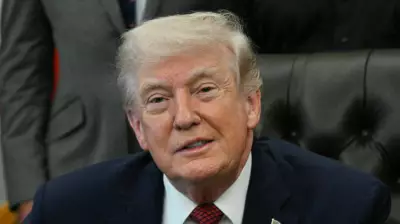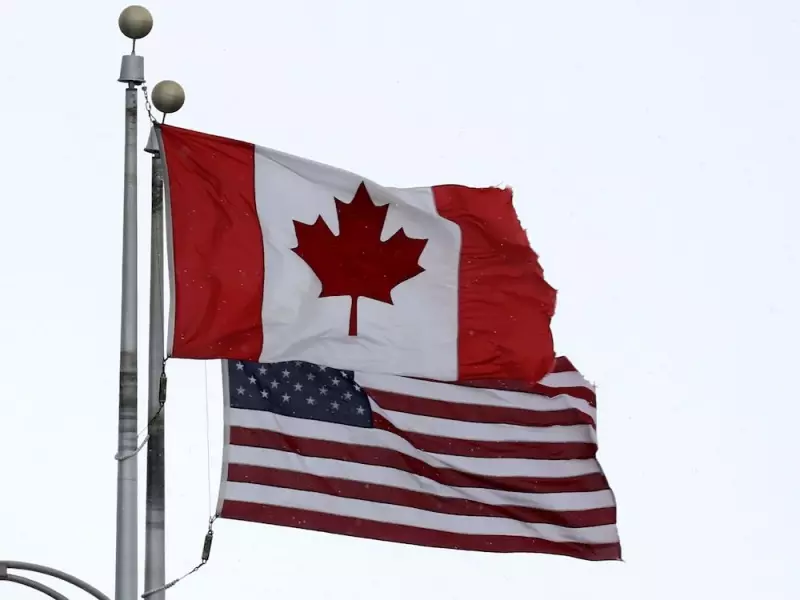
Canada's geopolitical fortune is rooted in its geography, with the United States as its immediate neighbour and closest ally. This proximity to the world's preeminent military and economic power has delivered generational prosperity and security. As the government of Prime Minister Mark Carney navigates complex international dynamics, this foundational reality must remain paramount, especially when reacting to the provocations of former U.S. President Donald Trump.
The Peril of Emotional Reactions vs. Rational Strategy
Over the past year, Canadian responses to Trump's rhetoric have often been driven by emotion, akin to feeling betrayed by a best friend. While the sentiment is understandable, other nations have adopted a more pragmatic approach, focusing on business and forging paths forward. Canada, with far more at stake in the relationship, has an even greater imperative to act calmly and rationally. For all its challenges, the partnership with the United States remains the most advantageous alliance available to Canada.
In trade negotiations and broader diplomatic engagements, Ottawa must remember that the U.S. is more than any single administration. The bilateral relationship predates and will outlast the Trump era. This moment of tension should not push Canada toward the risky alternative of deepening ties with China, a non-ally whose strategic interests are fundamentally misaligned with Canada's and who cannot be relied upon in a global crisis.

The False Promise of a Chinese Pivot
Despite these risks, the Carney government appears to be exploring precisely this option. This week, a Canadian delegation travelled to Beijing to lay the groundwork for a prime ministerial visit planned for next year. This follows a meeting between Carney and Chinese President Xi Jinping during a summit in Korea in October 2024. Foreign Affairs Minister Anita Anand noted that China's interest lies specifically in Canadian energy and critical minerals exports.
This outreach, however, should not be mistaken for desirable long-term trade diversification. The risks posed by China extend far beyond potentially straining relations with Washington. Beijing is actively preparing for a potential invasion of Taiwan, a key Canadian ally. The current production of military landing barges and troop build-up mirrors the prelude to the war in Ukraine. A conflict in the South China Sea would trigger a major war, and Canada would swiftly regret any role in bolstering China's strategic energy reserves.
Unnecessary Friction with a Key Ally
While shared values connect Canada with Europe, other recent policy considerations risk needlessly antagonizing the United States. Notably, Carney's exploration of purchasing Swedish Gripen fighter jets over the originally planned American-built F-35s is a prime example. If the Gripen were a superior aircraft, the case might be different, but the government's own data indicates the F-35 is more advanced. Furthermore, Canada is already contractually obligated to purchase an initial batch of F-35s, making the logistical and financial burden of maintaining a mixed fleet difficult to justify.
The fundamental takeaway is clear: while the relationship with America requires careful and sometimes firm management, it is an irreplaceable asset. The security and economic benefits of this alliance, forged by geography and shared history, far outweigh the transient frustrations of political cycles. Strategic patience and a clear-eyed focus on enduring national interests must guide Canada's path forward.