William Watson: U.S. Remains Essential Ally Regardless of Trump's Policy Influence
The fundamental challenge with power vacuums lies in the uncertainty of who fills them—often without guarantee of improvement. As geopolitical dynamics shift, particularly concerning Iran, cautious optimism is warranted while maintaining realistic expectations about outcomes.
Geopolitical Positioning and Alliance Dynamics
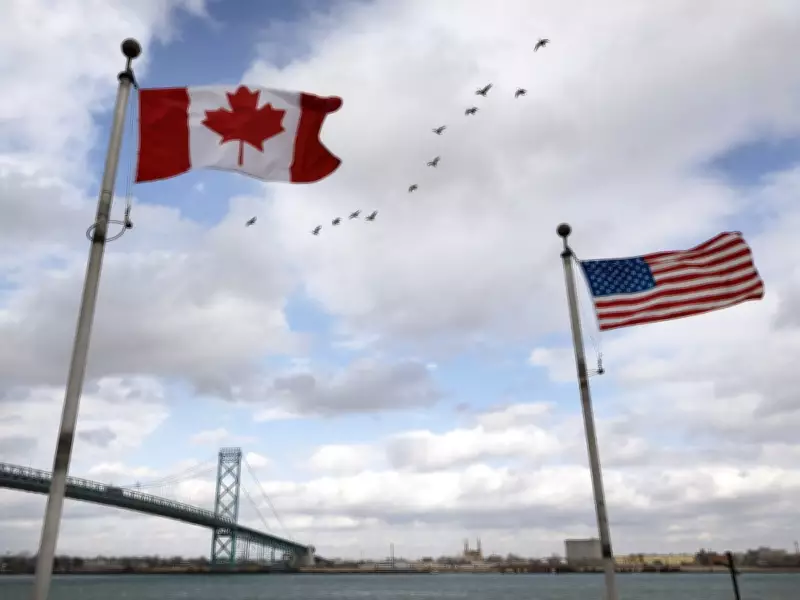
Recent developments have prompted considerations about reactivating contingency plans, should CUSMA negotiations this summer unfold contrary to Donald Trump's preferences. This underscores the ongoing importance of the U.S.-Canada relationship despite potential political turbulence.
Following the U.S.-Israeli operation targeting Iranian leadership, John Bolton's commentary in the Telegraph highlighted an intriguing response pattern. While segments of Western liberal-left circles expressed dismay, the center-left governments of Canada and Australia promptly declared support for the military actions.

Canada's Nuanced Stance and Political Spectrum
Many observers have attempted to precisely locate the Carney government on the political spectrum. Bolton, having served as national security adviser during Trump's first term, views matters from a Republican perspective, yet his characterization of "center-left" appears accurate despite Liberal adoption of certain Conservative policies.
Prime Minister Mark Carney's statement offered measured support, emphasizing Canada's backing of "the United States acting to prevent Iran from obtaining a nuclear weapon and to prevent its regime from threatening international peace and security." This represents endorsement of the strategic objective while leaving tactical specifics somewhat ambiguous.
Military Non-Involvement as Strategic Position
Carney clarified Canada would not participate militarily—a decision unlikely to disappoint American or Israeli counterparts. Sometimes perceived weakness transforms into diplomatic advantage. Canada's diplomatic flexibility benefits from lacking substantial military assets in the region, simplifying negotiation postures.
British Prime Minister Keir Starmer initially denied U.S. access to British bases for the offensive operation, earning presidential disappointment. However, following Iranian attacks on Gulf nations, Starmer reversed course, permitting limited U.S. access to British assets for defensive purposes—illustrating how international law interpretations adapt to circumstances.
Ethical Considerations of Leadership Targeting
The moral question of assassinating foreign leaders demands careful examination. Beginning with the clearest historical parallel: would eliminating Hitler and his inner circle through precision strikes have been justified? Most would agree, though technological capability might have altered historical trajectories.
The ethical timeline presents complexities: at what point would intervention have been warranted? During mid-1930s bellicose rhetoric? Following Kristallnacht in 1938? After war commencement in 1939? Or upon confirmation of death camp operations?
Regarding Iran's former leadership, particularly after January's violent suppression of protests, evidence suggests troubling governance. While frequently expressing hostile intentions toward Israel through proxy channels, whether they equated to Hitler's regime remains subject to expert assessment.
The broader implication remains clear: despite potential political shifts and leadership changes, the United States continues as Canada's indispensable ally. Strategic partnerships endure beyond individual administrations, requiring nuanced navigation of international law, ethical considerations, and geopolitical realities.