In a landmark bipartisan move, the United States Congress has voted to permanently end economic sanctions imposed on Syria, a decision set to unlock international investment for the reconstruction of the war-ravaged nation.
A Bipartisan Vote for Permanent Repeal
The decisive action took place on Wednesday, December 17, 2025, when the U.S. Senate passed the repeal of the 2019 Caesar Act as part of a comprehensive annual defense package. The vote was overwhelmingly in favor, with 77 senators supporting the measure against 20 who opposed it. The legislation had already been approved by the House of Representatives and is now expected to be signed into law by President Donald Trump.
This move finalizes a process that President Trump had already initiated, having twice suspended the implementation of sanctions in response to appeals from key allies Saudi Arabia and Turkey. These nations support the new Syrian government led by former jihadist Ahmed al-Sharaa, who seized Damascus in a lightning offensive just a year ago.

Removing a Major Barrier to Investment
The now-repealed Caesar Act, named for an anonymous photographer who documented atrocities in the prisons of ousted leader Bashar al-Assad, had severely restricted foreign investment and cut Syria off from the global banking system. Its original intent was to prevent international businesses from rebuilding the country while Assad, whose regime was responsible for a brutal civil war, remained in power.
President al-Sharaa had vigorously sought a permanent end to these measures, arguing that as long as they remained U.S. law, they would continue to deter companies wary of legal risks in the world's largest economy. The repeal is seen as a critical step to clear those legal uncertainties and encourage the flow of capital needed for reconstruction.
A "Decisive Step" Toward Recovery
Lawmakers from both major American political parties broadly backed the repeal. Senator Jeanne Shaheen, the top Democrat on the Senate Foreign Relations Committee, stated that the action "is a decisive step toward giving the Syrian people a real chance to rebuild after decades of unimaginable suffering."
The Syrian conflict, which lasted over a decade, triggered a massive refugee crisis toward Europe and provided fertile ground for the rise of the Islamic State extremist movement. The path to recovery is expected to be long and complex.
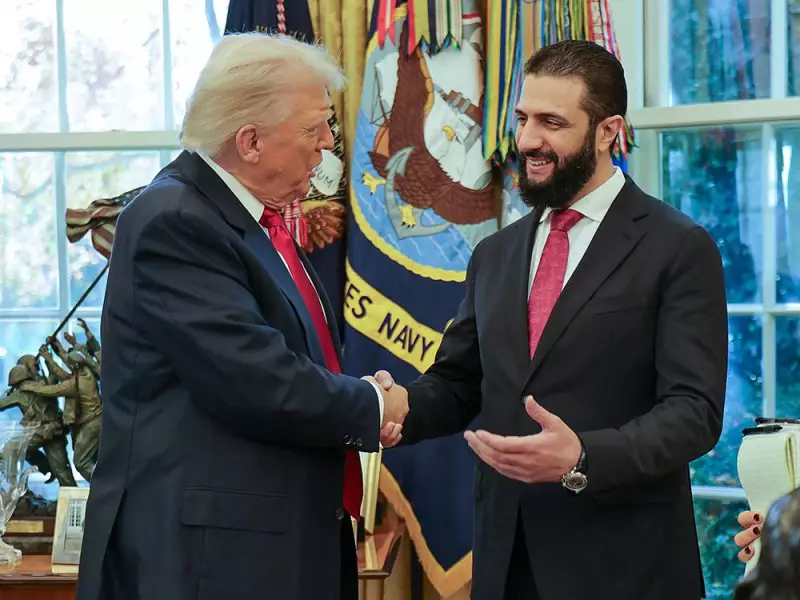
The political landscape has shifted dramatically with the rise of Ahmed al-Sharaa, who has since traded military attire for business suits and actively seeks improved relations with Western nations. His diplomatic efforts, including a notable first meeting with President Trump during the U.S. leader's trip to Riyadh in May, appear to have influenced Washington's changing policy stance.
With the permanent lifting of sanctions, the international community now watches to see if this legislative action will translate into tangible economic recovery and stability for the Syrian people.