U.S. Ambassador Mike Huckabee Stirs Diplomatic Storm with Middle East Remarks
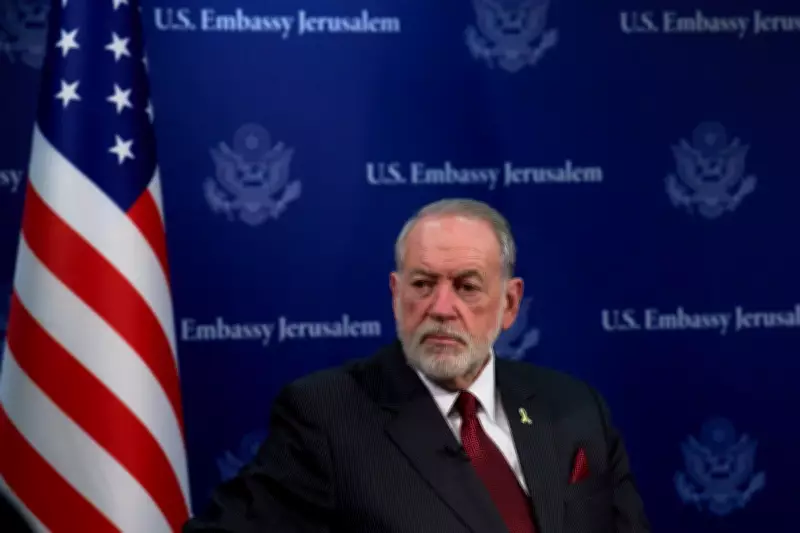
In a statement that has reverberated across global diplomatic circles, U.S. Ambassador to Israel Mike Huckabee has provoked significant controversy by asserting that Israel holds a rightful claim to extensive territories throughout the Middle East. This declaration, made during a recent public appearance, has swiftly drawn sharp criticism from various regional leaders and international observers, intensifying tensions in an already volatile geopolitical landscape.
Background and Immediate Reactions
Ambassador Huckabee, who has served in his role since 2025, articulated his views in a manner that many interpret as a bold endorsement of Israeli territorial ambitions. His comments come at a sensitive time, with the Israel-Hamas war continuing to shape regional dynamics and international relations. The ambassador's remarks have been met with swift condemnation from Palestinian authorities and other Arab nations, who view them as undermining peace efforts and legitimizing occupation.
Political analysts note that such statements from a high-ranking U.S. official could complicate ongoing diplomatic initiatives and fuel further instability. The U.S. State Department has yet to issue an official response, but sources indicate internal discussions are underway to address the fallout.

Broader Implications for U.S. Foreign Policy
This incident raises critical questions about the consistency and direction of U.S. foreign policy in the Middle East. Historically, the United States has positioned itself as a mediator in the Israeli-Palestinian conflict, advocating for a two-state solution based on negotiated borders. Huckabee's assertion appears to diverge from this longstanding approach, potentially signaling a shift in Washington's stance or reflecting personal viewpoints that may not align with official policy.
Experts warn that such rhetoric could embolden hardline factions within Israel while alienating key allies in the region, including Jordan and Egypt, who have peace treaties with Israel. Additionally, it may impact U.S. relations with European partners who generally support a more balanced diplomatic strategy.
Regional and Global Responses
The reaction from the international community has been predominantly critical. United Nations officials have expressed concern, emphasizing the need for adherence to international law and UN resolutions regarding territorial disputes. Meanwhile, human rights organizations have highlighted the potential humanitarian consequences, arguing that such claims could exacerbate displacement and conflict for Palestinian communities.
In Israel, responses have been mixed, with some political figures praising Huckabee's stance as a validation of national sovereignty, while others caution that it might incite further violence and diplomatic isolation. The ongoing Israel-Hamas war adds a layer of urgency, as any perceived escalation in territorial claims could influence military and political strategies on the ground.
Looking Ahead: Diplomatic Challenges and Opportunities
As the controversy unfolds, the focus will likely shift to how the Biden administration manages this diplomatic rift. Key considerations include:
- Clarifying the official U.S. position on Middle East territories to prevent misinterpretation.
- Engaging in dialogue with regional stakeholders to mitigate tensions and reaffirm commitment to peace processes.
- Assessing the impact on broader U.S. interests, such as counterterrorism cooperation and energy security in the region.
This episode underscores the delicate balance required in international diplomacy, where individual statements can have far-reaching implications. It also highlights the ongoing complexities of the Israel-Hamas conflict, where historical, political, and humanitarian dimensions intersect in ways that demand careful and nuanced handling by all parties involved.