Trump's Board of Peace Faces Global Rejection, Strengthening UN Support
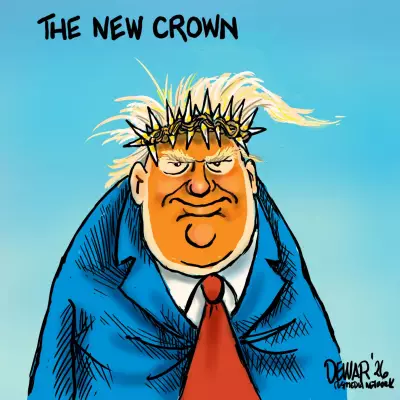
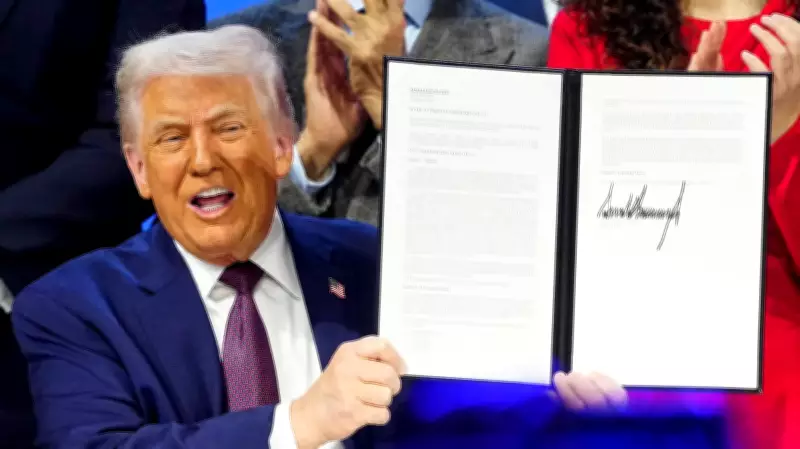
President Donald Trump's latest diplomatic initiative, the Board of Peace, has encountered significant international pushback, inadvertently reinforcing global commitment to the United Nations. The board, which Trump envisioned as a mediator for worldwide conflicts, has been dismissed by major powers who view it as an attempt to eclipse the UN Security Council's role in maintaining international peace and security.
Expanded Ambitions Meet Diplomatic Resistance
Originally conceived as a small group overseeing Gaza's future, Trump's ambitions for the Board of Peace expanded dramatically. The charter grants Trump leadership until resignation, with veto power over actions and membership, causing dismay among international observers. Secretary of State Marco Rubio attempted to downplay concerns, stating the board's current focus is solely on Gaza ceasefire phases, but Trump's promotion of a broadened mandate has alienated key allies and adversaries alike.
UN Secretary General Antonio Guterres emphasized Thursday that "the basic responsibility for international peace and security lies with the UN, lies with the Security Council. Only the Security Council can adopt decisions binding on all." This sentiment has been echoed across diplomatic channels, with countries rejecting what Trump describes as a "bold new approach to resolving global conflict."

Key Security Council Members Withhold Support
The four other veto-wielding Security Council members—China, France, Russia, and the United Kingdom—have either refused or not indicated willingness to join Trump's board. Economic powers like Japan and Germany have similarly withheld support. Richard Gowan of the International Crisis Group noted that "the U.S. rollout of the much broader Board of Peace charter turned the whole exercise into a liability," suggesting that a narrower Gaza focus might have attracted more European participation.
Diplomatic tensions were further exacerbated by Trump's simultaneous vow to take over Greenland and punish resistant European countries, prompting stark rebuttals from Canada and Denmark. British Prime Minister Keir Starmer, after meeting with Guterres, reiterated "the UK's enduring support for the UN and the international rules-based system," with the UK later declining board membership.
European Nations Cite Institutional Concerns
France, Spain, and Slovenia declined Trump's offer, citing overlapping agendas and potential conflicts with UN principles. French President Emmanuel Macron stated the board "raises serious questions, in particular with respect to the principles and structure of the United Nations." Spanish Prime Minister Pedro Sánchez pointed to the exclusion of the Palestinian Authority and the board's operation outside UN frameworks as reasons for refusal.
Calls for UN Strengthening Amid Alternative Mechanism Skepticism
China's UN ambassador, Fu Cong, emphasized at a Security Council meeting that "no single country should dictate terms based on its power," calling for UN strengthening rather than weakening. He warned against "bypassing the UN and creating alternative mechanisms," a clear reference to the Board of Peace.
Currently, about 26 of 60 invited countries have joined, with nine European nations declining. India remains undecided, while Trump revoked Canadian Prime Minister Mark Carney's invitation. Louis Charbonneau of Human Rights Watch criticized the board as "a pay-to-play club of human rights abusers," urging governments to strengthen the UN instead.
Select Muslim Nations Join with Gaza Focus
Eight Muslim nations—Turkey, Saudi Arabia, Egypt, Jordan, Indonesia, Pakistan, Qatar, and the UAE—joined the board, issuing a joint statement supporting its Gaza mission and Palestinian statehood advancement, without endorsing Trump's global peacemaking plan. Gowan suggested this could be a tactical move to "get a foothold in discussions of Gaza," given setbacks in Trump's ceasefire plan.
Despite the board's formation, Gowan remains "unconvinced that this is a real long-term threat to the UN," highlighting how Trump's overreach has paradoxically bolstered international support for the 80-year-old institution.