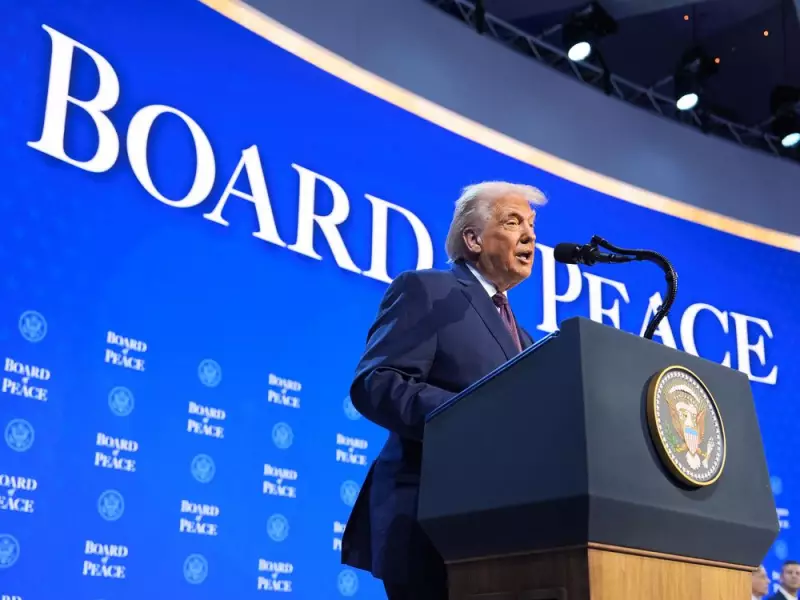
Trump's Controversial 'Board of Peace' Takes Shape with Autocrats and Monarchs
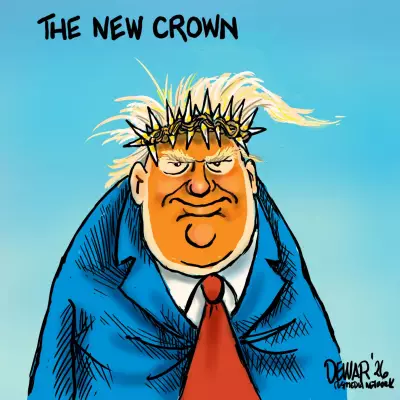
As former U.S. President Donald Trump attempts to reshape the global order, a fledgling club of autocrats, strongmen, and monarchs is emerging as the inaugural members of his proposed "Board of Peace." This nascent and idiosyncratic initiative, unveiled against the backdrop of Trump's territorial ambitions like his interest in Greenland, is rattling European allies while delighting regimes seeking to ingratiate themselves in what Trump calls a new world order.
A Roster of Controversial Figures
The board's membership includes six monarchs, three former Soviet apparatchiks, two military-backed regimes, and a leader sought by the International Criminal Court for alleged war crimes. Trump has promised this will be "the most prestigious board ever formed," acknowledging the controversial nature of some members but emphasizing their influence and ability to "get the job done."
Russian President Vladimir Putin was reportedly studying the details of his personal invitation, which included a potential $1 billion fee for lifetime membership in an institution with one lifetime chair: Trump himself. By Wednesday evening, Trump confirmed Putin was aboard, adding to the board's contentious composition.

From Gaza Solution to Global Cure-All
The board began as the brainchild of Trump's son-in-law Jared Kushner, initially conceived as a means to end the war in Gaza. However, within just a few weeks, it has expanded into what Trump presents as a cure-all for the world's conflicts. By Tuesday night, hours before Trump was to unveil the board at Davos, roughly two dozen countries had publicly accepted his invitation.
A senior White House official indicated they expected about 35 countries to participate, though no further update was provided later in the day. These leaders will sit above an executive board that includes Kushner, former British Prime Minister Tony Blair, and Secretary of State Marco Rubio, who will oversee operations in more detail.
European Allies Tread Carefully
Just two European Union countries have accepted invitations: Bulgaria and Viktor Orbán's Hungary. Dozens of other leaders have set aside their invites for now, including the Pope. China has yet to reject the invitation but has shown no enthusiasm. By comparison, the United Nations—born from the ashes of World War II—has 193 member states.
Trump's aides have made clear they arrived at Davos to smash norms and wield American power in unprecedented ways. This has left U.S. allies navigating a delicate path. Outright rejection or even veiled criticism could trigger Trump's frequently wielded cudgel: punishing tariffs. He previously threatened 200% tariffs on French wine after President Emmanuel Macron politely declined participation.
Risks of Participation and International Law Concerns
Joining the board carries significant risks beyond appearing subservient. California Governor Gavin Newsom warned that foreign leaders might need "knee pads" for such subservience. Participation also flirts with violating international law or, in Italy's case, its own constitution.
The United Kingdom's Foreign Secretary, Yvette Cooper, stated on Thursday that Britain did not participate in the signing ceremony due to "concerns about President Putin being part of something which is talking about peace." This highlights the diplomatic tightrope Western nations must walk as Trump's unconventional approach to global governance takes shape.
The numbers involved may be smaller than traditional international bodies, but as Trump's team emphasizes, they're largely beside the point. The Board of Peace represents a deliberate challenge to established global institutions, with implications that extend far beyond its current membership roster.