Trump Escalates Rhetoric Against Canada Over Arctic Security Project
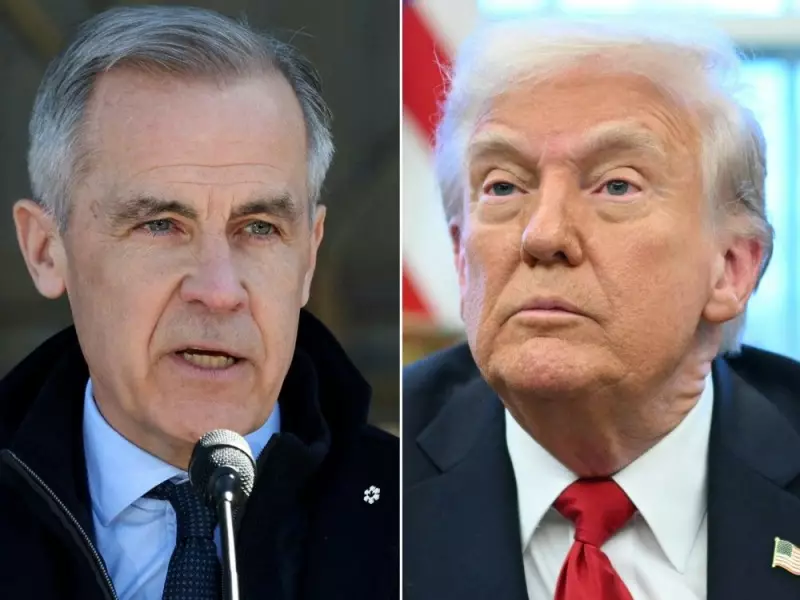
In a sharp escalation of diplomatic tensions, former U.S. President Donald Trump has publicly criticized Canada and Prime Minister Mark Carney for their perceived opposition to a proposed Arctic security initiative known as the "Golden Dome" project for Greenland. The controversy comes amid ongoing friction between the two North American leaders following their recent encounters at the World Economic Forum in Davos, Switzerland.
Trump's Social Media Accusations
Taking to his Truth Social platform, Trump made pointed accusations against Canadian leadership, writing: "Canada is against The Golden Dome being built over Greenland, even though The Golden Dome would protect Canada. Instead, they voted in favor of doing business with China, who will 'eat them up' within the first year!" This statement represents the second consecutive day of criticism directed at Canada from the former president, following his earlier decision to disinvite Carney from a peace initiative board.
The Golden Dome project, as described by Trump, appears to be a proposed security installation in Greenland that would ostensibly provide protection for North America against potential threats. However, specific details about the project's nature, scope, and funding remain unclear from the available information.

Carney's Position on Greenland Sovereignty
Prime Minister Carney, who has been traveling internationally to strengthen trade relationships, has not directly responded to Trump's latest accusations. However, during the Davos forum, Carney made clear statements regarding Greenland's sovereignty that may have prompted Trump's reaction.
"The future of Greenland is a decision for Greenland and for the Kingdom of Denmark," Carney stated during his appearance. "We are NATO partners with Denmark, and so our full partnership stands. Our obligations on Article 5, Article 2 of NATO stand. And we stand full square behind those."
This position emphasizes Canada's commitment to established international frameworks and respect for the sovereignty of Greenland and Denmark, rather than endorsing unilateral security initiatives proposed by other nations.
Growing Diplomatic Tensions
The current dispute represents the latest chapter in what has become an increasingly tense relationship between the two leaders. The friction reportedly began with Trump's characterization of Canada as the "51st state" and Carney's response that certain national interests are "not for sale."
During his Davos appearance, Trump further escalated matters by stating: "I watched your prime minister yesterday. He wasn't so grateful — they should be grateful to the U.S., Canada. Canada lives because of the United States. Remember that, Mark, the next time you make your statements."
Carney responded to this characterization during a Liberal cabinet retreat in Quebec, asserting: "Canada and the United States have built a remarkable partnership. In the economy, in security and in rich cultural exchange. But Canada doesn't live because of the United States. Canada thrives because we are Canadian."
Economic Realities and Diplomatic Challenges
The diplomatic spat occurs against the backdrop of significant economic interdependence between the two nations. More than 80% of Canada's international trade flows to the United States, making the relationship crucial for Canadian economic stability. This reality adds complexity to the current diplomatic tensions, as both leaders navigate between national pride and practical economic considerations.
Observers note that while Carney's approach has received praise from some international media outlets for its principled stance, there are concerns about potential economic consequences should tensions continue to escalate. The situation highlights the delicate balance Canadian leaders must maintain between asserting national sovereignty and preserving vital economic relationships.

Path Forward for North American Relations
As the diplomatic exchange continues, some analysts suggest that both leaders would benefit from de-escalating their rhetoric. The traditional friendship between Canada and the United States, built on decades of cooperation in security, trade, and cultural exchange, could provide a foundation for resolving current disagreements.
Potential areas for constructive dialogue include:
- Clarifying Canada's official position on Arctic security initiatives
- Establishing clear communication channels between the two administrations
- Focusing on shared economic interests in North American trade
- Reaffirming commitments to existing security frameworks like NATO
The coming weeks will likely reveal whether both sides can move beyond personal disagreements to address substantive policy questions about Arctic security, international trade relationships, and the future of North American cooperation in an increasingly complex global landscape.