President Donald Trump has identified Cuba as the next priority on his foreign policy agenda following Iran, asserting that the communist-led island nation is on the brink of collapse due to sustained American pressure. In a phone interview with CNN on Friday, Trump emphasized that Cuba is "ready" for change after decades of communist rule and indicated that Secretary of State Marco Rubio would lead U.S. efforts regarding Cuba.
Trump's Predictions and Policy Focus
"They want to make a deal so badly," Trump stated, referencing Cuban authorities. He added, "We're really focused on this one right now. We've got plenty of time, but Cuba's ready—after 50 years." This declaration follows Trump's previous suggestions that he would turn to Cuba after addressing the conflict with Iran, highlighting a strategic shift in U.S. foreign policy under his administration.
Both Trump and Rubio, whose parents were Cuban immigrants, have openly expressed their desire for regime change in Havana. This ambition aligns with their prior efforts to overthrow Venezuelan leader Nicolas Maduro, another longtime adversary of Washington in the Caribbean region.

Recent Diplomatic Engagements
The U.S. Embassy in Havana recently disclosed that Rob Allison, the State Department's coordinator for Cuban affairs, met with senior representatives of the Catholic Church in Cuba. Although the exact dates were not specified, the embassy posted images on social media platform X showing Allison and U.S. charge d'affaires Mike Hammer meeting with Cardinal Juan de la Claridad and Bishop Arturo Gonzalez, president of the national bishop's conference.
According to the embassy, discussions centered on humanitarian aid provided by Washington to Cuba and "the need for change to improve the situation in Cuba." The Catholic Church has historically acted as a mediator between Washington and Havana, including during Pope Francis's negotiations that led to the resumption of diplomatic relations under President Barack Obama in 2015.
Economic Strangulation and Energy Blockade
Trump has repeatedly claimed that the Cuban regime is ripe for collapse, and his administration has taken concrete steps to precipitate this outcome. Most notably, an energy blockade imposed on Cuba has severely restricted oil shipments to the island since January 9, exacerbating a prolonged economic crisis.
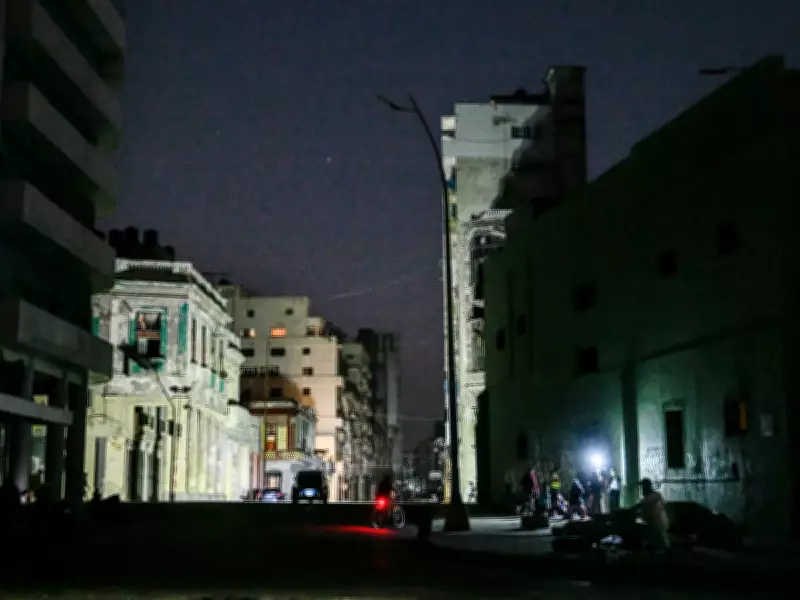
This blockade has forced airlines to curtail or suspend flights to Cuba and deepened existing shortages of fuel, medicine, and food. Havana accuses Trump of deliberately strangling Cuba's economy, which has been under a U.S. trade embargo since 1962. The recent energy restrictions have led to extended power cuts, including a significant blackout on Wednesday that affected two-thirds of the island after a breakdown at the Antonio Guiteras power plant, Cuba's largest electricity facility.
Humanitarian and Political Context
Despite the blockade, Washington recently eased restrictions slightly to allow private Cuban companies to import small amounts of oil. However, the overall economic pressure remains intense. The Vatican previously facilitated a deal between Havana and former President Joe Biden, resulting in Cuba's release of hundreds of political prisoners in exchange for removal from the U.S. list of state sponsors of terror.
Trump reversed this decision on his first day back in power in January 2025, reinstating Cuba on the terror list. This move underscores the administration's hardline approach, contrasting with the diplomatic openings seen under previous administrations.
The ongoing crisis in Cuba is characterized by severe power outages, fuel shortages, and humanitarian challenges. As Trump pivots his focus from Iran to Cuba, the international community watches closely to see how this renewed pressure will impact the island's future and its relations with the United States.