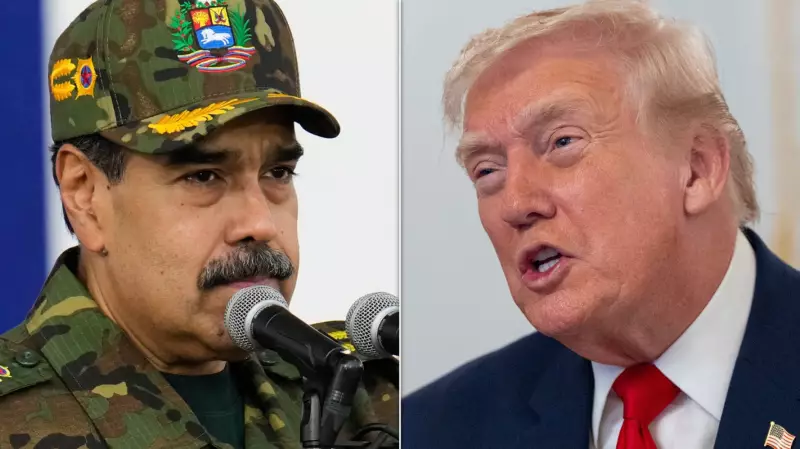
In a surprising diplomatic development, U.S. President Donald Trump publicly confirmed on Sunday, November 30, 2025, that he has spoken directly with Venezuelan President Nicolás Maduro. The revelation adds a complex layer to the Trump administration's increasingly aggressive posture toward the South American nation.
A Confirmed Conversation, Few Details
President Trump acknowledged the communication with the Venezuelan leader while speaking to reporters aboard Air Force One. When pressed for details about the discussion, Trump was notably reticent. "I don't want to comment on it. The answer is yes," he stated, confirming the New York Times report that first revealed the call earlier in the month. The report suggested the leaders discussed a potential meeting in the United States.
Trump downplayed the significance of the exchange, characterizing it neutrally. "I wouldn't say it went well or badly, it was a phone call," he remarked. The call's content remains undisclosed, and senior officials in Maduro's government have so far declined to comment on it.

Bellicose Rhetoric and Military Buildup Continue
The confirmation of direct dialogue stands in stark contrast to the administration's recent actions and statements. Just one day prior, on Saturday, President Trump declared that the airspace above and surrounding Venezuela should be considered "closed in its entirety." This announcement caused significant anxiety and confusion in the Venezuelan capital of Caracas, though Trump later cautioned observers, "Don't read anything into it," when asked if it signaled imminent strikes.
This rhetoric is part of a broader campaign to pressure Maduro's government, which the U.S. accuses of facilitating the illegal drug trade. The Trump administration has framed this as a response to drugs that have killed Americans, a charge Maduro vehemently denies.
According to Reuters reporting, the U.S. is actively considering a range of options, including efforts to overthrow Maduro. The military has already been involved in a massive buildup in the Caribbean and nearly three months of strikes on suspected drug boats off Venezuela's coast. U.S. Defense Secretary Pete Hegseth has defended these strikes as lawful and intended to be "lethal."
International Concerns and Future Operations
The U.S. military strategy has drawn sharp criticism. Human rights organizations have condemned the boat strikes as illegal extrajudicial killings of civilians, and some American allies have expressed growing concerns about potential violations of international law.
In a concerning admission, President Trump said he would look into whether the U.S. military conducted a second strike in September that killed survivors of an initial operation, adding he would not have wanted such an action. Meanwhile, the administration signals no let-up. Trump told military service members last week that the U.S. would "very soon" begin land operations targeting suspected Venezuelan drug traffickers.
In Caracas, the head of Venezuela's National Assembly, Jorge Rodriguez, sidestepped questions about the leaders' call during a Sunday press conference. Instead, he announced a lawmaker investigation into the U.S. boat strikes in the Caribbean, highlighting the escalating cycle of accusation and action between the two nations.