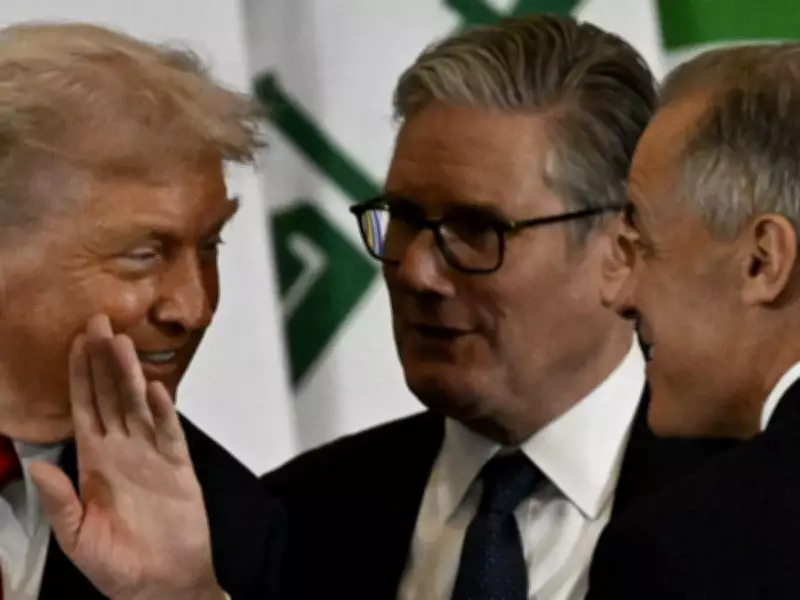
British Leader Offers Pragmatic Response to Canadian PM's Davos Address
British Prime Minister Keir Starmer has offered a characteristically diplomatic yet revealing response when questioned about Canadian Prime Minister Mark Carney's recent address at the World Economic Forum in Davos. The exchange occurred during Starmer's flight to Beijing on Wednesday, where reporters pressed him on whether he agreed with Carney's call for "middle powers" to unite in response to shifting global dynamics.
The Context: Carney's Stark Davos Warning
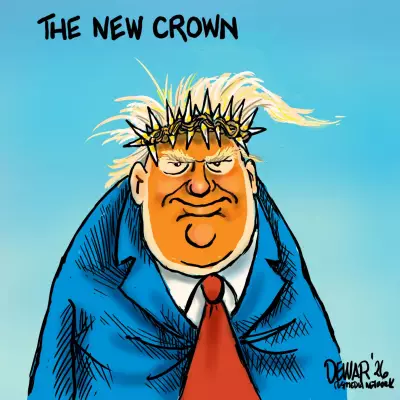
Mark Carney's speech at the prestigious Davos gathering represented one of his most direct assessments of current international relations. The Canadian leader spoke frankly about what he described as a "rupture in the world order" and expressed concern that "great powers" were acting "without restraint" in the current geopolitical climate. His remarks came on the same day that U.S. President Donald Trump shared a doctored map showing Canada and other nations under the American flag.
Carney began his address in French, stating: "Today I will talk about the breakdown of the world order, about the end of a pleasant fiction and the beginning of a brutal reality where the geopolitics of the superpowers is not subject to any constraints." He went further to declare that the traditional rules-based international order has effectively ended and will not return in its previous form.

Starmer's Carefully Measured Response
When asked specifically about Carney's Davos remarks, Starmer offered what The Independent characterized as a pragmatic British perspective. "I'm a pragmatist, a British pragmatist applying common sense," Starmer told reporters. While he avoided directly endorsing or criticizing Carney's specific points, the British leader emphasized the importance of maintaining strong international relationships.
"I'm pleased that we have a good relationship with the U.S. on defence, security, intelligence and on trade and prosperity," Starmer noted, adding that "it's very important that we maintain that good relationship." This balanced approach reflects Starmer's tendency to navigate complex diplomatic waters without committing to stark positions that might complicate Britain's international partnerships.
International Reactions and Domestic Implications
The ripple effects of Carney's Davos speech have extended well beyond the Swiss Alps gathering. Mexican President Claudia Sheinbaum publicly praised Carney's address, telling Mexico News Daily that it was "very good speech by Carney" that was "very much in tune with the current times." Meanwhile, the speech has reportedly increased pressure and criticism from the U.S. administration, highlighting the delicate balance middle-power nations must maintain in today's polarized international environment.
Domestically in Canada, a Postmedia-Leger poll conducted January 23-26 suggests Carney's speech and his preceding trip to China may have influenced voter sentiment. According to the survey, nearly half of Canadians now indicate they would likely vote Liberal if a federal election were held today, suggesting the prime minister's international positioning may be resonating with the electorate.
The Broader Diplomatic Landscape
The exchange between Starmer and reporters highlights the complex diplomatic dance world leaders must perform when addressing sensitive international issues. While Carney's speech represented a bold statement about shifting global power dynamics, Starmer's response illustrates how leaders of allied nations must balance agreement on principle with practical diplomatic considerations.
This diplomatic interplay occurs against a backdrop of increasing international uncertainty, where traditional alliances are being tested and new power configurations are emerging. The differing approaches of Carney's directness and Starmer's pragmatism reflect the varied strategies national leaders are employing to navigate these challenging global waters while maintaining crucial international relationships and advancing their nations' interests on the world stage.