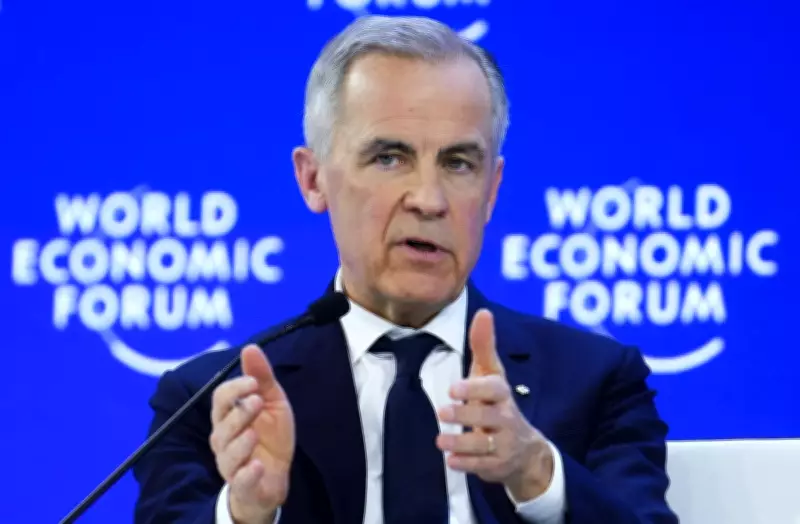
A senior Canadian diplomat has voiced skepticism regarding Prime Minister Mark Carney's recent emphasis on the role of middle powers in global affairs. Speaking on condition of anonymity, the diplomat questioned the feasibility and strategic underpinnings of Carney's pitch, which was delivered during a speech at the World Economic Forum in Davos, Switzerland, on January 20, 2026.
Carney's Vision for Middle Powers
In his Davos address, Carney argued that middle powers—nations that are not superpowers but wield significant influence—must collaborate to address pressing global challenges such as climate change, economic inequality, and geopolitical instability. He called for a new multilateral framework that empowers these countries to take a leading role in shaping international norms and policies.
Diplomatic Concerns
The skeptical diplomat, however, suggested that Carney's approach may be overly idealistic. "The reality is that middle powers often lack the leverage to drive meaningful change without the support of major powers," the diplomat said. "While the rhetoric is compelling, the execution faces significant hurdles, including diverging national interests and limited resources."

Canada has long positioned itself as a middle power, but critics argue that its influence has waned in recent years due to domestic political turmoil and inconsistent foreign policy. The diplomat noted that Carney's pitch could be seen as an attempt to revive Canada's global standing, but cautioned that it may not resonate with other nations facing their own challenges.
International Reactions
Reactions from other middle powers have been mixed. Some, like Australia and South Korea, have expressed interest in the proposal, while others remain cautious. "We need to see concrete actions, not just speeches," a European diplomat commented. The skepticism underscores the difficulty of rallying diverse nations around a common agenda, especially in a polarized geopolitical landscape.
Implications for Canadian Policy
Domestically, Carney's middle powers push has sparked debate among foreign policy experts. Some argue that it could strengthen Canada's alliances and open new avenues for trade and diplomacy. Others worry that it might strain relations with traditional allies like the United States, which prefers a more bilateral approach. The diplomat's remarks highlight the need for a pragmatic strategy that balances ambition with realism.
As Carney awaits a committee report on medical assistance in dying expansion and navigates other pressing issues, his middle powers agenda remains a key pillar of his foreign policy. Whether it gains traction will depend on his ability to translate vision into action and secure buy-in from both domestic and international stakeholders.