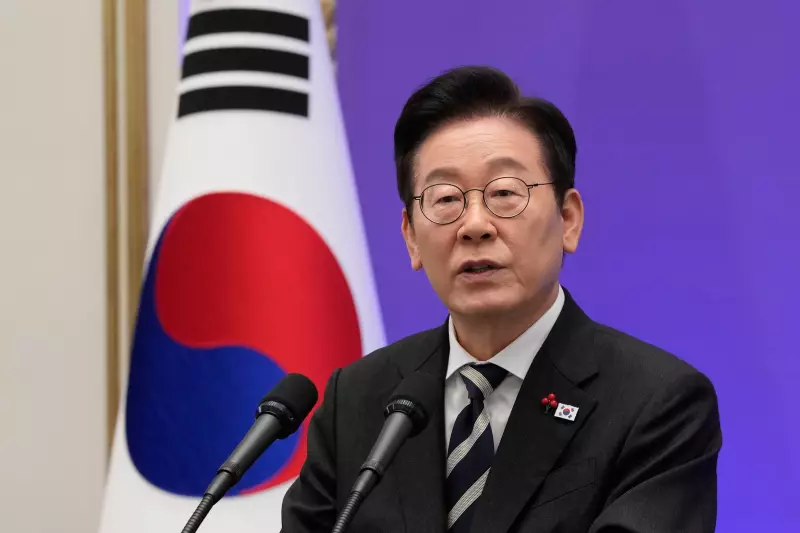
In a notable development that could reshape diplomatic relations on the Korean peninsula, South Korean President Lee Jae Myung has indicated he feels an apology may be owed to North Korea for the actions of a previous administration.
A Shift in Diplomatic Tone
The remarks were made during a news conference held on Wednesday, December 3, 2025, at the Blue House in Seoul. The event marked the first anniversary of the Dec. 3 martial law crisis. While the conference covered domestic commemorations, President Lee's comments regarding North Korea captured significant international attention.
President Lee expressed a personal sentiment that South Korea should apologize to Pyongyang for certain actions taken by his predecessor. This represents a potential pivot in Seoul's approach, moving away from the more hardline stances of recent years towards a posture open to reconciliation and diplomatic overtures.

Context and Potential Implications
Although the president did not specify the exact actions or name the predecessor in question during the reported comments, the implication points to a desire to address historical grievances directly. Such an apology, if formally issued, would be a rare and powerful gesture in the complex and often hostile inter-Korean relationship.
Analysts suggest this move could be aimed at reducing tensions and creating an opening for renewed dialogue. The Korean peninsula has experienced cycles of escalation and détente, and a formal apology from the South could serve as a confidence-building measure. However, the potential political ramifications both domestically in South Korea and in terms of the regional alliance with the United States remain to be seen.
Looking Forward
The announcement comes at a time of global geopolitical uncertainty. President Lee's willingness to publicly broach the subject of an apology signals a clear intent to explore new diplomatic avenues. The international community, particularly allies and neighbours in Northeast Asia, will be watching closely to see if these sentiments translate into concrete policy proposals or official communications with the North Korean regime.
The path forward is fraught with challenges, given North Korea's continued weapons testing and often combative rhetoric. Nevertheless, Lee Jae Myung's comments have undeniably introduced a new element into the diplomatic calculus surrounding one of the world's most enduring standoffs.