Putin Proposes Redirecting Frozen U.S. Assets to Trump's Peace Initiative and Ukrainian Reconstruction
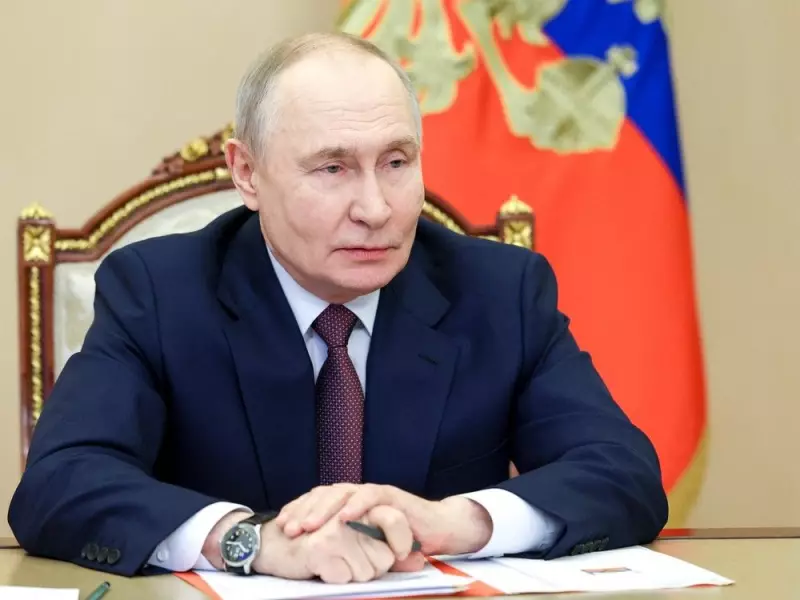
In a significant diplomatic maneuver, Russian President Vladimir Putin has announced his willingness to commit Russian assets currently frozen in the United States toward two specific purposes: supporting President Donald Trump's proposed Board of Peace and financing the reconstruction of Ukrainian territories damaged during the ongoing conflict.
Details of the Russian Proposal
During a meeting with Russia's Security Council, Putin outlined a dual-track proposal that represents a calculated attempt to engage with American leadership while addressing international concerns about Ukraine's future. The Russian leader stated that even before formal participation in peace negotiations is resolved, he believes Russia could direct one billion dollars from assets frozen under previous U.S. administrations to Trump's proposed Peace Council.
"Given Russia's special relationship with the Palestinian people, I believe we could direct one billion dollars to the Peace Council from Russian assets frozen under the previous US administration," Putin declared during the security meeting.

Post-War Reconstruction Funding
The second component of Putin's proposal involves utilizing the remaining funds from frozen Russian assets in the United States to rebuild territories damaged by fighting, but only after a peace treaty between Russia and Ukraine is formally concluded. This represents a conditional offer that ties reconstruction funding directly to a peace agreement.
"The remaining funds from our frozen assets in the US could also be used to rebuild territories damaged by the fighting after the conclusion of a peace treaty between Russia and Ukraine," the Russian president explained.
Strategic Context and Limitations
This proposal emerges as Russia seeks to avoid escalating U.S. penalties while showing little indication of altering its military approach in Ukraine. The offer represents a strategic attempt to appeal directly to the American president using funds the Kremlin currently cannot access.
However, the practical impact of this proposal may be limited by several factors:
- Only approximately $4 to $5 billion of Russia's assets are held in the United States
- This represents just a tiny fraction of the estimated $300 billion in Russian assets frozen worldwide
- Ukraine's reconstruction needs are enormous, with February 2025 estimates projecting costs around $524 billion over the next decade
Diplomatic Engagement and Peace Process
Putin revealed that the offer has already been discussed with U.S. officials, and he plans to elaborate further during an upcoming meeting with Trump envoys Steve Witkoff and Jared Kushner in Moscow. This diplomatic engagement occurs against a backdrop of continued military conflict, with Russia's full-scale invasion approaching its fifth year.
The proposal comes as both sides remain far apart on key aspects of Trump's proposed peace plan. Russia continues to insist that Ukraine surrender territories it doesn't currently control as part of any agreement, while Ukraine maintains its defensive position amid ongoing attacks on energy infrastructure that have left millions without heating and water during freezing winter conditions.
Broader Implications and Analysis
This Russian initiative represents a complex diplomatic calculation that attempts to leverage frozen assets for multiple strategic objectives. By proposing to fund both Trump's peace initiative and Ukrainian reconstruction, Putin seeks to position Russia as a constructive participant in peace discussions while potentially mitigating further economic penalties.
The timing is particularly significant as reconstruction costs continue to escalate with each passing month of conflict. Meanwhile, the international community watches closely how this proposal might influence the broader geopolitical landscape and whether it represents a genuine opening for diplomatic progress or merely a tactical maneuver in an ongoing geopolitical struggle.