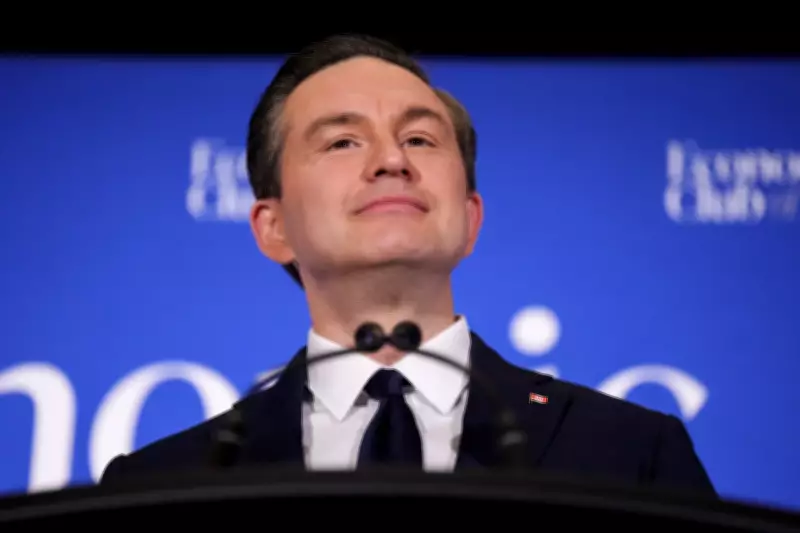
Conservative Leader Proposes Revitalized Alliance Framework in Key International Speech
In a significant foreign policy address marking his first official trip abroad as Conservative Party leader, Pierre Poilievre articulated a vision for a "modern" CANZUK partnership. The speech, delivered to an international audience, emphasized the need to strengthen and update cooperative ties between Canada, Australia, New Zealand, and the United Kingdom.
A Call for Contemporary Collaboration
Poilievre's proposal centers on transforming the existing CANZUK concept into a more dynamic and relevant framework for the current geopolitical landscape. The Conservative leader argued that historical and cultural connections between these four Commonwealth nations provide a solid foundation for enhanced cooperation, but that the partnership requires modernization to address contemporary challenges effectively.
"We share more than just a common language and parliamentary traditions," Poilievre stated during his address. "We share fundamental values of democracy, individual liberty, and the rule of law. A modern CANZUK partnership would leverage these shared principles to create new opportunities for our citizens while strengthening our collective position on the world stage."

Potential Areas of Enhanced Cooperation
The proposed modernized partnership would potentially encompass several key areas of mutual interest:
- Trade and Economic Integration: Facilitating smoother movement of goods, services, and capital between member nations
- Security Collaboration: Enhancing intelligence sharing and defense cooperation
- Diplomatic Coordination: Aligning foreign policy approaches on international issues
- People Mobility: Streamlining visa and work permit processes for citizens
- Technological Innovation: Joint research initiatives in emerging fields
Poilievre emphasized that a revitalized CANZUK framework would not seek to duplicate existing international organizations but rather complement them with a more focused, values-based partnership among like-minded democracies.
Strategic Timing and Political Context
The speech comes at a time of shifting global alliances and increasing geopolitical uncertainty. Poilievre's decision to highlight CANZUK modernization during his first international trip as Conservative leader signals the potential importance of this initiative in his party's foreign policy platform should they form government.
Political analysts note that while the CANZUK concept has circulated in policy discussions for years, Poilievre's endorsement represents the highest-level political support it has received from a major Canadian party leader in recent memory. The proposal aligns with his broader political strategy of positioning the Conservatives as proponents of practical, forward-looking policies that strengthen Canada's international relationships.
The response from other CANZUK nations to Poilievre's proposal remains to be seen, but the speech has undoubtedly placed the concept of a modernized partnership back into mainstream political discourse in Canada. As Poilievre continues his international engagements, observers will be watching closely to see how this foreign policy vision develops and what specific policy proposals might emerge from the Conservative leader's call for a contemporary CANZUK alliance.