

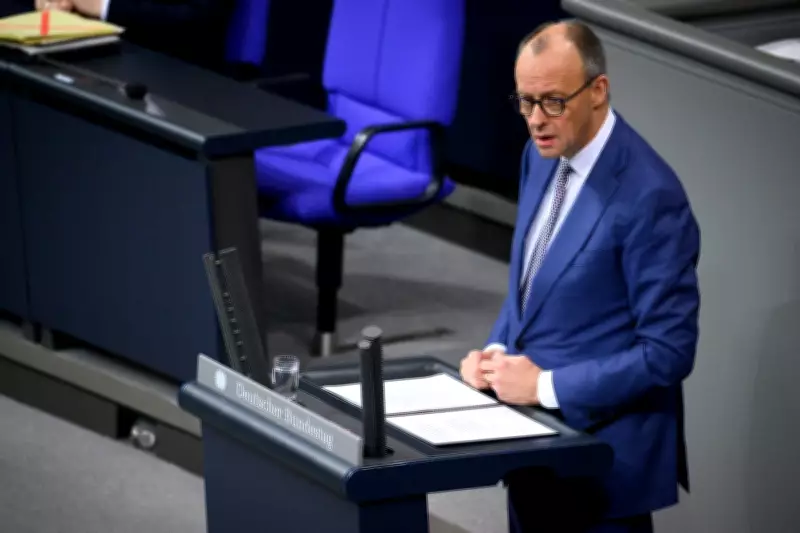
German Leader Advocates for European Strategic Independence
In a significant address to the German Bundestag, Chancellor Friedrich Merz articulated a vision for Europe's future that involves shedding what he termed "nostalgia" for the transatlantic partnership with the United States. Delivering a government statement on the current foreign policy landscape, Merz emphasized the necessity for European nations to cultivate greater self-reliance and assertiveness on the global stage.
A Call for Pragmatic Realignment
The Chancellor's remarks, made during the 56th plenary session of the 21st legislative period, underscore a growing sentiment within European political circles. Merz highlighted that while historical ties with the U.S. remain valuable, an overreliance on American leadership could hinder Europe's ability to address its own security, economic, and diplomatic challenges effectively.
This perspective marks a pivotal moment in post-war European diplomacy, as leaders grapple with shifting geopolitical dynamics and the need for a more cohesive, independent foreign policy framework. Merz pointed to recent global uncertainties as a catalyst for this reevaluation, suggesting that Europe must develop its own strategic capabilities to navigate an increasingly multipolar world.

Building a Self-Sufficient Europe
The German Chancellor outlined several key areas where Europe should focus its efforts to reduce dependency:
- Enhanced defense cooperation among EU member states to bolster collective security without sole reliance on NATO structures led by the U.S.
- Strengthening economic sovereignty through innovation and reduced vulnerabilities in critical supply chains.
- Fostering diplomatic initiatives that reflect European values and interests autonomously on international issues.
Merz's statement reflects a broader debate within Germany and across the European Union about the continent's role in the 21st century. By advocating for a move beyond sentimental attachments to the past, he aims to inspire a more pragmatic and forward-looking approach to foreign relations.
This shift does not imply a severance of ties with the United States but rather a maturation of the partnership into one based on mutual respect and shared responsibilities, rather than historical dependency. The Chancellor's words are likely to resonate with other European leaders who have expressed similar desires for greater strategic autonomy in recent years.






