Iran Declines New Round of Direct Talks with United States, Citing Unchanged Demands
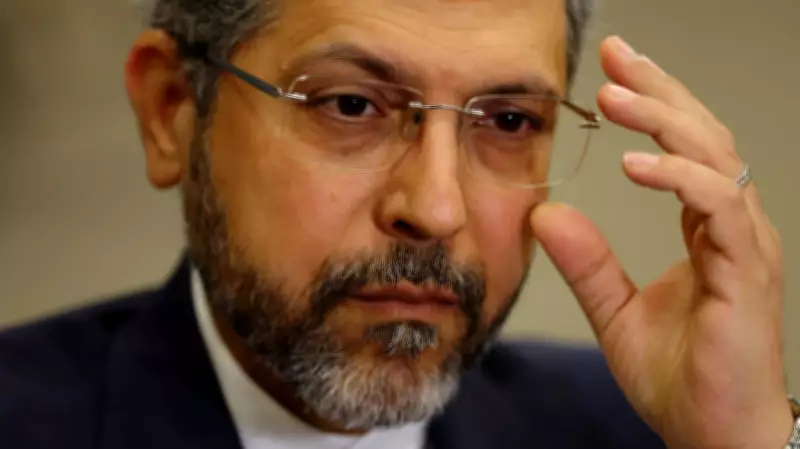
ANTALYA, Turkey — Iran remains unprepared to engage in a fresh round of face-to-face negotiations with American officials, a high-ranking Iranian diplomat announced on Saturday. The decision stems from Washington's persistent adherence to what Tehran describes as "maximalist" positions on critical issues, according to Iranian Deputy Foreign Minister Saeed Khatibzadeh.
No Uranium Transfer to the U.S., Official Asserts
In an exclusive interview with The Associated Press conducted during a diplomatic forum in Turkey, Khatibzadeh explicitly rejected claims made by former U.S. President Donald Trump regarding the transfer of Iran's enriched uranium. "I can tell you that no enriched material is going to be shipped to the United States," he stated firmly. "This is a non-starter, and I can assure you that while we are ready to address any legitimate concerns, we will not accept proposals that are fundamentally unacceptable."
This declaration directly counters Trump's assertion from Friday, in which he suggested the U.S. would "get all the nuclear dust" from Iran—a reference to approximately 970 pounds (440 kilograms) of enriched uranium believed to be stored at nuclear facilities damaged by U.S. military strikes last year.

Diplomatic Stalemate Over Framework and Sanctions
Khatibzadeh revealed that while numerous messages have been exchanged between the two nations, the United States has not retreated from demands that Iran considers excessive. "We are still not at a point where we can proceed to an actual meeting because the Americans have not yet abandoned their maximalist stance," he explained. Iran is insisting on the finalization of a preliminary "framework agreement" before committing to any in-person discussions.
The Iranian official declined to specify the exact unresolved issues but emphasized that Washington must address Tehran's primary concerns, particularly the unilateral sanctions imposed by the U.S. "The other side must also understand and address our main concerns, which are the illegal unilateral sanctions that target the Iranian people—an act of economic terrorism designed to suffocate them and incite rebellion against Iran's political structure," Khatibzadeh asserted.
Regional Tensions and the Strait of Hormuz
The interview also touched upon escalating regional conflicts. When questioned about potential Iranian responses to renewed Israeli attacks on Lebanon despite a ceasefire, Khatibzadeh responded, "Iran has no option but to stop aggressors once and for all." This statement follows Trump's comment that Israel is "prohibited" by the U.S. from further strikes on Lebanon, with the State Department clarifying that this prohibition applies only to offensive actions, not self-defense.
Khatibzadeh reiterated Iran's stance that its actions are purely defensive and a reaction to unprovoked aggression during negotiations. He stressed that any ceasefire must include Lebanon, where Israel has been engaged in conflict with the Iran-backed militant group Hezbollah. Discrepancies emerged last week when the U.S. and Iran declared a temporary truce; while Pakistan and Iran asserted it extended to Lebanon, Israel and later the U.S. denied this. Subsequent Israeli airstrikes on central Beirut led Iran to temporarily close the Strait of Hormuz, a vital global oil shipping route, before reopening it following a truce in Lebanon on Friday.
"Iran negotiated in good faith, accepted a ceasefire, and insisted it must include all countries, including Lebanon," Khatibzadeh said. "Then the other side claimed it was not committed to this and commenced atrocities." He added that a "new protocol" for the Strait of Hormuz is being discussed as part of the negotiations with the U.S., aimed at ensuring it "remains open and safe for all civilian passage." In contrast, Trump has warned that a U.S. blockade of the strait will persist and attacks may resume if no agreement is reached with Iran.

The ongoing impasse highlights the deep-seated disagreements and complex geopolitical dynamics that continue to hinder progress in U.S.-Iran relations, with significant implications for regional stability and international diplomacy.