Iran Escalates Diplomatic Conflict by Declaring European Armies Terrorist Groups
In a dramatic parliamentary session held on Sunday, Iran officially declared the armies of European countries to be terrorist organizations. This retaliatory measure comes directly in response to the European Union's recent decision to apply the same designation to Iran's Islamic Revolutionary Guard Corps (IRGC).
Parliamentary Display of Defiance
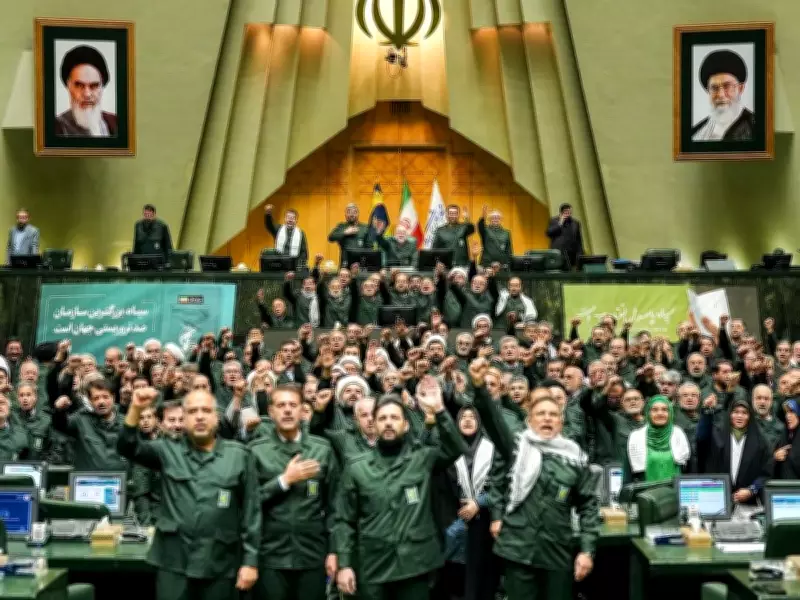
Lawmakers gathered in Tehran's legislative chamber wearing the distinctive green uniforms of the Revolutionary Guards as a powerful show of solidarity. State television footage captured the charged atmosphere as legislators chanted provocative slogans including "Death to America," "Death to Israel" and "Shame on you, Europe."
Parliament Speaker Mohammad Bagher Ghalibaf, himself dressed in IRGC uniform while presiding over the session, invoked Article 7 of Iran's Law on Countermeasures Against the Declaration of the IRGC as a Terrorist Organization. He stated this legislation formally designates European armies as terrorist groups, calling the EU's original decision an "irresponsible action" that followed American and Israeli directives.

Historical Context and Immediate Implications
The parliamentary session coincided with the 47th anniversary of the return from exile of Ayatollah Ruhollah Khomeini, the founder of the Islamic Republic. The timing was clearly symbolic, reinforcing Iran's revolutionary ideology against perceived Western aggression.
While the immediate practical consequences of Iran's declaration remain uncertain, the move represents a significant escalation in diplomatic tensions. The IRGC, established as the ideological arm of Iran's military with the specific mandate of safeguarding the Islamic revolution, has faced increasing international scrutiny.
International Reactions and Broader Conflict
The European Union's decision to list the IRGC as a terrorist organization on Thursday followed similar classifications by the United States, Canada and Australia. Western governments have accused the Guards of orchestrating violent crackdowns on recent protest movements within Iran, allegations Tehran has dismissed as "terrorist acts" allegedly fomented by the United States and Israel.
Ghalibaf asserted that the EU's action would only strengthen domestic support for the Revolutionary Guards while accelerating what he described as Europe's path toward irrelevance in the future world order.
Ongoing Diplomatic Maneuvers
This legislative development occurs against a backdrop of heightened military tensions between Iran and the United States. Recent weeks have seen both threats and potential openings for dialogue, with U.S. President Donald Trump dispatching an aircraft carrier group to the region while simultaneously confirming that negotiations with Iran continue.
Ali Larijani, head of Iran's Supreme National Security Council, noted on Saturday that "structural arrangements for negotiations are progressing" despite media portrayals of conflict. Trump later acknowledged ongoing talks while maintaining his previous threats, suggesting Iran might prefer negotiation over confrontation regarding its nuclear and missile programs.
The reciprocal terrorist designations between Iran and European nations mark a new low in diplomatic relations, with both sides employing legal and symbolic measures to assert their positions in an increasingly polarized international landscape.