Iran's Top Prosecutor Rejects Trump's Execution Claims as Death Toll Climbs
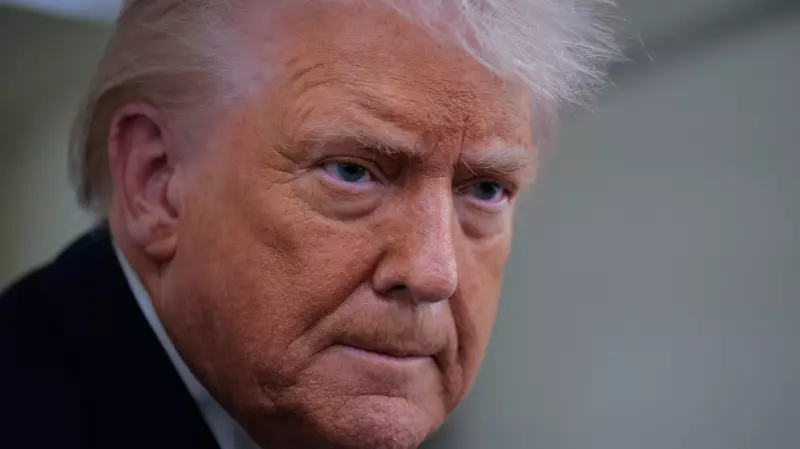
Iran's top prosecutor has strongly denied claims made by former U.S. President Donald Trump regarding the halting of executions in the country, calling the assertions "completely false." The denial comes as the death toll from nationwide protests continues to rise, with activists reporting at least 5,002 fatalities amid an ongoing internet blackout that has hampered information verification.
Prosecutor's Firm Denial of Trump's Assertions
Prosecutor Mohammad Movahedi, speaking through the judiciary's Mizan news agency, categorically rejected Trump's repeated claims that Iran had halted the execution of 800 detained protesters. "This claim is completely false; no such number exists, nor has the judiciary made any such decision," Movahedi stated emphatically. His remarks suggested potential confusion within Iranian government channels, possibly involving the Foreign Ministry led by Abbas Araghchi, who has maintained direct communication lines with U.S. officials regarding nuclear negotiations.
Movahedi emphasized Iran's institutional independence, declaring, "We have a separation of powers, the responsibilities of each institution are clearly defined, and we do not, under any circumstances, take instructions from foreign powers." This statement comes as judiciary officials continue to classify some detainees as "mohareb" or "enemies of God," a charge carrying the death penalty that has historical precedent in Iran's 1988 mass executions.

Escalating Death Toll and Information Blackout
According to the U.S.-based Human Rights Activists News Agency, the death toll has reached at least 5,002 individuals, with 4,716 identified as demonstrators, 203 as government-affiliated personnel, 43 children, and 40 civilians not participating in protests. The organization, which maintains an activist network within Iran, reports that more than 26,800 people have been detained in an expanding arrest campaign.
This figure represents the highest death toll from protests in Iran in decades, surpassing even the chaos surrounding the 1979 Islamic Revolution. Iran's government offered its first official count on Wednesday, reporting 3,117 fatalities with 2,427 categorized as civilians and security forces, while labeling the remainder as "terrorists." Historically, Iranian authorities have been known to underreport or withhold fatality figures during periods of unrest.
The comprehensive internet blackout, now extending beyond two weeks, represents the most severe digital disruption in Iran's history, severely limiting independent verification of casualty numbers and creating significant challenges for activists attempting to document events.
Regional Tensions and Military Movements
Tensions between the United States and Iran remain elevated as American military assets, including the aircraft carrier USS Abraham Lincoln and accompanying warships, move closer to the Middle East region. Trump described the naval deployment as an "armada" during comments to journalists, stating the ships were being positioned "just in case" military action becomes necessary.
Analysts from the New York-based Soufan Center noted in their Friday analysis that while Trump appears to have stepped back from immediate military strikes, likely due to pressure from regional leaders and recognition that airstrikes alone would be insufficient to destabilize the Iranian regime, the continued movement of military assets suggests kinetic action remains a possibility.
The U.K. Defense Ministry separately announced the deployment of its joint Eurofighter Typhoon fighter jet squadron with Qatar to the Persian Gulf region for defensive purposes, citing heightened regional tensions.
Iranian Rhetoric and Military Displays
During Friday commemorations of "the Day of the Guardian," honoring Iran's paramilitary Revolutionary Guard forces that played a key role in suppressing protests, state television aired unusual programming featuring military drones. The broadcast showed Shahed drones, similar to models Russia has deployed in Ukraine, with engines being started during the telecast.

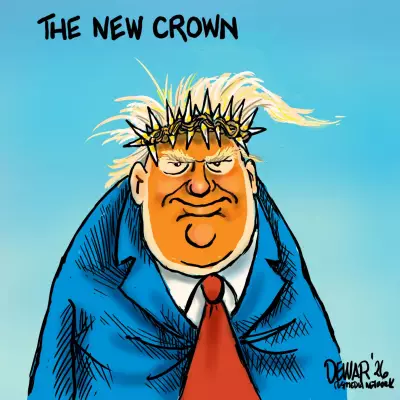
In a particularly provocative segment, an unidentified security force member wearing a surgical mask and sunglasses delivered a threat in broken Hebrew toward Israel, attempting to say, "We are closer to you than you think." This display occurred alongside inflammatory rhetoric from Tehran's Friday prayer leader Mohammad Javad Haji Ali Akbari, who mocked Trump as a "yellow-faced, yellow-haired and disgraced man" comparable to "a dog that only barks."
The cleric warned that any harm to Iranian interests would make American assets in the region "clear and precise targets of Iranian forces," reflecting the increasingly confrontational atmosphere between the two nations.