Rafah Border Crossing Reopens in Critical Truce Development, Yet Access Remains Highly Constrained
The pivotal Rafah border crossing, which connects the Gaza Strip to Egypt, has been reopened as a significant component of the current ceasefire agreement. This development marks a crucial step in the ongoing efforts to de-escalate the Israel-Hamas conflict and address the dire humanitarian situation in Gaza. However, the reopening has been characterized by severe restrictions, with only a very limited number of Palestinians being permitted to cross, underscoring the persistent challenges in delivering aid and facilitating movement for civilians.
A Symbolic Yet Restricted Gateway
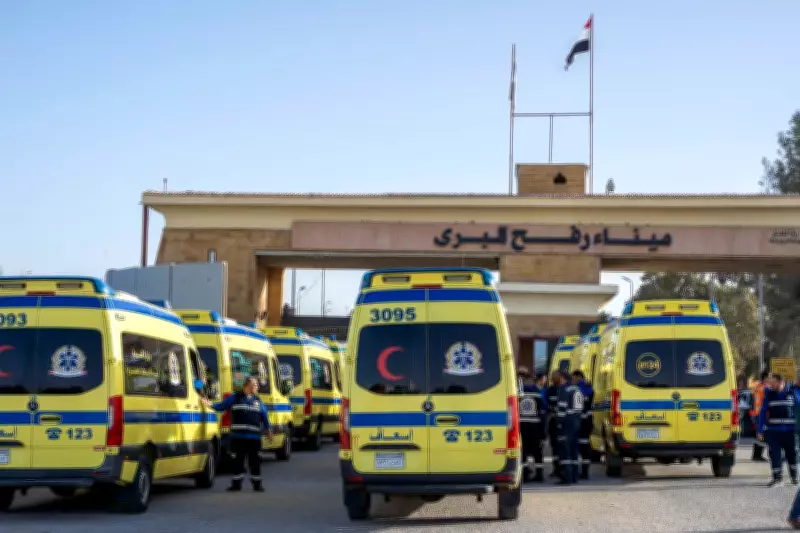
The reopening of the Rafah crossing is seen as a symbolic gesture of progress in the truce negotiations. For months, the crossing had been largely closed, severely hampering the flow of essential supplies, medical aid, and the movement of people. Its reopening is intended to allow for the entry of humanitarian assistance and the evacuation of the wounded and critically ill. Visual reports from the scene depict a line of ambulances queued at the Egyptian gate, ready to transport patients from Gaza to medical facilities in Egypt, highlighting the urgent medical needs that have accumulated during the conflict.
Despite this positive step, the actual number of individuals allowed to cross remains disappointingly low. Authorities are implementing strict controls, permitting only a select few Palestinians to pass through each day. This limitation has raised concerns among international observers and aid organizations, who argue that the current level of access is insufficient to meet the overwhelming humanitarian demands in Gaza. The restricted flow exacerbates the suffering of a population already grappling with severe shortages of food, water, medicine, and other basic necessities.

Humanitarian Implications and Ongoing Challenges
The constrained access at the Rafah crossing reflects the broader complexities and security considerations involved in the ceasefire implementation. While the truce has brought a temporary halt to hostilities, the logistical and political hurdles to full humanitarian access remain formidable. The crossing's operation is being closely monitored, with Egyptian and international officials working to ensure that the movement of people and goods complies with the agreed-upon terms. However, the slow pace of crossings is causing frustration among Palestinians who have been waiting for an opportunity to leave Gaza for medical treatment, to reunite with family, or to seek refuge from the devastation.
This situation underscores the fragile nature of the current truce and the need for sustained diplomatic efforts to expand humanitarian corridors. The limited reopening of the Rafah crossing, while a step in the right direction, highlights the ongoing struggle to balance security concerns with the imperative to provide relief to civilians caught in the conflict. As the ceasefire holds, there is hope that access will gradually increase, but for now, the reality on the ground is one of continued hardship and restricted mobility for the people of Gaza.