In a powerful personal appeal, Egyptian-Canadian journalist and human rights defender Mohamed Fahmy is urging the Canadian government to take a decisive step that many Middle Eastern nations already have: officially designating the Muslim Brotherhood as a terrorist organization.
A Firsthand Witness to Ideology and Power
Fahmy, a Muslim journalist who reported from the front lines of the Arab Spring for CNN, bases his plea on direct observation. He witnessed the rise of the Brotherhood's political power in Egypt and the subsequent unfolding of what he describes as a dark period for the nation.
The organization, founded in Egypt in 1928 by Hassan al-Banna, has grown into a transnational Sunni Islamist movement. Its ideology, Fahmy argues, has influenced a range of groups, from charitable bodies to violent Islamist factions like Hamas—an organization Canada designated as terrorist in 2002.

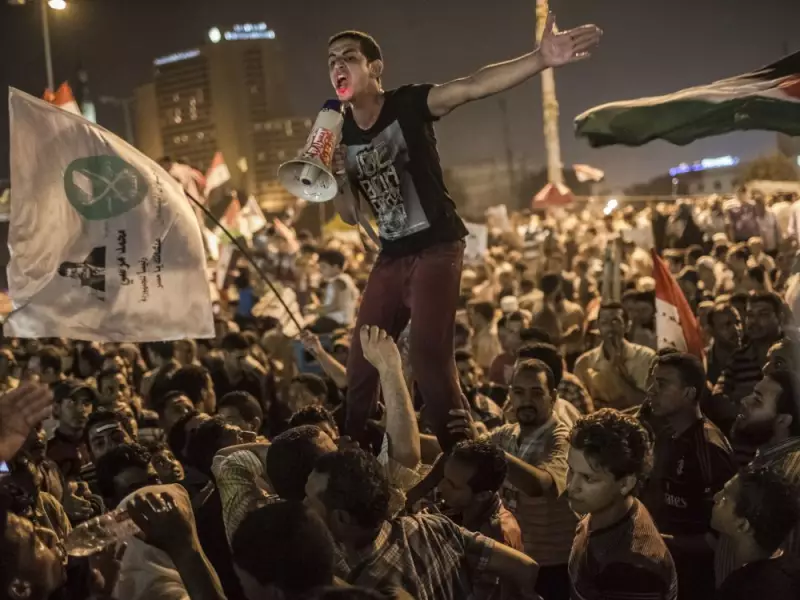
"While covering the political turmoil on the streets of Egypt... the dangers of political Islam became evident to me," Fahmy writes. He recalls the Brotherhood's organized, well-funded protests, where supporters waved flags bearing the group's emblem: two crossed swords over the Arabic word for "prepare." Their chants of "Islam is the solution" often escalated into violent clashes with authorities.
The Brief Reign and Revealed Intentions
Fahmy was in Cairo's Tahrir Square on June 24, 2012, reporting for CNN as the Egyptian election results were announced. Inside the Muslim Brotherhood's main tent, he watched as disciples celebrated the victory of their candidate, Mohamed Morsi.
However, Fahmy's apprehension proved prescient. Within a year of Morsi's rule, Fahmy states the group's true nature surfaced. The Brotherhood's television channels, hosted by "heavy bearded men," engaged in relentless hate speech. The party's intolerance for dissent became clear as artists and intellectuals protested outside the Ministry of Culture, facing a clampdown on free expression.
Fahmy contends that the famous motto, "Islam is the solution," was a veil for the movement's core objective: establishing a state governed by Islamic Shariah law. Egyptians, he says, learned this goal the hard way.
An Urgent Call for Canadian Action
Fahmy's central argument hinges on a perceived inconsistency in Canadian policy. He notes that while Canada has long recognized the threat posed by Hamas, it has failed to act against its ideological predecessor, the Muslim Brotherhood, leaving it "noticeably absent" from Canada's list of terrorist entities.
As a dual citizen who has seen the group's impact firsthand, Fahmy makes a direct and impassioned plea to Ottawa. He aligns his call with the assessments of several Middle Eastern countries that have already recognized the danger the organization poses, suggesting Canada is lagging behind its allies in addressing this security and ideological threat.
The journalist's appeal adds a significant voice to a growing debate in Canada about how to classify and respond to the Muslim Brotherhood, framing it not just as a foreign policy issue, but as a matter of consistent principle in combating extremist ideologies.