European Leaders Firmly Reject U.S. Assertions of 'Civilizational Erasure' at Munich Security Conference
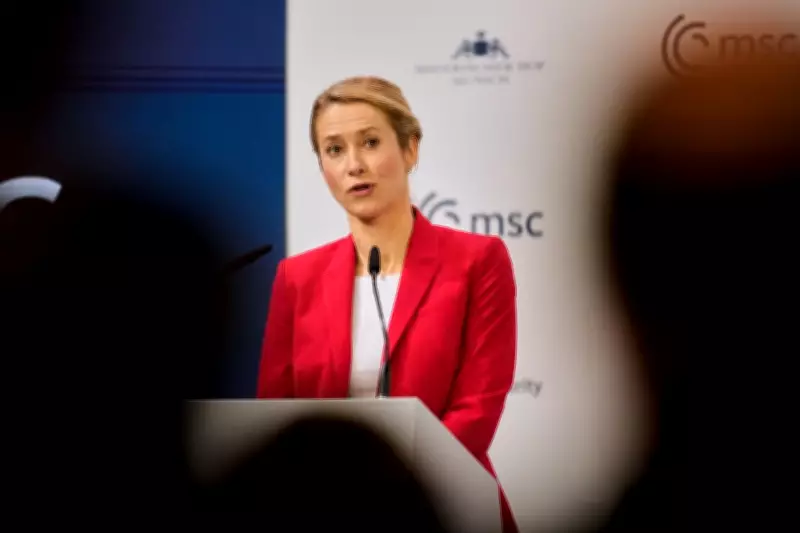
European Union foreign policy chief Kaja Kallas delivered a pointed rebuttal to recent U.S. claims that Europe faces "civilizational erasure" during her address at the Munich Security Conference on February 15, 2026. The high-profile gathering in Munich, Germany, became a platform for European leaders to push back against what they characterize as alarmist rhetoric from across the Atlantic.
Kallas Leads European Response to Transatlantic Tensions
Speaking before an international audience of diplomats and security experts, Kallas emphasized Europe's resilience and historical continuity. "The suggestion that European civilization is facing erasure fundamentally misunderstands our continent's strength and diversity," Kallas stated during her conference remarks. "Europe has weathered centuries of challenges and emerged stronger through unity and shared values."
The European Union's top diplomat acknowledged transatlantic disagreements but framed them as differences in perspective rather than existential threats. Her comments came amid growing diplomatic friction between European capitals and Washington over various policy matters, though the specific U.S. statements prompting her response were not detailed in her public address.

Broader European Consensus Against 'Erasure' Narrative
Multiple European officials and analysts at the conference echoed Kallas's sentiments, creating a unified front against what many described as hyperbolic characterizations of Europe's current situation. Conference participants noted that while Europe faces significant challenges—including demographic shifts, economic pressures, and security concerns—the continent remains fundamentally stable and culturally vibrant.
Security experts at the gathering pointed to Europe's robust institutions, technological innovation, and cultural influence as evidence contradicting claims of civilizational decline. The Munich Security Conference, traditionally a forum for discussing transatlantic cooperation, instead highlighted growing divisions in how European and American leaders perceive contemporary geopolitical realities.
Context of the Diplomatic Exchange
The exchange occurs against a backdrop of evolving transatlantic relations, with European nations increasingly asserting independent foreign policy positions while maintaining security cooperation with the United States. Observers noted that Kallas's remarks reflect broader European efforts to define their geopolitical identity without relying on American frameworks or narratives.
As the conference continues, European leaders are expected to further articulate their vision for the continent's future, emphasizing adaptation rather than decline. The strong pushback against the "civilizational erasure" characterization suggests European officials are keen to control their own narrative rather than accept external assessments of their continent's trajectory.