The administration of U.S. President Donald Trump has formally declared a starkly confrontational stance towards Europe in its newly released National Security Strategy, provoking immediate and sharp rebukes from European leaders who labelled the document "unacceptable and dangerous."
A Strategy Unveiled in the Dead of Night
Published in the early hours of Friday, December 5, 2025, the highly anticipated strategy document codifies an offensive rhetoric against European allies that has been building for months. The strategy represents a radical departure from previous U.S. policy, framing Europe as an over-regulated continent suffering from a lack of "self-confidence" and facing what it terms "civilizational erasure" largely due to its immigration policies.
The document targets a wide range of issues, including European institutions accused of "undermining political liberty and sovereignty," policies on immigration, "censorship of free speech and suppression of political opposition," declining birth rates, and the erosion of national identities. It starkly warns, "Should present trends continue, the continent will be unrecognizable in 20 years or less."

European Leaders Reject 'Outside Advice'
The reaction from European capitals was swift and unequivocal. German Foreign Minister Johann Wadephul dismissed the critique, stating that Germany does not require "outside advice." From France, Valerie Hayer, who leads the Renew Europe centrist group in the European Parliament, took to social media platform X to condemn the strategy as "unacceptable and dangerous."
The strategy also criticizes European democracies directly, asserting, "a large European majority wants peace, yet that desire is not translated into policy, in large measure because of those governments’ subversion of democratic processes." This aligns with the administration's emphasis on the restoration of nation-state primacy over supranational entities like the European Union.
Vance's Munich Speech Foreshadowed the Clash
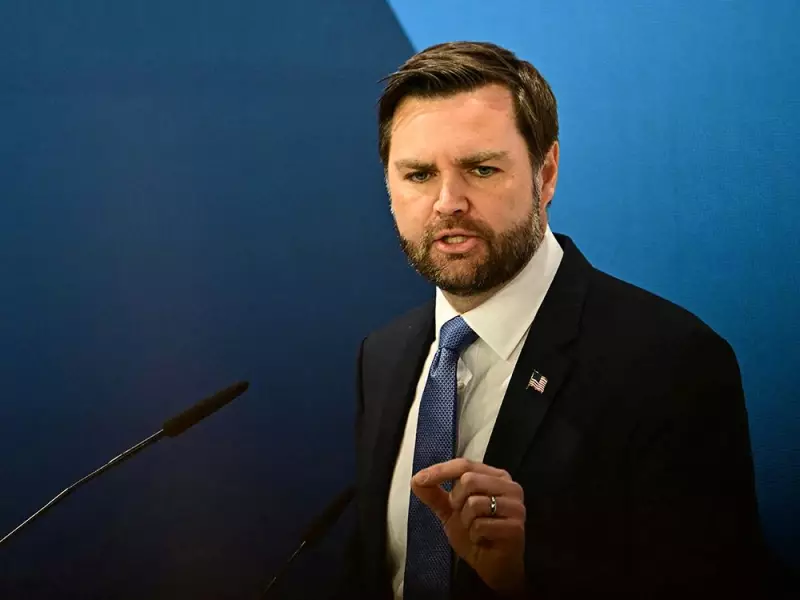
The new strategy did not emerge in a vacuum. It was foreshadowed months earlier by U.S. Vice President JD Vance during a speech in Munich, Germany, on February 14, 2025. In that address, Vance launched a blistering attack, claiming freedom of expression was receding in Europe and aligning U.S. perspectives with far-right parties such as Germany's Alternative for Germany (AfD). The speech dismayed many German and European officials at the time.
Foreign policy experts noted the exceptional nature of the document's focus on Europe. Evan Feigenbaum, a former advisor to two U.S. secretaries of state, observed that "the Europe section is by far the most striking" part of the strategy, more so than sections on China or Asia. He highlighted its confrontational tone, particularly a line about "cultivating resistance to Europe’s current trajectory within European nations," which positions the U.S. as decisively opposed to the foundational European project.
This formal strategy solidifies a profound shift in transatlantic relations, moving from a posture of alliance to one of open criticism and ideological opposition, setting the stage for continued diplomatic friction during Trump's second term.