EU Suspends Visa-Free Travel for Georgian Officials Over Democratic Concerns
The European Union has taken a significant diplomatic step by suspending visa-free travel for Georgian diplomats and officials, citing concerns over democratic backsliding in the country. This move underscores growing tensions between Brussels and Tbilisi, particularly following the Georgian government's decision to halt talks on joining the EU, which has sparked sustained public protests.
Background and Rationale
The suspension, announced in early March 2026, reflects the EU's deepening unease with Georgia's political trajectory. Officials in Brussels have pointed to a series of actions by the Georgian government that they argue undermine democratic norms and the rule of law. This includes the cessation of accession negotiations, a process that had been a key goal for many Georgians seeking closer integration with Europe.
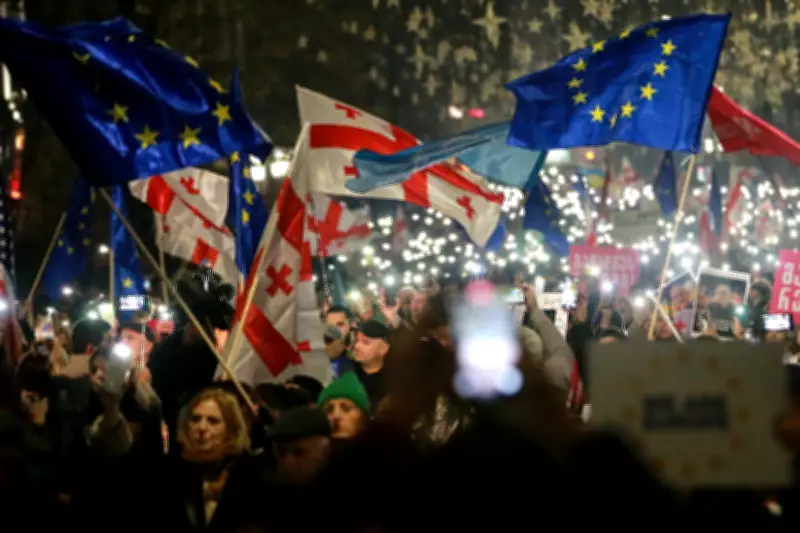
In response, demonstrators have gathered repeatedly in the capital, Tbilisi, waving Georgian and EU flags to protest the government's stance. These rallies, which began in late 2025, have marked over a year of continuous activism, highlighting the public's strong pro-European sentiment and dissatisfaction with current policies.

Implications and Reactions
The visa-free travel suspension means that Georgian diplomats and officials will now face stricter entry requirements when traveling to EU member states, potentially complicating diplomatic engagements and bilateral relations. This measure is seen as a symbolic yet impactful rebuke, aiming to pressure the Georgian government to realign with democratic principles.
Analysts note that this development could strain Georgia's aspirations for European integration, a process that has been a cornerstone of its foreign policy for decades. The ongoing protests in Tbilisi, with participants calling for a reversal of the government's decision, add a domestic layer of pressure, suggesting that the issue remains highly contentious within the country.
Broader Context
This action by the EU is part of a broader pattern of using travel restrictions as a tool to address democratic deficits in partner nations. It highlights the bloc's commitment to upholding its values, even as it navigates complex geopolitical landscapes. For Georgia, the suspension serves as a critical juncture, forcing a reevaluation of its political direction amid both international scrutiny and domestic unrest.
The situation continues to evolve, with observers watching closely for any shifts in policy from Tbilisi or further responses from Brussels. As protests persist, the outcome could significantly influence Georgia's future relations with the European Union and its internal political stability.