Terence Corcoran: Why Canada Will Eventually Join the United States as a Continuing Ally
In a provocative analysis, columnist Terence Corcoran examines Prime Minister Mark Carney's recent World Economic Forum speech, suggesting it lays groundwork for Canada to distance itself from the United States as a trusted economic and political partner. Corcoran argues this middle-power strategy is fundamentally flawed and that Canada will ultimately reaffirm its alliance with the U.S., though not as a state.
Carney's Ideological Framework at Davos
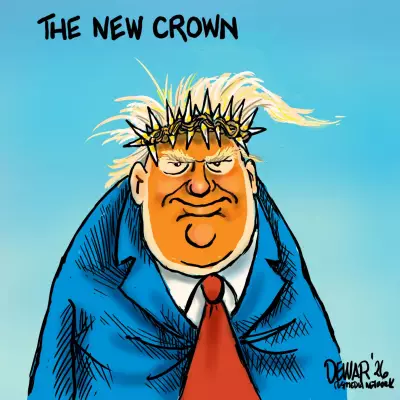
Unlike former U.S. President Donald Trump's direct approach to international relations—often ridiculing nations or praising specific leaders like Vladimir Putin and Xi Jinping—Carney presented a broader philosophical vision. Without naming specific countries, Carney warned of ruptures in the world order, collapsing rules-based governance, and the unraveling of international structures that empower hegemonic powers.
This builds on themes from Carney's 2021 book, Value(s): Building a Better World for All, which argued that market fundamentalism and globalization threaten environmental stability. Carney claimed the "rules-based architecture that Canada has long cherished is under strain," advocating for stakeholder capitalism and sustainable development to address climate change—though notably, climate rhetoric was subdued in his Davos address.

The Middle-Power Strategy: A Dubious Proposition
Carney proposed that middle powers like Canada must adapt to global shifts by forming their own power structures, collectively opposing major hegemons such as China, Russia, and the United States. Corcoran questions the feasibility of this plan, particularly given Canada's recent trade and cooperation pact with China. He raises critical concerns:
- If China encroaches on the Arctic, would Canada rely on U.S. protection or merely protest?
- How can Canada simultaneously oppose hegemons while engaging with them economically?
Corcoran identifies four key reasons why Carney's go-it-alone approach is unrealistic:
- American Democracy's Resilience: Trump's presidency is temporary, and future U.S. leaders from both parties may align more closely with Canadian values.
- Economic Realities: Canada's deep integration with the U.S. economy makes separation impractical.
- Political Ties: Historical and cultural bonds between the nations are too strong to sever.
- Security Dependencies: Canada relies on U.S. support for defense, particularly in regions like the Arctic.
The Enduring Canada-U.S. Alliance
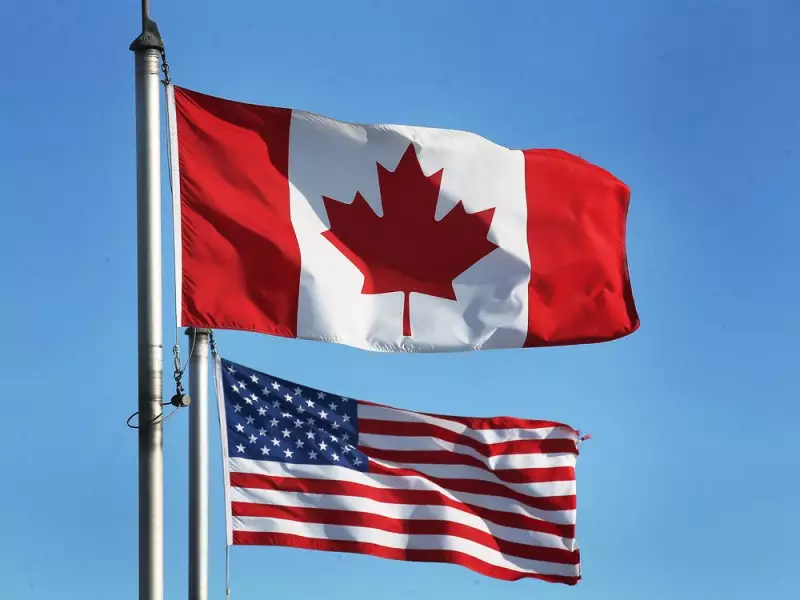
Corcoran emphasizes that the majority of Americans value the relationship with Canada, as noted by Kentucky Governor Andy Beshear at Davos, who stated Americans do not see Canada as a 51st state but believe in the partnership. This sentiment underscores that despite political fluctuations, the alliance remains robust.
In conclusion, while Carney's vision seeks to position Canada as an independent middle power, Corcoran argues that economic, political, and security realities will inevitably draw Canada back into a close, continuing partnership with the United States—not as a state, but as a steadfast ally in an uncertain global landscape.