Vivian Bercovici: Mark Carney's Foreign Policy Failures Damage Canada's Global Standing
In a scathing critique, commentator Vivian Bercovici argues that Prime Minister Mark Carney has demonstrated significant shortcomings in international diplomacy during his recent global engagements. Over just one week, Carney's actions have reportedly degraded Canada's international reputation and further strained relations with the nation's most crucial trading partner and closest ally.
Geographic Realities and Trade Dependencies
Bercovici begins by emphasizing Canada's immutable geographic position. While geography presents both advantages and challenges, the fundamental reality remains unchanged: the United States dominates Canadian trade relationships. No piecemeal agreements can substantially alter this economic dependency, which forms the bedrock of Canada's international economic standing.
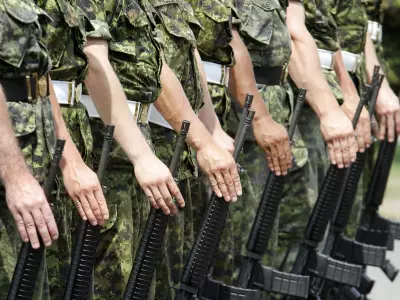
The commentary highlights how this trade reliance has created additional vulnerabilities. Due to the fortunate circumstance of sharing an 8,891-kilometer border with the United States, Canada has allegedly neglected its security and military capabilities. Recent reports suggesting the Canadian military has contemplated scenarios involving a potential U.S. invasion underscore this defensive deficiency, with projections indicating the country would be rapidly overrun by American forces.

Questionable International Engagements
Despite these realities, Bercovici contends that Carney continues to operate under the illusion that Canada possesses significant international power and leverage. This misconception reportedly manifested during the Prime Minister's mid-January visit to Beijing, where he celebrated an agreement providing Canadian canola farmers access to the critical Chinese market. This development comes after Canadian agricultural producers faced crippling tariffs since August 2025.
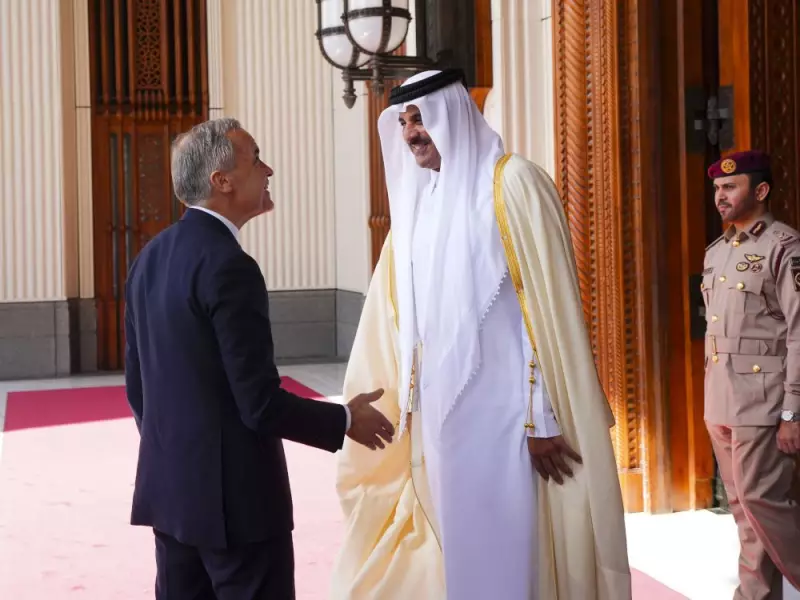
The critique becomes particularly pointed regarding Carney's subsequent visit to Qatar. Bercovici notes that Qatar, with approximately 300,000 citizens and 2.7 million residents—many working under exploitative conditions—maintains policies fundamentally at odds with Canadian values. Personal liberties are severely constrained, and principles central to Canadian governance, including gender and sexual rights, are virtually nonexistent in the Gulf nation where homosexuality remains a criminal offense.
Problematic Partnerships and Strategic Missteps
Bercovici further emphasizes Qatar's alignment with concerning international actors, describing the nation as a staunch ally of the Islamic Republic of Iran and the Hamas terrorist organization. Hamas leaders have long enjoyed privileged status in Qatar, residing lavishly in Doha while advancing their agendas.
Despite these issues, Carney reportedly secured an agreement promising two-way investment in artificial intelligence, quantum computing, and other high-tech sectors with Qatar. Bercovici questions this partnership, noting Qatar's virtually nonexistent track record in these technological domains despite the nation's efforts to diversify beyond its oil-dependent economy.
The commentary reveals potentially troubling connections: Brookfield Asset Management, where Carney served as vice-chair until becoming Liberal leader in early 2025, inked a $20-billion deal with Qatar in early December to support AI-related ventures. Bercovici suggests Carney may be attempting to ride Brookfield's coattails to access the lucrative global AI sector, but in choosing Qatar as his launchpad, he demonstrates limited understanding of Middle Eastern technology markets.
Strategic Isolation in Key Regions
Bercovici concludes that Carney's approach ignores regional realities. In the Middle East, technological success depends heavily on participation in deal flows concentrated among Abraham Accords signatory nations. By courting Qatar instead of engaging with this established framework, Canada risks perpetuating its exclusion from crucial regional partnerships, further undermining the nation's international position and economic opportunities.
The overall assessment presents a damning portrait of Carney's foreign policy approach, suggesting strategic misjudgments that compromise both Canada's values and its practical interests on the global stage.