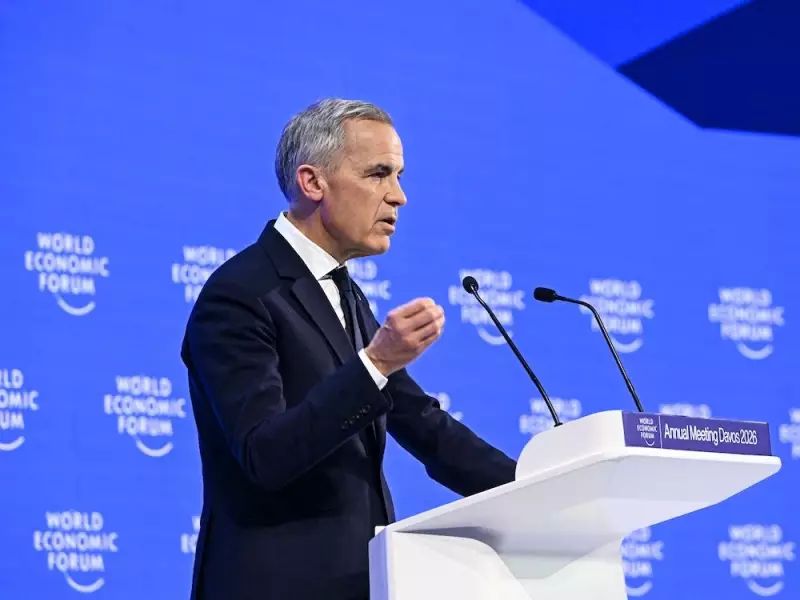
Carney's Davos Address Sparks Controversy Over Foreign Policy Stance
Prime Minister Mark Carney's recent address at the World Economic Forum in Davos has ignited significant debate about Canada's foreign policy direction. The speech, delivered on January 20, 2026, during the annual gathering of global leaders in Switzerland's Rhaetian Alps, has been criticized for what some observers describe as a troubling indifference to authoritarian regimes around the world.
The Context of Carney's Remarks
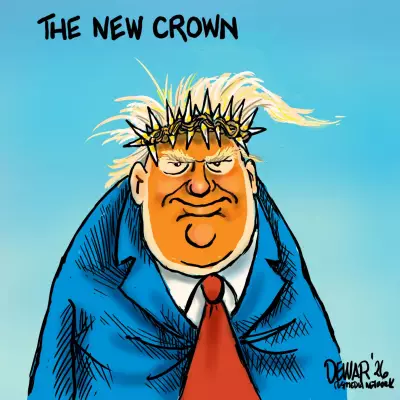
Carney's comments came during a week when former U.S. president Donald Trump also made headlines at Davos with what many described as an unnerving exhibition of extreme narcissistic personality disorder. Against this backdrop, Carney's approach to international relations has drawn particular scrutiny from foreign policy analysts and human rights advocates.
The prime minister's philosophy was perhaps best encapsulated in his response to reporters questioning his stance on China's human rights record. "We take the world as it is, not as we wish it to be," Carney stated, a position that critics argue represents a dangerous departure from Canada's traditional commitment to human rights and democratic values.

The Reality of Modern Conflict
To understand the implications of Carney's approach, one need look no further than the ongoing conflict in Ukraine. In recent weeks, Moscow has launched approximately 2,000 drones against Ukrainian cities, targeting civilian infrastructure including highrise apartment buildings, energy systems, and water facilities in Dnipro, Odesa, Kharkiv, and Zaporzhia.
The situation in Kyiv has become particularly dire. As of Wednesday morning, nearly 3,000 multi-story residential buildings remained without heating, with roughly 60 percent of the city lacking electricity. Approximately 600,000 people have been evacuated since Moscow's New Year's Day offensive began, with daytime temperatures hovering around -10°C.
The Geran-5 Drone: A Case Study in Globalization
A recent analysis of a downed Geran-5 drone provides a stark illustration of how global supply chains continue to fuel modern conflicts despite international sanctions. The Geran-5 represents the latest model in a line of Iranian Shahed unmanned aerial vehicles manufactured at the Albatross Corporation's Yelabuga drone factory in Russian Tartarstan.
What makes this weapon particularly concerning is its advanced capabilities. The Geran-5 reaches speeds of 600 km per hour - three times faster than previous Shahed models - with a range of up to 1,000 kilometers while carrying a 90-kilogram warhead.
More revealing, however, is the drone's international components. Ukrainian military intelligence analysis shows the Geran-5 is powered by a Chinese turbojet engine manufactured by Telefly Telecommunications in Shenzhen. The electronics systems, including satellite navigation and guidance mechanisms, come from American and German manufacturers.
Key components include:
- Processors, transceivers and amplifiers from Texas Instruments in Dallas
- Clock generators from CTS Corporation in Indiana
- A special converter from Monolithic Power Systems in Washington
- Transistors from German semiconductor manufacturer Infineon Technologies
The Breakdown of International Order
This complex web of international manufacturing highlights what critics see as the collapse of the rules-based international order that Carney's approach appears to accept. The old system, with its high-minded pretenses of global sanctions designed to protect innocent populations, has given way to what Carney describes as foreign policy "realism."
The prime minister's casual reference to a "new world order" during his recent visit to Beijing has raised particular concern among those who believe Canada should maintain a principled stance against authoritarian regimes. His lavish tributes to Chinese hosts, coupled with his apparent indifference to human rights concerns, have drawn comparisons to approaches typically associated with more transactional foreign policies.

As global conflicts continue to evolve with increasingly sophisticated weaponry supplied through complex international networks, the debate over Canada's foreign policy direction grows more urgent. Carney's Davos speech has positioned Canada at a crossroads between pragmatic engagement and principled opposition to global tyranny, leaving many to wonder which path the nation will ultimately choose.