Carney's Davos Address Signals Strategic Shift in Canada-U.S. Relations
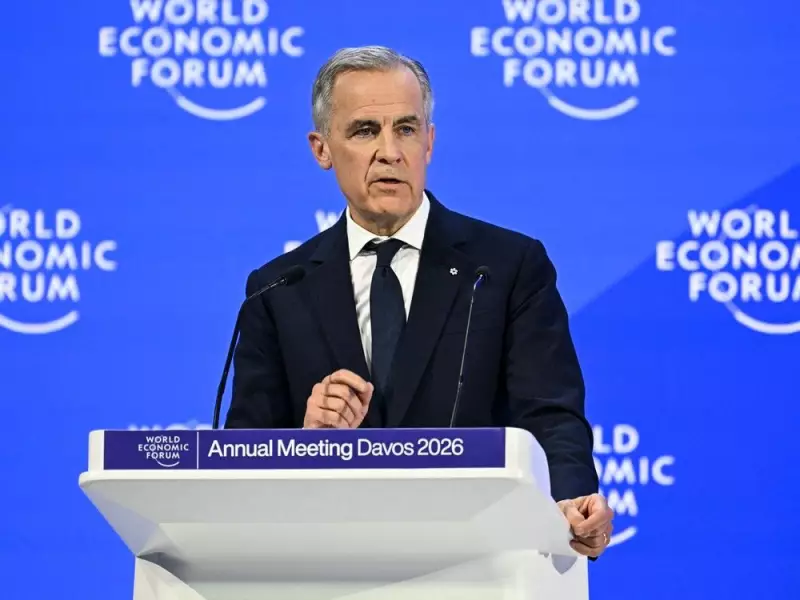
Prime Minister Mark Carney's recent address to the World Economic Forum in Davos, Switzerland, has been widely interpreted as a significant departure from Canada's conventional diplomatic approach toward the United States. Delivered on January 20, 2026, the speech received a standing ovation and global plaudits for its candid assessment of contemporary international realities.
A Moment of Global Clarity
The Prime Minister's remarks to the assembled political and economic elite were characterized by a level of candor and nuance rarely exhibited by serving politicians. Carney presented a twofold message that acknowledged fundamental shifts in global power dynamics while outlining a proactive path forward for nations like Canada.
First, Carney made unequivocally clear that the world has undergone permanent transformation. The comfortable patterns of global politics that characterized previous eras are not returning. Those awaiting a restoration of conventional diplomatic sanity are waiting in vain. We now inhabit a world increasingly shaped by the threat and application of hard power, a reality all states must acknowledge.

The Middle Power Alternative
Second, and more hopefully, Carney articulated that while global superpowers may pursue unilateral actions, middle powers such as Canada are not without agency or influence. By identifying and cooperating on areas of shared interest, these nations can pool their limited resources to construct flexible networks of cooperative ties.
Collectively, these alliances can provide a viable alternative to passive acceptance of policies dictated by great powers. As Carney eloquently framed the imperative: "If we're not at the table, we're on the menu." This cooperation represents not merely an option but a necessity for countries determined to maintain their independence in a transformed geopolitical landscape.
From Campaign Rhetoric to Diplomatic Reality
The Davos address marks a remarkable evolution from Canada's recent diplomatic posture toward its southern neighbor. Despite "elbows up" rhetoric during the 2025 federal election campaign, the Carney government initially pursued a strategy of ambivalence and conciliation toward the United States.
This approach centered on hopes for a renewed trading relationship and normalized relations through good faith negotiations and conciliatory gestures on issues prioritized by U.S. President Donald Trump. This resulted in Canada committing substantial funds to address a largely non-existent fentanyl trafficking concern and meeting American demands for increased military expenditures.
At times, this conciliation bordered on placation, exemplified by Canada's unilateral removal of retaliatory tariffs on American goods—a move that produced no discernible diplomatic reciprocation.
A Blunt Rebuke of U.S. Foreign Policy
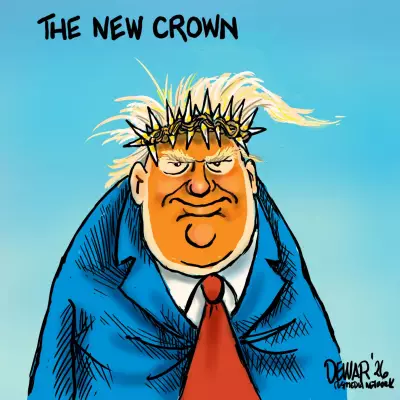
Carney's Davos speech explicitly acknowledged that this conciliatory strategy had proven ineffective. While neither the United States nor President Trump were mentioned by name, the target of Carney's critique was unmistakable to both the Davos audience and observers in Washington.
The Prime Minister described global changes being driven by a specific actor, at times allowing the diplomatic veneer to thin considerably—particularly when reiterating Canada's support for Greenland's sovereignty as Danish territory. The speech constituted a remarkably direct rebuke of American foreign policy during Trump's second term, highlighting how U.S. actions frequently leave nearly all parties, including Americans themselves, in a diminished position.
This pointed critique did not go unnoticed, resonating both within the Davos conference hall and across the Atlantic at the White House. Whether this address will be remembered as a landmark speech for the ages ultimately depends on subsequent developments in Canada-U.S. relations and the international response to Carney's call for middle-power cooperation.