Carney's Davos Address: Eloquent Rhetoric or Strategic Misstep?
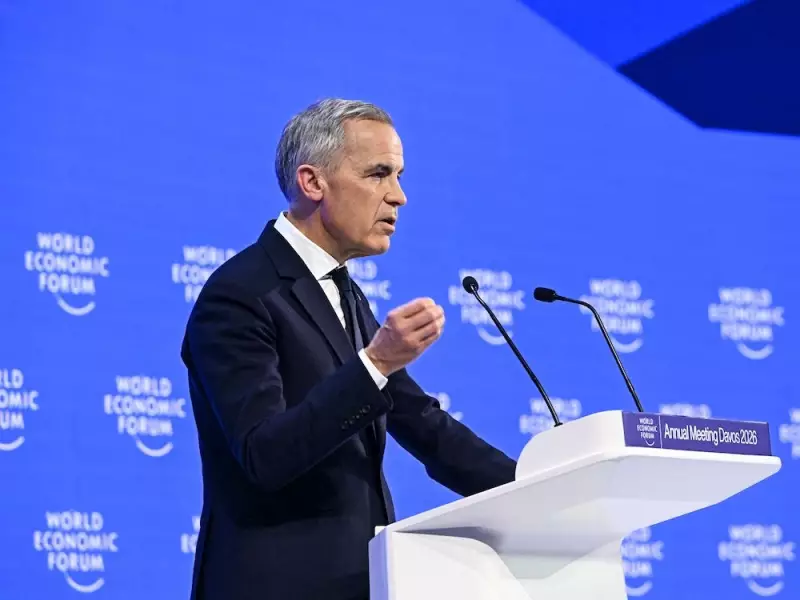
Prime Minister Mark Carney's recent address at the World Economic Forum in Davos showcased polished delivery and ambitious vision, yet critics argue it reveals troubling ambiguities in Canada's foreign policy direction. The speech, delivered on January 20, 2026, during the annual gathering of global leaders, cannot be viewed in isolation from Carney's earlier remarks in China, where he spoke approvingly of an emerging "new world order."
The Problematic Language of "New World Order"
When a Canadian prime minister echoes terminology that carries decades of geopolitical baggage, particularly in Beijing where such language often justifies the erosion of liberal norms, it raises serious questions about strategic alignment. The phrase "new world order" historically signals shifts toward hierarchical governance, managed markets, and increased political control—concepts fundamentally at odds with the democratic principles Canada claims to champion globally.
By lending even indirect legitimacy to such frameworks, Carney risks undermining Canada's traditional advocacy for liberal internationalism. His Davos performance, while rhetorically impressive, appears less like sober realism and more like an attempt to reconcile democratic values with an emerging global structure that may not align with Canadian interests or principles.

Accurate Diagnosis, Questionable Prescription
Carney correctly identifies that the post-Cold War era of frictionless globalization has ended. Power dynamics, geographical realities, and tangible assets like energy resources, food security, critical minerals, defense capabilities, and industrial depth have reemerged as fundamental components of national sovereignty. On this analytical front, there exists broad consensus among policymakers and analysts.
Where divergence emerges is in Carney's proposed solutions. His speech positions Canada as a middle power whose future depends on coalition building, variable geometry, and values-based realism. While theoretically pragmatic, this approach risks becoming what critics describe as values-based abstraction—a framework that gestures toward realism while avoiding its most challenging implications and difficult choices.
Canada's Established Position vs. Reinvention Narrative
The fundamental question raised by Carney's address is whether Canada needs to reinvent itself as a nation cautiously navigating between global giants. Canada already possesses substantial international standing as:
- A G7 economy with significant global influence
- An Arctic nation with strategic northern sovereignty
- An energy superpower with substantial natural resources
- A founding NATO ally with established defense commitments
- The United States' most integrated economic and security partner
Any serious strategic doctrine should build upon these established realities rather than dilute them through ambiguous positioning. Carney's speech repeatedly urges nations to "name reality and stop living within a lie," yet critics argue his own framework hesitates to fully embrace this principle.
The American Relationship: Anchor or Hedge?
Perhaps the most significant concern emerging from Carney's Davos address involves its subtle framing of American power. The speech contains repeated references to hegemons, transactionalism, and the need to build alternatives to existing power centers—language that suggests viewing U.S. influence as something to hedge against rather than anchor with.
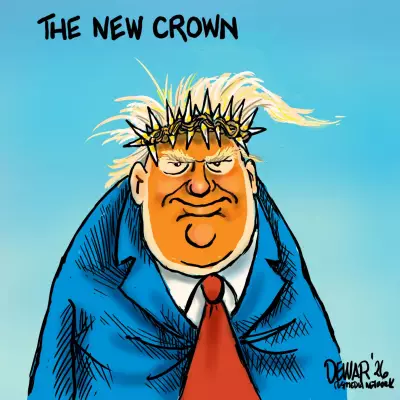
This perspective deserves particular scrutiny given recent provocative statements by former President Donald Trump, which have understandably unsettled allies and markets. However, as analysts note, confusing episodic political rhetoric with structural reality represents a strategic error. The Canada-United States relationship transcends any single administration, rooted instead in:

- Geographical inevitability and proximity
- Deeply integrated defense arrangements
- Continental supply chains and economic interdependence
- Shared strategic interests that will persist across multiple presidencies
Carney's speech speaks of great power coercion in general terms while avoiding clear distinctions between adversaries, competitors, and allies. This ambiguity, combined with the undercurrent of hedging against American influence, creates uncertainty about Canada's strategic priorities at precisely the moment when clarity matters most in global affairs.
The polished eloquence of Carney's Davos performance cannot mask the substantive questions it raises about Canada's foreign policy direction. As global power dynamics shift and traditional alliances face new pressures, Canada's leadership must balance rhetorical sophistication with strategic clarity that unambiguously defends democratic values and national interests.