Prime Minister Carney Declares U.S. Relationship a Strategic 'Weakness'
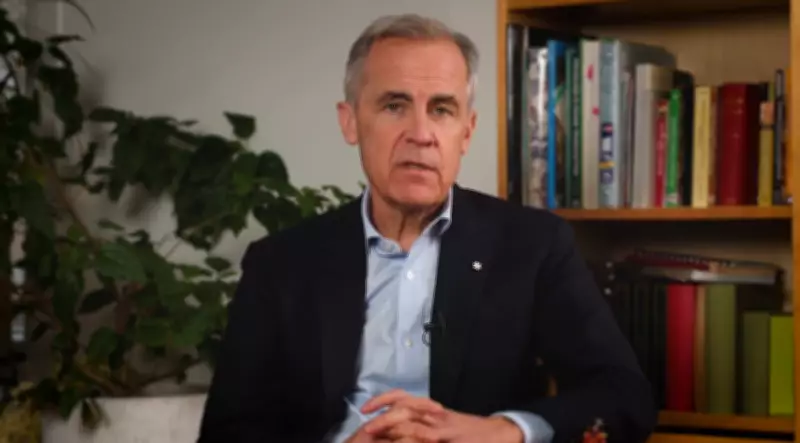
In a striking and direct national address, Prime Minister Mark Carney has fundamentally recast Canada's long-standing alliance with the United States, labeling it a critical 'weakness' that demands immediate strategic correction. The declaration, delivered against the backdrop of the ongoing Trump presidency, signals a profound shift in Canadian foreign policy thinking at the highest levels of government.
A Historic Reframing of the Bilateral Relationship
The Prime Minister's remarks represent a historic departure from decades of diplomatic rhetoric that has consistently celebrated the special relationship between the two North American neighbors. Carney argued that over-reliance on the United States has created vulnerabilities for Canada's economic security and political sovereignty. He emphasized that the current geopolitical climate, shaped by the policies of the Trump administration, necessitates a bold and independent course for Canada.
The address focused on several key areas of concern:

- Economic Dependency: Carney highlighted Canada's disproportionate trade reliance on the U.S. market as a primary risk factor, leaving the national economy exposed to American political and policy shifts.
- Energy and Resource Security: The integrated energy grid and resource supply chains were cited as examples of interdependence that could be leveraged against Canadian interests.
- Defense and Foreign Policy Alignment: The Prime Minister suggested that automatic alignment with U.S. foreign policy objectives may no longer serve Canada's distinct national interests on the global stage.
The Urgent Call for Strategic Diversification
Moving beyond critique, Prime Minister Carney outlined a framework for urgent corrective action. The core of his message was a call for strategic diversification—reducing dependency by strengthening ties with other global partners and bolstering domestic capabilities.
Key pillars of the proposed correction include:
- Accelerating trade agreements with Asian and European Union partners to create alternative markets for Canadian goods and services.
- Investing in sovereign capabilities in critical sectors like technology, energy, and advanced manufacturing to reduce supply chain vulnerabilities.
- Re-evaluating defense and security cooperation frameworks to ensure they are reciprocal and explicitly serve Canadian sovereignty.
The Prime Minister framed this not as a move toward isolationism, but as a necessary step toward a more mature, resilient, and self-reliant Canada. He acknowledged the deep historical, cultural, and economic ties with the United States but insisted that a relationship must be a strength, not a liability. The address concluded with a commitment to present a detailed policy roadmap to Parliament in the coming weeks, leveraging the governing party's new majority to enact what he termed a 'sovereignty and security reset.'
This landmark speech is expected to trigger intense debate within political, business, and diplomatic circles, redefining a cornerstone of Canadian international relations for the foreseeable future.