Canada's Deliberate Pause on Trump's Global Peace Initiative
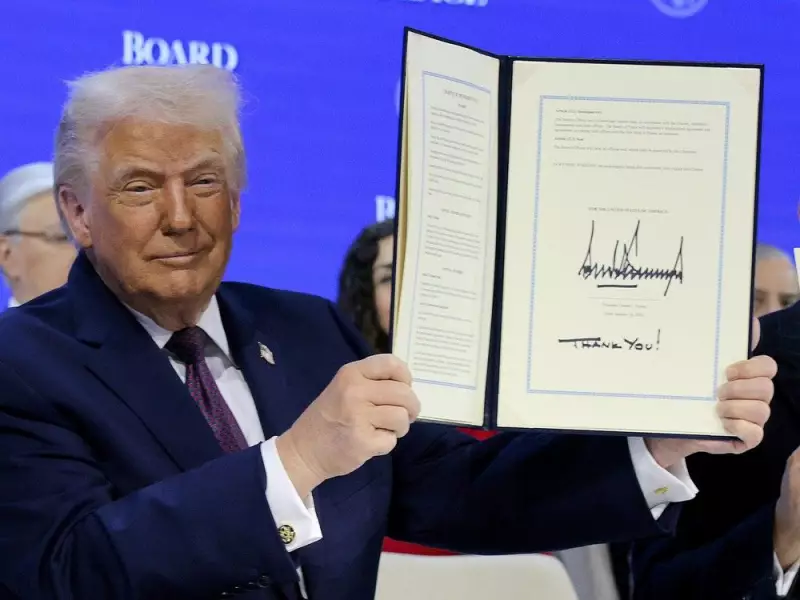
As U.S. President Donald Trump formally inaugurated his ambitious "Board of Peace" during a high-profile signing ceremony at the World Economic Forum in Davos, Switzerland, one notable absence stood out: Canada's Prime Minister Mark Carney. The Canadian leader had already departed the annual gathering when Trump unveiled his new global endeavor, leaving Ottawa's position on the matter deliberately unresolved.
The Expanding Mandate of Trump's Peace Initiative
Originally conceived in September as part of phase two of Trump's peace plan for Gaza, the Board of Peace was initially designed to oversee governance, reconstruction, and economic recovery in the region following the Israel-Hamas conflict. However, recent developments have revealed a significant expansion of the board's scope beyond its Middle Eastern origins.
A draft of the founding charter, examined by multiple media outlets including The Times of Israel, conspicuously omits any mention of Gaza while broadening the organization's mandate to global proportions. The document describes the Board of Peace as "an international organization that seeks to promote stability, restore dependable and lawful governance, and secure enduring peace in areas affected or threatened by conflict."

Canada's Conditional Acceptance
Canada was among approximately sixty nations invited to become founding members of the initiative late last week. While Carney indicated over the weekend that he had accepted a seat "in principle" following his widely discussed WEF speech on Tuesday, he established clear conditions for Canada's continued involvement.
"We are still not where we need to be, so that needs to come onside," Carney stated, emphasizing that Canada's participation remains contingent upon ensuring "the full flow of humanitarian aid into Gaza." The National Post has reached out to the Prime Minister's Office for additional commentary following the formal signing ceremony.
Controversial Structural Elements
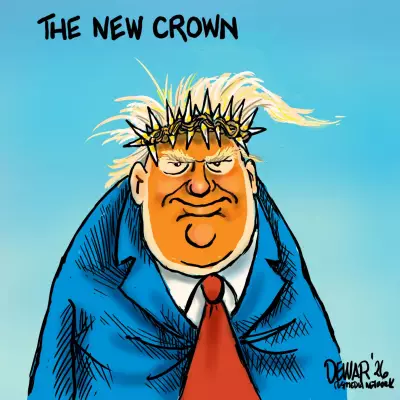
The board's founding charter introduces several contentious provisions that have raised eyebrows among international observers. Member nations are required to either commit to three-year terms or contribute US$1 billion for permanent membership status. Perhaps most significantly, the document grants the chairman—a position Trump has claimed indefinitely—near absolute decision-making authority.
"Once this board is completely formed, we can do pretty much whatever in conjunction with the United Nations. You know, I've always said the United Nations has got tremendous potential," Trump remarked during the launch event.
International Response and Participation
As of Thursday's signing ceremony, approximately two dozen invited nations have agreed to join the initiative. Notable participants included Argentine President Javier Milei and Hungarian Prime Minister Viktor Orban, both longstanding supporters of the U.S. president. Also present were Armenian Prime Minister Nikol Pashinyan and Azerbaijani President Ilham Aliyev, whose nations recently reached a Trump-brokered peace agreement in August.
Other confirmed participants include Bahrain, Morocco, Bulgaria, Pakistan, Saudi Arabia, Egypt, Qatar, Kosovo, Paraguay, Kazakhstan, Mongolia, Vietnam, Indonesia, Turkey, Jordan, the United Arab Emirates, and Uzbekistan. U.S. Secretary of State Marco Rubio, a member of the founding executive board, characterized the initiative as a "board of action," while Press Secretary Karoline Leavitt declared that "the charter is now in full force, and the board of peace is now an official international organization."
United Nations' Qualified Support
The United Nations Security Council initially endorsed the board's original mandate focused on Gaza. However, following the expansion of its proposed role to global dimensions, a UN spokesperson clarified that the organization had only granted authority for Gaza-specific efforts, as reported by Bloomberg. This distinction highlights the potential for jurisdictional overlap and conflicting mandates between established international bodies and Trump's new initiative.

Canada's cautious approach reflects broader concerns among some key allies about the board's expanded scope and governance structure. As the initiative moves forward without Canadian commitment, Ottawa continues to monitor developments while maintaining its position that humanitarian considerations in Gaza must be addressed before formal participation can be considered.