Canada's Indo-Pacific Strategy Shift: Pragmatism Over Principles Under Carney
Canada's Indo-Pacific Strategy, once heralded as a framework to "seize opportunities in the national interest of Canadians, while defending the values they hold dear," appears to have been largely abandoned in favor of pragmatic realpolitik. As Prime Minister Mark Carney concludes a trade mission to India and moves on to Australia, the shift toward doing business with nations whose values may not align with Canada's has become increasingly evident.
The China Conundrum: From Disruptive Power to Strategic Partner
Exhibit A in this strategic pivot is China. In 2022, the Indo-Pacific Strategy described China as "an increasingly disruptive global power" that disregards international norms. By 2026, this assessment remains unchanged, yet Canada has dramatically shifted its approach. Beijing has capitalized on aggressive and unpredictable behavior from the United States, which has imposed tariffs and engaged in military actions with relative impunity over the past year.
Faced with this geopolitical reality, Carney declared at the World Economic Forum in Davos that Canada aims to be "both principled and pragmatic—principled in our commitment to fundamental values ... and pragmatic ... that not every partner will share all of our values."

This rhetoric was followed by action when Carney announced a "strategic partnership" with China during a high-profile visit to Beijing. The Chinese government agreed to suspend damaging agricultural tariffs on Canadian canola meal, peas, lobster, and crab effective March 1. In return, Canada dropped its 100 percent tariff on Chinese electric vehicles, allowing imports of up to 49,000 Chinese EVs at a most-favored-nation tariff rate of 6.1 percent.
The India Equation: Shared Values with Complications
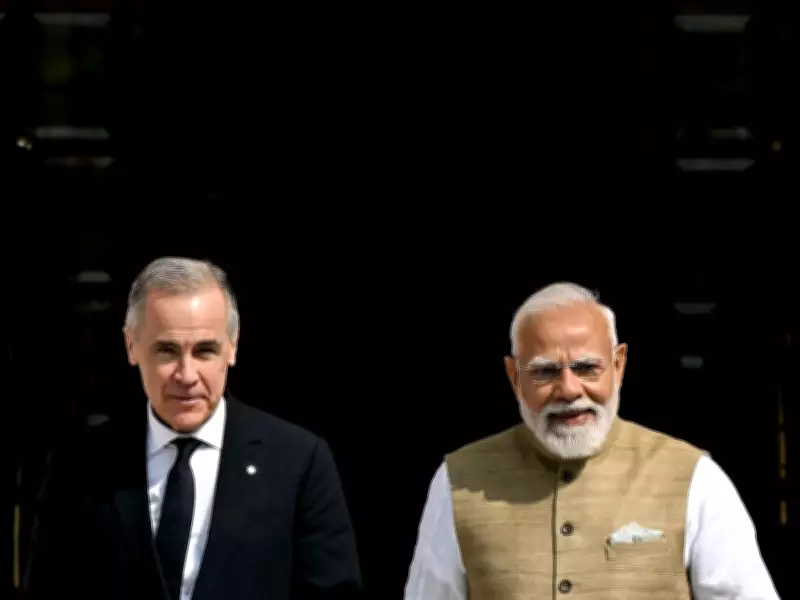
Now comes Exhibit B: India. This week, Carney announced a substantial $2.6-billion uranium supply deal and the possibility of a free trade agreement by year-end following successful meetings with Prime Minister Narendra Modi in New Delhi. The visit also yielded new opportunities for Indian students, whose numbers had plummeted following Canada's restrictions on student visas and temporary workers.
There is no question that Canada shares more common values with India than with China, including respect for democracy and the rule of law. When selecting a key partner in the Indo-Pacific region, India naturally emerges as the preferable choice. However, this does not mean India has been without its controversies regarding Canadian principles.
Canada's relationship with India famously deteriorated in 2023 over accusations that agents of Modi's government may have been involved in the murder of a Sikh separatist on Canadian soil. In 2026, fresh allegations of similar foreign interference surfaced just before Carney's departure for New Delhi. When questioned about these concerns, an unnamed senior Canadian official asserted that "If we believed that the government of India was actively interfering in the Canadian democratic process, we probably would not be taking this trip."
The Broader Implications: Foreign Interference from Friends and Foes
The current situation highlights a challenging reality: foreign interference is being practiced by both adversaries and allies. While Canada's Indo-Pacific Strategy initially positioned the country to navigate these waters with clear principles, the practical demands of global trade and diplomacy have necessitated a more flexible approach.
Carney's administration appears to be walking a tightrope between maintaining Canada's stated values and securing economic advantages in an increasingly complex international landscape. The uranium deal with India and the agricultural concessions from China represent significant economic opportunities, yet they come with political compromises that raise questions about consistency in foreign policy.
As Canada continues to navigate relationships with major powers in the Indo-Pacific region, the tension between pragmatism and principles will likely remain a defining feature of its foreign policy. The original vision of the Indo-Pacific Strategy—balancing opportunity with values—has given way to a more nuanced reality where economic imperatives often take precedence over ideological alignment.