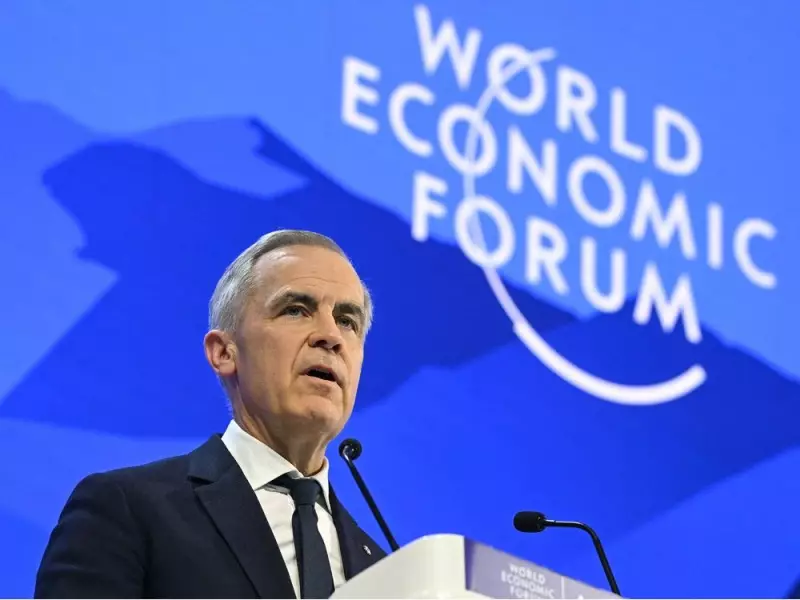
Canada's Diplomatic Golden Age Unlikely to Return Despite Prime Minister's Davos Vision
Foreign policy analysts are expressing skepticism about the possibility of Canada returning to what many describe as its "golden age" of diplomacy, despite Prime Minister Mark Carney's recent call for middle-power collaboration on the global stage. This assessment comes in response to Carney's high-profile speech at the World Economic Forum in Davos, Switzerland, where he declared a fundamental rupture in the international order.
A Stark Declaration at Davos
Speaking before global elites and influencers on January 20, 2026, Prime Minister Mark Carney delivered a sobering message about the current state of international affairs. He characterized the shift in global dynamics not as a mere transition but as a profound rupture that has permanently altered the world order that has prevailed for the past eight decades.
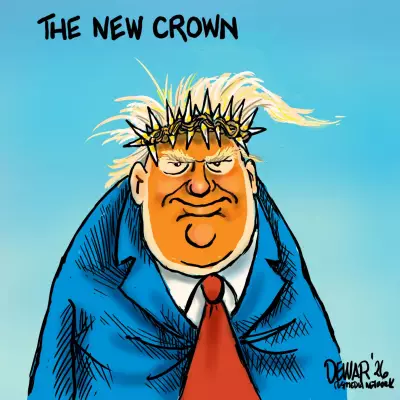
"The rules-based international order is gone and not returning any time soon," Carney told the assembled audience, capturing global attention with his frank assessment. Without specifically naming countries, the Canadian leader suggested that the United States could no longer be counted on to lead democratic alliances or uphold the international rules it helped establish.

The Middle-Power Proposal
In response to this transformed landscape, Carney proposed what he described as a "starter kit" for collective resistance to the emerging world order. His central argument focused on the need for middle powers like Canada to collaborate more effectively, working together to counterbalance superpower dominance and reform key international institutions.
While this approach might seem innovative in today's geopolitical environment, it actually echoes strategies from Canada's diplomatic past. Many international affairs specialists refer to the period from the end of the Second World War through the mid-1960s as "the golden era of Canadian foreign policy," when Ottawa successfully leveraged its position as an honest broker between major powers.
Experts Highlight Fundamental Differences
Foreign policy specialists caution against drawing direct parallels between these two eras, noting significant differences that make a return to Canada's former diplomatic prominence highly unlikely. According to Fen Hampson, a foreign affairs specialist at Carleton University in Ottawa, the most crucial distinction lies in Canada's changed relationship with the United States.
"The golden age was very different," explained Hampson, who also serves as co-chair of the Expert Group on Canada-U.S. Relations at Carleton. "We're not in the middle—we're on the menu." This stark metaphor captures the vulnerability many analysts perceive in Canada's current international position compared to its post-war standing.
The Post-War Diplomatic Landscape
The so-called golden era represented a unique convergence of circumstances that favored Canadian diplomacy. During this approximately two-decade period following World War II, North America enjoyed unprecedented prosperity that made it the envy of the world. Life for millions on the continent appeared to be on a constant upward trajectory, while much of the globe operated under American leadership.
This geopolitical arrangement provided Canada with significant international leverage and prestige. Ottawa skillfully used its special relationship with the United States to advance its political, economic, and security interests while selectively acting as a mediator between Washington and other nations, particularly European powers. The era reached its diplomatic zenith in 1957 when then Foreign Affairs Minister Lester B. Pearson received the Nobel Peace Prize for his role in resolving the Suez Crisis and establishing the first United Nations peacekeeping force.
Contemporary Challenges to Middle-Power Diplomacy
Today's global environment presents fundamentally different challenges for Canadian diplomacy. The bipolar superpower dynamic that characterized the Cold War era has given way to more complex multipolar arrangements. Additionally, Canada's relationship with the United States has evolved significantly, with Ottawa no longer enjoying the same privileged access or influence it once did.

While Carney's Davos speech correctly identifies the need for middle-power collaboration in the face of shifting global dynamics, specialists argue that the specific conditions that enabled Canada's golden age of diplomacy no longer exist. The country faces the difficult task of navigating a more fragmented international system without the same strategic advantages it possessed during the post-war period.
As Canada contemplates its role in this transformed world order, foreign policy analysts emphasize that successful diplomacy will require innovative approaches rather than attempts to recreate past strategies. The country must develop new tools and partnerships to advance its interests in an international landscape that has fundamentally changed since its diplomatic golden age.