Canadian Lawmakers and Rights Advocates Demand Stronger Action Against Iran
Members of Parliament and prominent human rights activists are calling on the Canadian government to implement more robust measures against the Islamic Republic of Iran. Their demands include sanctioning Supreme Leader Ayatollah Khamenei and intensifying criminal investigations into individuals responsible for human rights violations.
Growing Pressure for Concrete Sanctions
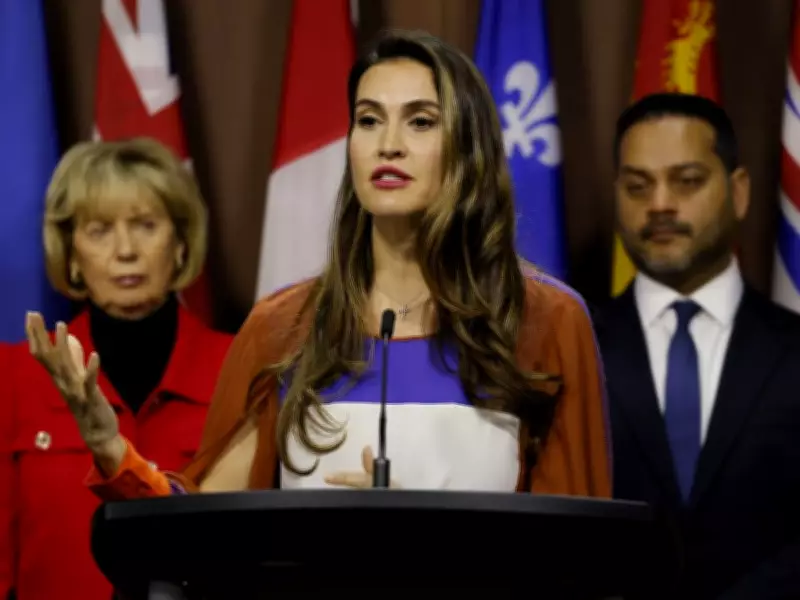
Brandon Silver, director of policy and projects at the Raoul Wallenberg Centre for Human Rights, emphasized the need for accountability. "We need to name and shame the perpetrators," Silver stated during a press conference on Parliament Hill in Ottawa. "It stands out that the architect of all of this repression, Ayatollah Khamenei, is not on Canada's sanctions list."
The call to action follows a severe crackdown by Iranian authorities against widespread anti-government protests this month, which has resulted in thousands of Iranian casualties. Activists argue that mere statements are insufficient and that tangible actions are required to support the Iranian people.

Broad Coalition of Support
Silver was joined by a diverse group of Canadian officials and activists, including:
- Conservative MP Shuvaloy Majumdar
- Liberal MP Judy Sgro
- Independent Senator Julie Miville-Dechêne
- Iranian-Canadian human rights activist Nazanin Afshin-Jam MacKay
This coalition is urging Canada to encourage its allies to designate the Islamic Revolutionary Guard Corps (IRGC) as a terrorist entity officially. They also advocate for advancing investigations into perpetrators of crimes and human rights abuses committed in Iran.
Demands for Structural Investigations
Silver elaborated on what these investigations would entail, suggesting a "structural investigation" where the RCMP would compile evidence against Canadian residents involved in war crimes and atrocities. This approach aims to move beyond symbolic gestures to concrete legal actions.
Afshin-Jam MacKay echoed this sentiment, stating, "We must go beyond issuing statements, we must act. This means supporting independent international investigations and treating the Islamic Revolutionary Guard Corps as a terrorist organization in practice, not just in name."
Current Canadian Sanctions and Enforcement Challenges
Canada has already severed diplomatic ties with Iran since 2012 and has sanctioned 210 Iranian individuals and 254 entities. In 2024, the Canadian government listed the IRGC as a terrorist group under the Criminal Code. However, enforcement has been limited, with only one deportation resulting from this designation so far.
Afshin-Jam MacKay expressed frustration within the Iranian-Canadian community regarding the lack of prosecution. "It is very frustrating as Iranians to be walking the streets and see our oppressors alongside us and having no real tools to put them behind bars, even though we've reported many of them," she said. She described encountering these individuals in everyday settings, noting their lavish lifestyles while many in Iran struggle economically.
International Context and Broader Implications
The European Union recently agreed to list the IRGC as a terrorist group, though the United Kingdom has yet to commit. Meanwhile, U.S. President Donald Trump has not ruled out military action in Iran, deploying military assets to the region. Iran's supreme leader has warned of broader conflict if the U.S. decides to strike.
Majumdar framed the situation as a pivotal moment, comparing it to the fall of the Berlin Wall. "This is a moment, perhaps as significant as the Berlin Wall falling itself," he remarked. "Can you imagine for a moment what a world of peace might look like if we listen to the call of the Iranian people, of whom tens of thousands have now been brutally massacred."
Sgro acknowledged ongoing efforts in tracking individuals for deportation and active court cases but conceded that more work is necessary to achieve justice.