Global Nations Forge Closer Ties with China Amid U.S. Political Uncertainty
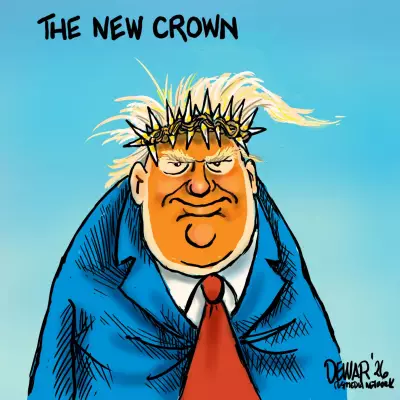
In a significant geopolitical shift, Canada, the United Kingdom, South Korea, and several other nations are actively cultivating warmer relationships with Chinese leadership. This strategic realignment serves as a calculated hedge against the unpredictable nature of the Trump administration's foreign policy approach. The move represents a delicate balancing act for these countries as they navigate complex international dynamics.
Economic Pressures and Strategic Calculations
U.S. President Donald Trump has recently threatened retaliatory tariffs, specifically identifying Canada as what he calls a "pressure-relief valve" for Chinese industrial overcapacity entering American markets. This economic pressure creates a challenging environment for traditional U.S. allies who must now carefully weigh their diplomatic and economic options. The Chinese Communist Party's ultimate objectives in these expanding relationships remain somewhat opaque, adding another layer of complexity to international relations.
Expert Insights on Chinese Influence Operations
To better understand these developments, we consulted China-watcher and Canadian journalist Cleo Paskal, who specializes in reporting from remote global locations where Chinese and American interests intersect. Paskal recently provided expert testimony before the U.K. House of Lords regarding the British decision to return the Chagos Islands to Mauritius.

"I think they were expecting me to say it's a bad idea because of Chinese influence in Mauritius," Paskal revealed about her parliamentary testimony. "What I actually said was it's a bad idea because of Chinese influence in the U.K. itself." This perspective highlights how Chinese influence operations extend beyond direct territorial acquisitions to more subtle forms of political and economic engagement.
The U.K.-China Relationship Deepens
Paskal noted that U.K. Prime Minister Keir Starmer's recent three-day visit to China was particularly significant. "I don't think it's coincidental," she observed, pointing out that preceding this diplomatic mission, the British government "approved this massive Chinese embassy in London, situated in a highly strategic location." This development suggests a deliberate strengthening of bilateral ties between the U.K. and China.
Strategic Competition in the Pacific
During an interview conducted while Paskal was traveling through the Pacific region, she provided insights into Chinese operational methods. She was en route to Yap, a small island in the Federated States of Micronesia that holds significant strategic importance. "Yap is in a highly strategic location on the second island chain between Guam and Palau," Paskal explained.
The island has become a focal point for U.S.-China competition, with U.S. Defense Secretary Pete Hegseth announcing approximately $2 billion in infrastructure investments for an island with only 5,000 inhabitants. Meanwhile, Paskal was traveling to witness the handover of a former Imperial Japanese runway in Yap State, recently rehabilitated by Chinese interests, to the local government.
Divergent Approaches to International Engagement
Paskal highlighted the fundamental differences between American and Chinese approaches to international engagement. "In Yap, the U.S. is legally required to defend these locations through the Compacts of Free Association, but the U.S. definition of defense is very narrow—it's kinetic defense," she explained. "The Chinese unrestricted warfare approach is much more societally comprehensive: it involves establishing Chinese shops, running hospitals, and similar community-level engagements."
This comprehensive approach to influence represents what experts describe as China's "unrestricted warfare" strategy, which extends beyond traditional military considerations to encompass economic, social, and cultural dimensions of international relations.
Navigating a Complex Geopolitical Landscape
As nations like Canada, the U.K., and South Korea deepen their engagement with China, they must carefully balance multiple competing interests. The unpredictable nature of U.S. foreign policy under the Trump administration creates additional complications for traditional American allies seeking to maintain stable international relationships.

Paskal's extensive fieldwork provides valuable perspective on these developments. "When you've been reporting on this for a while," she noted, "you can feel where something's going to blow up, or has the potential to go wrong." This expert insight underscores the delicate nature of current geopolitical realignments and the careful calculations nations must make in their foreign policy decisions.
The evolving relationships between Western nations and China will likely continue to develop as global powers adjust to shifting political and economic realities. How countries navigate these complex dynamics will significantly influence international relations in the coming years.