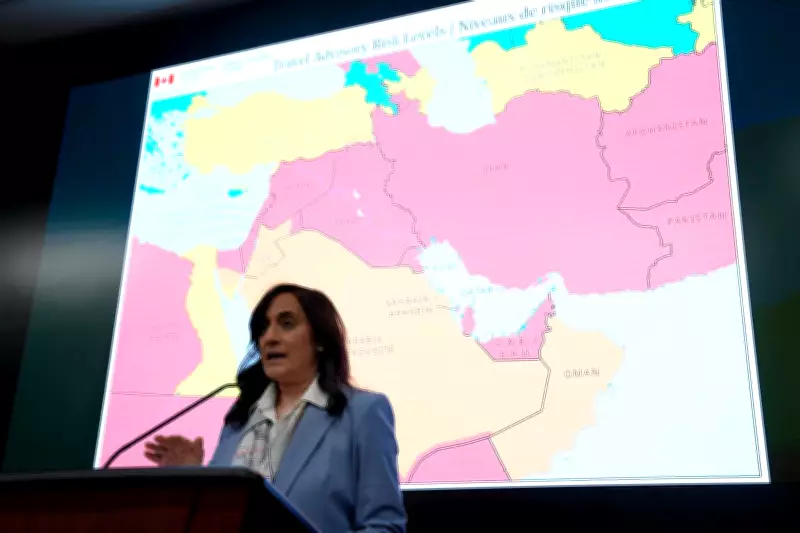
Foreign Affairs Minister Mélanie Joly Anand has publicly affirmed that the Canadian government is diligently exploring and implementing various strategies to facilitate the safe departure of Canadian nationals from volatile regions in the Middle East, as military tensions continue to escalate. This announcement comes during a period of heightened global concern over the expanding conflict zone, which has already impacted international travel and security protocols.
Government Mobilizes Resources for Citizen Safety
In a detailed statement, Minister Anand emphasized that the safety and security of Canadians abroad remain the top priority for the federal administration. "We are pursuing all available options to ensure that any Canadian citizen wishing to leave the affected areas can do so safely and efficiently," Anand stated. The government is coordinating with international partners, local authorities, and diplomatic missions to establish viable exit routes, which may include organized evacuations, assisted travel arrangements, and enhanced consular support for those in distress.
NATO's Strategic Pivot to the Arctic
Concurrently, Minister Anand highlighted the necessity for NATO to reorient its strategic focus towards the Arctic region, citing emerging security challenges and geopolitical shifts. "As global dynamics evolve, it is imperative that NATO turns its attention to the North, where Canada's sovereignty and environmental interests are increasingly at stake," she remarked. This call for a renewed Arctic focus aligns with Canada's broader defense and foreign policy objectives, aiming to bolster surveillance, infrastructure, and cooperative security measures in the rapidly changing polar landscape.

Broader Implications for Canadian Foreign Policy
The dual emphasis on Middle East evacuations and Arctic security underscores a proactive and multifaceted approach to Canada's international engagements. Analysts suggest that these efforts reflect an adaptive strategy to manage complex global crises while safeguarding national interests. The government's actions are being closely monitored, as successful evacuations could enhance Canada's reputation for citizen protection abroad, whereas the NATO advocacy may strengthen its leadership role in circumpolar affairs.
As the situation develops, officials urge Canadians in the conflict zone to register with Global Affairs Canada and stay informed through official channels. Further updates on evacuation procedures and NATO discussions are expected in the coming days, with the government pledging transparency and swift action in response to evolving circumstances.