Cambodian Leader Alleges Thai Occupation After U.S.-Mediated Ceasefire
Cambodian Prime Minister Hun Manet has publicly accused Thailand of occupying Cambodian territory, a claim that follows a ceasefire agreement brokered by former United States President Donald Trump. This statement marks a significant escalation in long-standing border tensions between the two Southeast Asian nations, raising concerns about regional stability.
Background of the Dispute
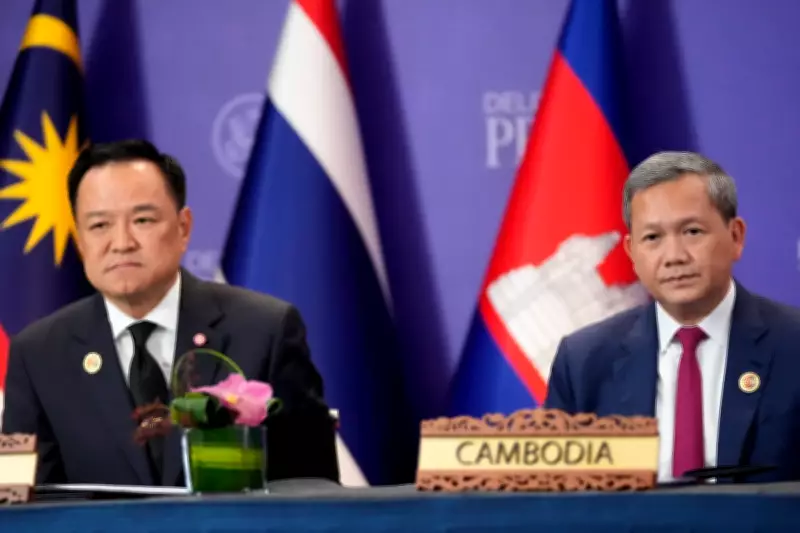
The territorial conflict between Cambodia and Thailand centers on areas near the Preah Vihear temple, a UNESCO World Heritage site. Disputes over this border region have periodically flared into military skirmishes over the past decades. In 2025, former President Trump intervened diplomatically to facilitate a ceasefire during the ASEAN Summit in Kuala Lumpur, Malaysia, where leaders from both countries were photographed at a signing ceremony.
Prime Minister Hun Manet, who succeeded his father Hun Sen, has now asserted that Thailand has failed to adhere to the terms of that agreement, effectively occupying Cambodian land. This accusation comes amid broader geopolitical shifts and increasing great-power competition in the region.

Regional and International Implications
The allegation has immediate implications for the Association of Southeast Asian Nations (ASEAN), which prioritizes consensus and non-interference. A public dispute of this nature challenges the bloc's unity and could complicate ongoing diplomatic efforts. Analysts suggest that Cambodia's stance may be influenced by its deepening ties with China, while Thailand maintains closer relationships with Western powers.
International observers are closely monitoring the situation, as any military mobilization could destabilize not only the bilateral relationship but also affect trade routes and security dynamics in the Mekong subregion. The involvement of a former U.S. president in the ceasefire adds a layer of complexity, highlighting the enduring role of external actors in regional conflicts.
Historical Context and Recent Developments
The Preah Vihear temple dispute has its roots in colonial-era border demarcations. The International Court of Justice awarded the temple to Cambodia in 1962, but surrounding areas remain contested. Periodic clashes have occurred, most notably in 2008 and 2011, resulting in casualties on both sides.
Recent developments include:
- Increased military patrols along the disputed border by both nations.
- Diplomatic communications through ASEAN channels urging restraint.
- Statements from Cambodian officials emphasizing sovereignty and territorial integrity.
The current accusation by Prime Minister Hun Manet suggests that the Trump-brokered ceasefire, intended to de-escalate tensions, may have only provided a temporary respite. The Cambodian government has not detailed specific actions it will take in response, but the rhetoric indicates a hardening position that could lead to renewed diplomatic or even military confrontations.
This situation underscores the fragile nature of peace in regions with unresolved historical grievances and the challenges of enforcing international agreements without robust monitoring mechanisms. The coming weeks will be critical in determining whether dialogue can prevail or if the region faces another cycle of tension.