Conrad Black Dismisses Carney's Middle Powers Proposal as Unrealistic Fantasy
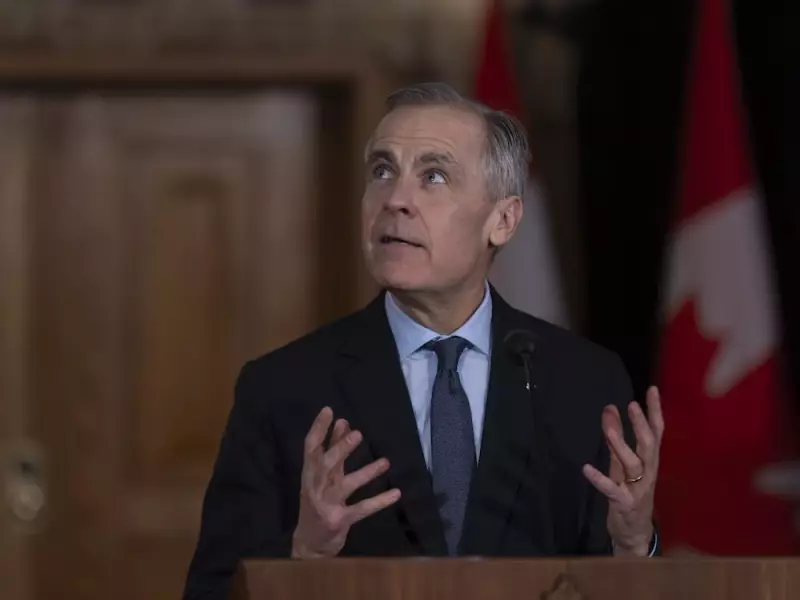
Prime Minister Marc Carney's recent address at the World Economic Forum in Davos has drawn sharp criticism from commentator Conrad Black, who characterizes the leader's vision for a coalition of middle powers as "a complete fantasy" detached from geopolitical realities.
Questioning the Rules-Based International Order
While Carney spoke purposefully about adopting more nationalistic policies for Canada, his simultaneous call for middle powers to unite and influence superpowers toward establishing what he termed a "rules-based international order" struck Black as particularly unconvincing. The commentator argues this concept has always been fundamentally flawed, relying almost entirely on American military and economic power for enforcement rather than any genuine international consensus.
Black traces the historical context, noting that the Western Alliance established in 1949 successfully contained the Soviet Union until its disintegration in 1991. Since then, he observes a gradual shift from collective security to national interest-based foreign policies across NATO countries and other regional blocs, none of which have effectively mobilized combined influence on international affairs.

The Reality of Superpower Dynamics
"Superpowers don't care about middle powers as long as other superpowers don't invade them," Black asserts bluntly. He characterizes Carney's approach as effectively wagging a finger at the United States while Canada and European allies have historically sheltered under American military protection.
The commentary paints a picture of NATO degenerating into what Black calls "an alliance of the willing" where the United States guarantees security while other members selectively choose which initiatives to support. This arrangement, he contends, represents not a rules-based order but rather the dominance of a benign superpower surrounded by freeloading coattail-riders.
Historical Precedents and Current Realities
Black examines the Cold War era, noting how the United States implemented containment policies against the Soviet Union while President Nixon exploited the Sino-Soviet split through strategic triangulation. When the Soviet Union collapsed, America didn't exploit its position as the world's sole superpower, while China embraced capitalist economic growth while retaining communist political structures.
The commentator takes particular issue with Carney's characterization of current international developments as a "rupture," arguing instead that what's occurring represents an adjustment. He contrasts the serious contributions of leaders like de Gaulle, Mitterrand, Adenauer, Kohl, Thatcher, and Mulroney during the Soviet threat with what he describes as NATO's transformation into "a low-rise house of cards" in recent decades.
Reassessing Canada's Global Position
Black challenges Carney's description of Canada as a middle power, arguing this characterization might have been reasonable when John Diefenbaker used it at the United Nations in 1962 but no longer reflects reality. Today, Canada stands as:
- A G-7 member nation
- One of the world's 10 or 11 largest economies
- Among the planet's five most resource-rich countries
- Home to 41 million people in a world of nearly 200 nations
"We are one of the world's 10 to 15 most important countries and need not belittle ourselves with unctuous self-deprecation," Black concludes, suggesting Canada should recognize its substantial global standing rather than diminishing its position through what he views as unrealistic diplomatic fantasies.
The analysis presents a stark contrast between Carney's vision of middle powers collaboration and Black's perspective grounded in historical power dynamics and what he sees as Canada's underestimated global significance.