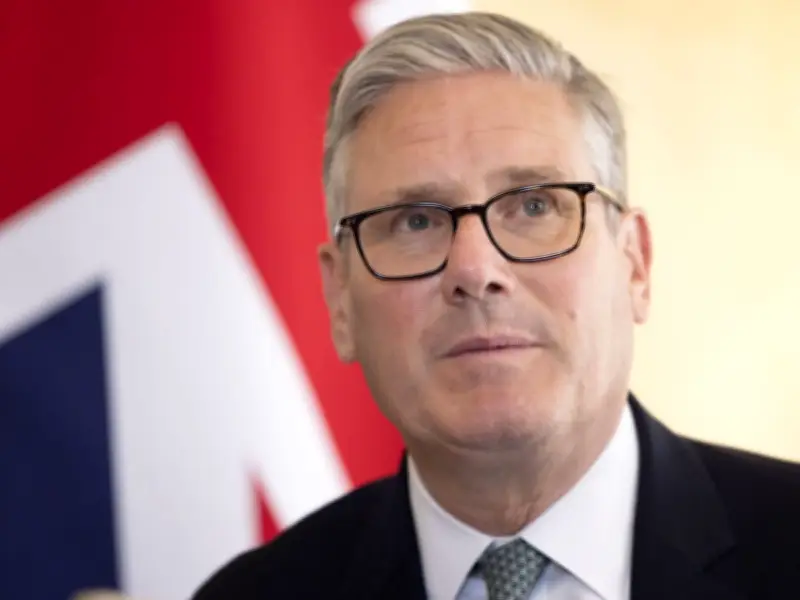
In the U.K. general election two years ago, Sir Keir Starmer led Labour back to power with 411 out of 650 seats in the House of Commons — 63 per cent of the seats though with only 33.7 per cent of the popular vote. Now he’s done. What happened?
One theory is that he managed his parliamentary caucus poorly. Some Labour MPs say he didn’t know their name — though with more than 400 of them, it’s understandable. If he met each of his MPs for five minutes every month, that’s almost three working days gone. And he still had Donald Trump, Vladimir Putin, and Mark Carney to deal with.
Starmer's U-turn problem
Following British politics through conservative lenses like the Telegraph and Spectator, the impression is that Starmer’s problem was way too many U-turns. Margaret Thatcher remains the most consequential British prime minister of the past half-century. One of her best-known phrases came from her 1980 Conservative Party conference speech: “To those waiting with bated breath for that favourite media catchphrase, the ‘U’ turn, I have only one thing to say, ‘You turn if you want to. The lady’s not for turning.’” The speech got a six-minute ovation.

Today’s U.K. Conservative Party has a webpage dedicated to Keir Starmer’s 25 supposed U-turns. Google AI says only 14. But several high-profile reversals early on gave Starmer a reputation for being turned far too easily.
Examples of Starmer's reversals
Starmer and his Chancellor Rachel Reeves began by income-testing winter fuel supplements for pensioners, giving them only to the poorest. It made policy sense but didn’t go over well with pensioners and lefty MPs, so they eventually relented. Same for capping full child benefits at the second child, and for very modest cuts to welfare payments. When parts of the Labour caucus rebelled, Starmer caved. A drawback of party politics is that measures that would likely win big majorities in a free vote of all MPs are hostage to influential minorities in the governing party’s caucus.
The value of flexibility
A little turning here or there is not such a bad thing. It may even create an impression of reasonableness. As Keynes supposedly asked: “When the facts change, I change my mind. What do you do, sir?” Margaret Thatcher did some turning herself, most importantly in her first confrontation with the miners. Her initial tactical withdrawal allowed her to build up coal stocks that helped her prevail second time round in a long, bitter strike that effectively broke the unions’ control of Britain’s labour market.
But Starmer-style turning and turning — “like a circle in a spiral, like a wheel within a wheel” — makes it look as if No. 10 Downing Street were on a large Lazy Susan. It suggests a PM who never knows the facts, doesn’t think through political implications, won’t fight for his convictions, or doesn’t have convictions at all — all charges laid against Starmer in recent weeks.
The danger of never turning
On the other hand, never turning can be a mistake, too. Margaret Thatcher refused to compromise on her “community charge” for local taxation, and it helped drive the caucus coup that eventually turfed her. The lesson for Mark Carney, who may enter politics, is that while U-turns can damage credibility, inflexibility can also lead to downfall. A balanced approach is essential.