White House Communications Director Lashes Out at Journalist's Career Move
White House communications director Steven Cheung launched a sharp attack on Tuesday against award-winning journalist and former CBS News reporter Scott MacFarlane for his decision to join progressive media company MeidasTouch. In a post on the social media platform X, Cheung wrote with evident frustration, "Every reporter who 'leaves' (more like fired from) their outlet always comes out as a deranged liberal. Every. Single. Damn. Time." He concluded his message by asserting, "Just goes to show how biased news media has become."
MacFarlane's Transition from CBS News to MeidasTouch
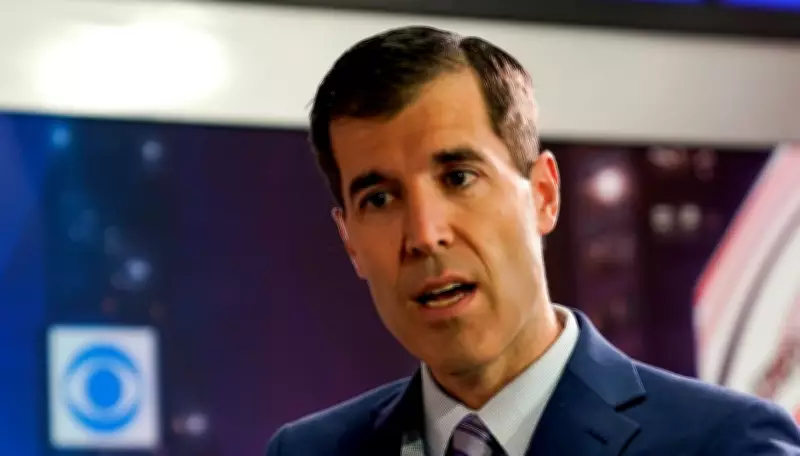
Scott MacFarlane departed from CBS News earlier this month, explicitly stating that the decision to leave was his own. This exit occurred against the backdrop of significant changes at the network, which has been undergoing a noticeable rightward shift and comprehensive staffing overhaul under the leadership of David Ellison. Ellison, who serves as the CEO of parent company Paramount Skydance, personally selected Bari Weiss as CBS's editor-in-chief, signaling a new editorial direction for the longstanding news organization.
On Monday, MeidasTouch officially announced MacFarlane's appointment to the position of chief Washington correspondent. The journalist himself shared the news enthusiastically on X, posting, "ALERT: Professional news. Nine days after leaving CBS, I have found a new professional home: Chief Washington Correspondent and Anchor for @MeidasTouch."

MacFarlane's Enthusiasm for His New Role
In a celebratory video message to his followers, MacFarlane expressed his alignment with MeidasTouch's journalistic philosophy. He emphasized, "We share the same North Star of communicating that when you have news to break or something important to explain, just get to it." The journalist elaborated on the significance of his move, stating, "It's important when we underscore how significant this moment is, this moment of unique political toxicity and unique political danger. And MeidasTouch and I have long shared this same philosophy."
MacFarlane further clarified his approach to reporting, declaring, "You don't platform lies, you don't platform conspiracy theories, and you don't allow for the whitewashing of history. We'll do that together." His comments reflect a commitment to factual, straightforward journalism in what he perceives as a particularly charged political climate.
Reactions from Political Figures and Media Leaders
The announcement prompted immediate reactions from various political quarters. White House press secretary Karoline Leavitt also commented on MacFarlane's new role, describing MeidasTouch as "far-left" in her social media post. Additionally, Federal Communications Commission Chair Brendan Carr offered a more neutral observation, remarking, "Same job, new duty station."
MacFarlane responded positively to Carr's characterization, noting, "I actually like that. It is the same job, and it is a new duty station, in the capital in both cases, but reporting for you from a different organization." This exchange highlights the continuity in MacFarlane's professional focus despite the change in employer.
Brett Meiselas, co-founder of MeidasTouch, addressed the criticisms from figures associated with former President Trump in an Instagram video. Meiselas asserted confidently, "Let's be honest, they wouldn't be attacking us if they weren't afraid. Because this, right here, is a major moment for independent media. They are scared of you. They are scared of people power." His statement frames the controversy as evidence of MeidasTouch's growing influence and the perceived threat it poses to established political narratives.
This incident underscores the ongoing tensions between media organizations and political operatives, particularly as journalists navigate career transitions in an increasingly polarized media landscape. The exchange between Cheung and MacFarlane serves as a vivid example of how such moves can become flashpoints in broader debates about media bias and journalistic integrity.