The second Trump administration has been an eventful era for American Catholics, as tensions between the Vatican and the White House continued to make headlines over disagreements about the war in Iran throughout the month of April.
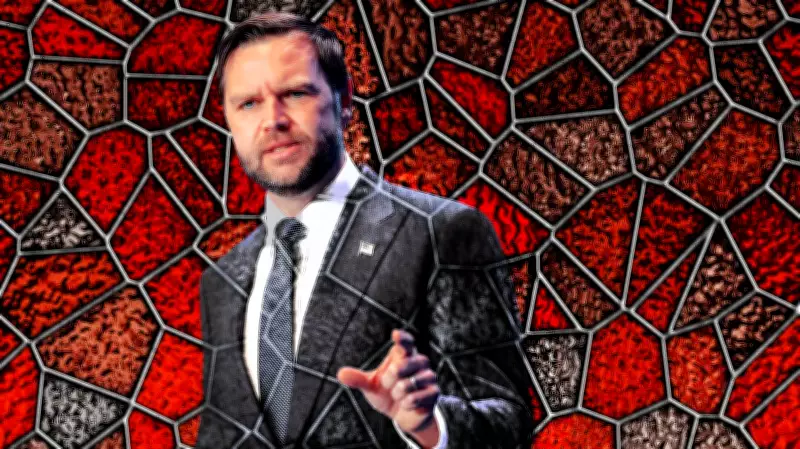
The squabbling came to a head earlier this month when, at a Turning Point USA event in Georgia, Vice President JD Vance, a Catholic, made a comment warning Pope Leo XIV that he should “be careful” talking about theology, also implying that the pope’s statements weren’t “anchored in the truth.”
“I think it’s very, very important for the pope to be careful when he talks about matters of theology,” Vance said, adding later, “If you’re going to opine on matters of theology, you’ve got to be careful, you’ve got to make sure it’s anchored in the truth.”

This came after Vance previously said, “It would be best for the Vatican to stick to matters of morality, to stick to matters of what’s going on in the Catholic church and let the president of the United States stick to dictating American public policy,” in response to the pope’s X post denouncing the war in Iran and calling for peace.
At that same TPUSA event, Vance seemingly attempted to out-theology the foremost authority on Catholic theology — with an uncomfortable twist. “When the pope says that God is never on the side of people who wield the sword, there is more than a 1,000-year tradition of just war theory,” Vance said, citing a foundational theory from Saint Augustine of Hippo.
“We can, of course, have disagreements about whether this or that conflict is just.”
One small problem? Vance, who became a Catholic in 2019 and has no formal education on religion, wasn’t just attempting to pope-splain this nuanced philosophical framework to the first American pope — but the first pope from the Augustinian order, one who quite literally wrote his doctoral thesis on St. Augustine’s ideas.
“Yes, he really said that,” James Martin, a Jesuit priest and founder of LGBTQ+ Catholic ministry Outreach, said in a statement on X. “...One of the many ironies about [Vance’s] statement is that it came in response to Pope Leo’s comments about war and peace and, specifically, the concept of ‘just war,’ which originated with St. Augustine. As many have already noted, when the Vice President was making his comments, Pope Leo XIV, a member of the Augustinian Order, and twice Prior General of the Augustinians before his election as pope, was visiting the hometown of St. Augustine, then called ‘Hippo,’ now in Annaba, a town in modern-day Algeria.”
Among the other “ironies” of these comments, Martin called Vance’s comments “a deadly combination of inaccuracy and hubris,” citing numerous church leaders who also disagree that the American war with Iran is a “just war under Catholic doctrine,” before concluding, “The Vice President doesn’t seem to understand the tenets of just war. Nor does he seem to understand the fundamental position of the church, which is for peace.”
If you’re cringing a little, you’re not alone. Catholics feel it, too.
Marianne Duddy-Burke, the executive director of DignityUSA, the oldest global organization dedicated to supporting queer Catholics, told HuffPost that it has been “very interesting time for the Catholic world, the faith world and politics.”
“Unfortunately, I feel like in the current era and the current administration in our country, we are really seeing an aspect of religion and aspects of Catholicism that are really being elevated in ways that kind of undermine the core values of our faith,” she said.
Among her circles, she has absolutely seen some degree of second-hand embarrassment, shame and frustration with Vance’s representation of the church’s teachings.
“The responses that we’ve gotten are everything from shame — a sense of shame at seeing our church, our faith, being depicted in this kind of language — to just ‘this the most ridiculous thing I’ve seen,’” Duddy-Burke said. “It’s very troubling that Catholicism and religion in general are being used to prop up militarism and hierarchialism.”

“To say that God favors some over others, core values of most faiths — including my own Catholicism — are disregarded: the respect for human dignity, care for the earth, and the common good,” she said.
Emily Harrison, senior director of digital organizing and engagement at Catholics for Choice, told HuffPost that she’s seen members of their community “rightfully and righteously troubled by this distortion of our faith.”
“Catholic social teaching is clear, and Pope Leo’s comments have not wavered from those seven core principles of our faith,” Harrison noted. “To try to argue that the pope is not properly representing theology or the teachings of St. Augustine exposes a lack of understanding of the faith Vance so insistently claims as his own.”
“It’s embarrassing, yes, but it’s also concerning that he can so confidently and publicly debate against the teachings of Jesus, the Gospels and Catholic social teaching,” she said.
Other Catholics are quick to note that Vance’s comments are far from the Catholicism they know.
In her work at Catholics for Choice, Harrison said that she’s seen a ripple effect as Catholics past and present respond to Vance’s comments and take stock of how they differ from their own experience with the faith.
“Vance’s misrepresentation of our faith has been so blatant that it has also lit a fire in former or non-practicing Catholics across the country to return to and defend the teachings of the Catholic church,” she said. “These Catholics are coming out of retirement to advocate for the core teachings and priorities of the church, like defending human dignity, advocating for the rights of workers, protecting God’s creation, and putting the needs of the poor and vulnerable first.”
“These folks may not have been to Mass in decades, but they know that what they’re hearing from Vance is not aligned with the faith they were raised in,” she said.
Harrison also cautions that “Vance’s radical views represent a few extremists more aligned with white Christian nationalism than Catholic social teaching” and emphasized that orgs like hers work to represent “the majority of Catholics who are pro-choice, LGBTQIA+ affirming, and social justice-oriented.”
“Our organization, our advocates, and our community will not let hate and harm be spread in the name of our faith,” Harrison said.
Progressive Catholics also think the “convert” memes about Vance are funny — but hesitate to take them too seriously. Of course, there’s been much discourse about Catholic converts in the years since Vance began identifying as a Catholic. One viral tweet that is often cited in conversations about the vice president and faith jokes that there’s a dissonance between people who join the church as adults and those who are so-called “cradle Catholics.”
And the jokes of this variety have resurfaced in this public back-and-forth with the pope, naturally. As Duddy-Burke said of her conversations with fellow Catholics about the situation: “One person said, ‘He’s been a Catholic as long as my great niece who just made her first communion at the age of 7, you know?’”
However, Duddy-Burke cautions against taking this line of thinking beyond gentle ribbing, noting that while she “found that comment sort of funny, it also did raise that issue a historical and even current sense that only people who are born in Catholicism — or other faith traditions — have the right to really claim it. And I do struggle with that.”
“I think there is so much good-hearted and intentionally genuine seeking at this point,” she said, citing how despite a strong trend of institutional disaffiliation in the Catholic church and “across the religious spectrum,” there has been a renewed interest in the church.
“People are still trying to find spiritual homes and spiritual practices and teachings that are good for their lives,” she said. “So, in some ways, I really respect the folks who take a journey that moves them through various faith identities. And don’t want to diminish that. If we want to be a church of welcome, we have to be willing and ready to open, accept and to claim all those folks who choose to journey with Catholicism for any or all of their lives.”
Instead, she said, “It’s not his status as a convert, but the arrogance. We’re all on a learning trajectory but, you know, let’s give credit to those who have gone deeper, who are respected for their study and their knowledge. Pope Leo clearly won the respect of cardinals from across the globe in being elected to the role of pope and that comes with some weight to it.”
For other Catholics, this whole situation just affirms their appreciation for the current pope — and the work that still needs to be done.
Russ Petrus, executive director of FutureChurch, an organization that advocates for reform in the Catholic Church, told HuffPost that while he has heard similar cringing responses to Vance’s comments and “understand[s] where they’re coming from,” what he’s heard more often than not was the sense of “pride” and “gratitude” toward the pope, and a sense that their prayers had been answered.
“During the conclave last year, we invited our members to share their hopes and prayers for the next pope,” Petrus said. “What we heard over and over again was a desire for a pope who would be a strong voice for social justice and a courageous defender of the rights and dignity of those most vulnerable — both in our church and in our world. And in this moment, I think a lot of people are experiencing Pope Leo and his witness as an answer to those prayers.”
But, just the same, he noted that this moment of attention also demonstrates the church has “a lot of work to do in helping Catholics understand the richness of our own social teachings” and the emphasis on “justice and care for the poor and vulnerable.”
“It’s sometimes called the church’s ‘best kept secret,’ in part because it hasn’t always been as widely prioritized in religious education or formation as it should be,” Petrus said. “When that tradition is more widely known, I think our public conversations — both within the church and beyond it — can become much more productive.”
“When we get it right, Catholicism calls us to hold together a deep commitment to human dignity, a primary concern for the poor and vulnerable, a pursuit of peace through justice, and a willingness to listen and grow,” he said.