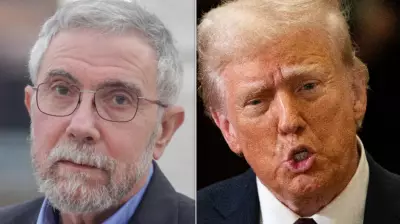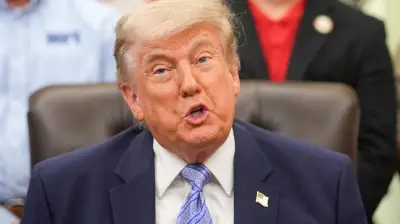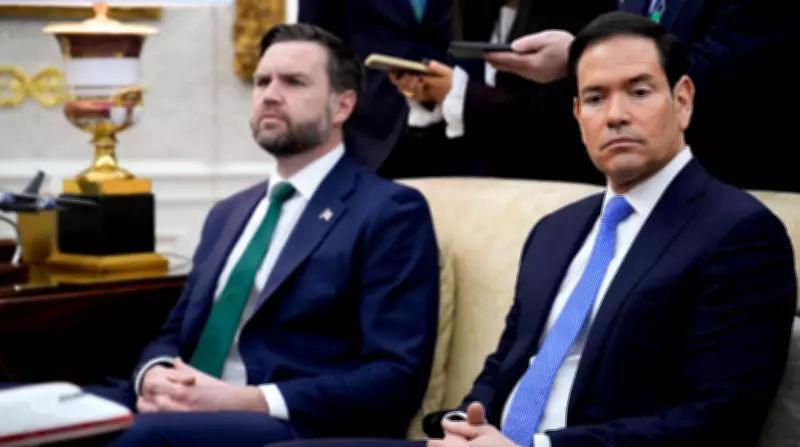
As President Donald Trump's military conflict with Iran reaches its four-week milestone, a notable silence has enveloped two key Republican figures who might aspire to succeed him in the White House: Vice President J.D. Vance and Secretary of State Marco Rubio. In a typical presidential administration, these individuals would be central voices articulating the president's most significant foreign policy decisions. However, in recent weeks, their public presence has diminished, leaving Treasury Secretary Scott Bessent as the most frequent advocate for the war, with multiple television appearances to his credit.
Political Calculations and Public Perception
David Axelrod, a Democratic consultant instrumental in Barack Obama's two presidential victories, expressed bewilderment at the situation. "Beats the hell out of me," Axelrod remarked. "Vance is easily understood. This is antithetical to his brand. Bessent is necessarily out there because while the war is a national security issue, its ramifications are very much economic. Rubio is bewildering because he was so visible at the beginning."
Trump, who attempted a coup to retain power after losing the 2020 election and has hinted at extending his tenure beyond 2028 despite constitutional term limits, faces a complex political landscape. If the 2028 elections proceed as scheduled, Republican candidates, particularly those within his administration like Vance and Rubio, may need to navigate the challenges of aligning with a deeply unpopular president. They could be compelled to justify their support for a war that is already unpopular, projected to exacerbate inflation, and has already driven gasoline prices up by over a dollar per gallon.

Internal Conflicts and Voter Betrayal
Further complicating Vance's and Rubio's positions is a significant segment of Trump's base, which supported him based on his pledge to end foreign wars. These voters may feel betrayed by Trump's repeated military engagements. Rubio, as the son of Cuban immigrants in South Florida, has long advocated for U.S. intervention in Latin America to counter socialist regimes, adding another layer to his political identity.
State Department spokesman Tommy Pigott, employing a common Trump administration tactic, personally attacked a HuffPost reporter, stating: "A ridiculous question debunked by a basic internet search. To be clear for those in the back, let me say once again, Secretary Rubio fully supports the president's policies, which are making the world a safer place."
Classified Advice and Public Statements
Vance has maintained that any advice he provided Trump in classified settings prior to the war's onset will remain confidential. "Partially because I don't want to go to prison, and partially because I think it's important for the president of the United States to be able to talk to those advisers without those advisers running their mouth to the American media," he explained during a March 13 visit to North Carolina.
John Bolton, a former national security adviser to Trump and a longtime proponent of regime change in Iran, suggested that Vance's reluctance stems from opposition to the policy. "Vance is against the policy but can't say so," Bolton asserted. "Rubio is worried that it is distracting from Venezuela and Cuba." Bolton, like many Trump critics, is currently under investigation by Trump's Justice Department, which the president openly wields as a political tool.
Policy Defense and Presidential Volatility
Beyond political considerations, defending Trump's policies is fraught with practical challenges due to his propensity for abrupt changes. Rubio, who also serves as Trump's national security adviser, initially told reporters that Trump launched the attack because Israel had indicated plans to do so, potentially triggering Iranian retaliation against the U.S. However, he retracted this explanation the following day after Trump contradicted him.

Matt Wolking, a Republican political consultant and former Rubio aide, argued that there is little incentive for Rubio or Vance to make policy declarations when Trump is so vocal himself. "With Trump so accessible, it's just not that necessary," Wolking noted. "This is one of those areas where a Trump administration official is more at risk of getting ahead of the president than offering significant value to the public debate. I think Vance and Rubio have been doing enough."
On this point, even Democrat Axelrod concurred. "Maybe as this gets more complicated and Trump becomes more frustrated, he is calling on the spokesperson he trusts the most: himself."