The fragile U.S.-Iran ceasefire held Tuesday morning after a day of clashes involving shipping in the Strait of Hormuz and missile attacks against the United Arab Emirates.
Relative calm returned to the Persian Gulf after U.S. and Iranian forces exchanged fire Monday and Tehran launched missiles and drones toward the UAE, in the worst flareup since the ceasefire began less than a month ago.
Violence Erupts After Trump's Announcement
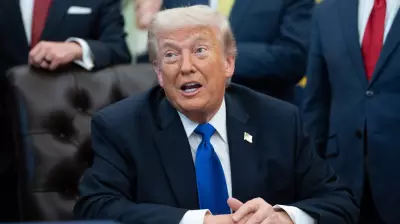
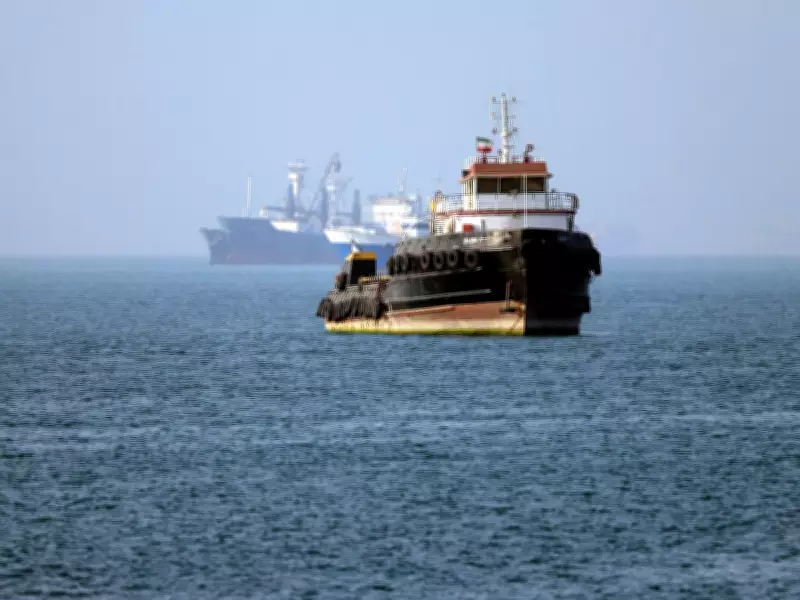
The violence erupted after U.S. President Donald Trump announced “Project Freedom,” which he described as a humanitarian effort to guide neutral ships stranded in the Gulf through Hormuz. At least two merchant vessels transited the waterway with U.S. assistance in fending off attacks, while two American warships entered the Gulf.

Iran warned all ships against trying to get through Hormuz without its permission. It hit a South Korean bulk carrier and attacked an empty tanker belonging to the UAE’s state oil firm, Abu Dhabi National Oil Company. There were no reports of injuries on either ship.
The American military fought off attacks from Iranian drones, missiles and armed small boats as it facilitated the passage of the two merchant vessels, U.S. Central Command chief Brad Cooper said late on Monday.
Impasse in Peace Talks
The developments came amid an impasse between Iran and the U.S., with the sides showing little sign of agreeing to a fresh round of peace talks soon. Tehran insists Washington must lift a naval blockade on its ports for that to happen. The U.S. says the blockade is choking Iran’s oil exports and squeezing its economy, forcing it into concessions.
“We see ‘Project Freedom’ as an attempt to break the logjam in the strait, which has cast a long shadow over the global economy,” said Becca Wasser, an analyst with Bloomberg Economics. “Still, it carries significant escalation risks, as the outbreak of fighting Monday illustrates.”
Oil dipped on Tuesday, with Brent trading around 1.5 per cent lower at US$112.60 a barrel as of 9:36 a.m. in London. It jumped almost six per cent on Monday.
UAE Intercepts Missiles
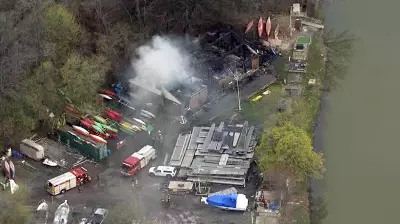
The UAE said it intercepted almost all the roughly 20 projectiles fired from Iran, the first such attack on the Arab country since the truce kicked in. Yet three Indians were injured in a strike on an oil terminal part-owned by Vitol Group at the port city of Fujairah. Missile alerts were sent to people in cities such as Dubai and Abu Dhabi, and authorities announced distance learning at schools for the rest of the week.
Iran cast the U.S. move as “Project Deadlock” and a violation of the ceasefire. It also said talks mediated by Pakistan are making progress.
“Events in Hormuz make clear that there’s no military solution to a political crisis,” Foreign Minister Abbas Araghchi said on X. “The U.S. should be wary of being dragged back into quagmire by ill-wishers. So should the UAE.”