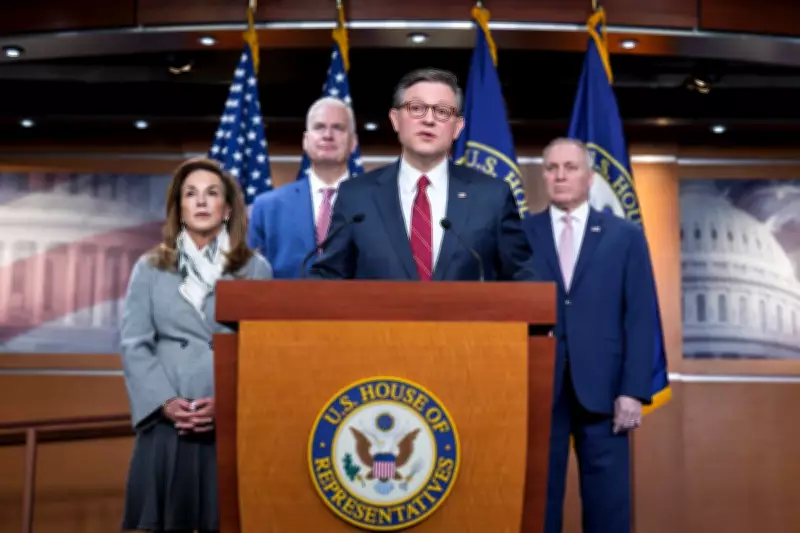
U.S. House Approves Bill to End Partial Government Shutdown
The United States House of Representatives has taken decisive action to address the ongoing partial federal government shutdown. Lawmakers passed a critical bill designed to resume full government operations, moving the measure forward to the President's desk for final consideration. This legislative step marks a significant development in the protracted budgetary impasse that has affected various federal agencies and services.
Key Procedural Vote Advances Shutdown Resolution
House Speaker Mike Johnson, a Republican from Louisiana, led the effort alongside key congressional leaders including Majority Leader Steve Scalise, Majority Whip Tom Emmer, and House Republican Conference Chair Lisa McClain. The bipartisan vote followed intense negotiations and comes as the shutdown enters its latest phase, creating uncertainty for federal employees and citizens relying on government services.
The passage of this bill represents a crucial milestone in the political process to restore normal governmental functions. While the legislation now moves to the executive branch, its approval in the House demonstrates congressional willingness to address the funding gap that triggered the partial closure. Political observers note that such shutdowns typically stem from disagreements over federal spending priorities between legislative and executive branches.

Broader Implications for Governance and Services
Partial government shutdowns have become increasingly common in recent American political history, often resulting from budgetary standoffs between different branches of government. These disruptions can affect numerous federal operations including national parks, regulatory agencies, and various administrative services. The current legislation aims to mitigate these impacts by providing the necessary funding authorization to resume full operations.
As the bill proceeds to the President for final approval, attention now shifts to the executive response and the potential for additional negotiations. The resolution of this shutdown will have implications for federal workers, government contractors, and citizens who depend on affected services. This development underscores the ongoing challenges in federal budget processes and inter-branch cooperation in American governance.