Trump's Controversial Comments on Omar Assault Spark Outrage and Analysis
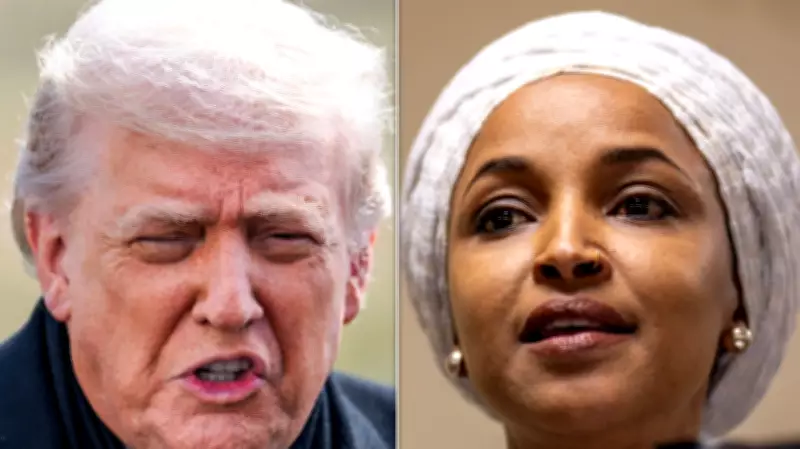
Former President Donald Trump faced immediate and widespread criticism this week for his remarks regarding an attack on Democratic Representative Ilhan Omar of Minnesota. During a town hall event in Minneapolis on Tuesday, a man charged toward Omar and sprayed her with an unknown substance from a syringe. Trump, when asked about the incident by ABC News reporter Rachel Scott, stated he had not seen video of the attack and added, "I think she's a fraud. She probably had herself sprayed, knowing her."
The Minneapolis Town Hall Incident
The attack occurred while Representative Omar was delivering a speech calling for the abolition of Immigration and Customs Enforcement (ICE) and the resignation or impeachment of Homeland Security Secretary Kristi Noem. The assailant, identified as 55-year-old Anthony Kazmierczak, was quickly subdued by attendees and arrested on preliminary third-degree assault charges. Witnesses reported a strong vinegar-like odor following the spraying.
Demonstrating remarkable resilience, Omar returned to the podium shortly after the incident to continue her address. "We are Minnesota strong, and we will stay resilient at the face of whatever they might throw at us," she declared. Later, on social media platform X, she affirmed, "I'm ok. I'm a survivor so this small agitator isn't going to intimidate me from doing my work. I don't let bullies win."

Political Science Experts Decipher Dangerous Rhetoric
Political scientists have expressed deep concern over Trump's response, analyzing it as part of a broader pattern that potentially normalizes political violence. Conor M. Dowling, a professor of political science at the University at Buffalo, told HuffPost that while direct causation is complex to establish, Trump's comments "certainly don't do anything to quell" the conspiracy theories that quickly emerged online alleging the attack was staged.
Dowling emphasized a critical point: "Most sitting presidents would either decline to comment until they were presented with the evidence or, at the very least, not immediately jump to accusations that the act was staged." He further noted that rhetoric continually directed at a specific individual can contribute to making political violence seem more acceptable.
A Pattern of Targeted Attacks and Escalation
Representative Omar, one of the first two Muslim women elected to Congress, has been a frequent target of racist and Islamophobic attacks from Trump and his supporters for years. Notably, just hours before the Minneapolis assault, Trump disparaged Omar at a rally in Iowa, telling the crowd that legal immigrants must show they "love our country. Not like Ilhan Omar." He added derogatory comments about her birthplace of Somalia.
This context makes Trump's subsequent remarks about the physical attack particularly alarming to observers. Independent Senator Bernie Sanders of Vermont called Trump's reaction "shameful," writing on X that it was reprehensible to escalate rhetoric instead of condemning the violence.
The Self-Centered Frame and Erosion of Shared Facts
Todd Belt, a professor and political management program director at George Washington University, framed Trump's response as another instance of the former president "lashing out before all of the facts are known." Belt contrasted this with conventional presidential conduct, which typically involves expressing sympathy and concern for a colleague under attack.
Belt identified a deeper systemic issue: "We seem to live in a world where we can no longer agree on basic facts and partisans are eager to believe the worst about the other side." He argued that Trump's rhetoric about fraud on the Democratic side has inspired many to believe in the conspiracies he promotes. Furthermore, Belt suggested that Trump's habit of making situations about himself prevents the empathy needed to de-escalate tensions, such as those in Minnesota.

The incident and its aftermath highlight a volatile political climate where violent acts are met not with unified condemnation but with further divisive and unfounded accusations from the highest levels, experts warn, creating a dangerous precedent for political discourse and safety.