Conrad Black: Trump's Iran War Strategy Tightens Economic Grip on China
The sudden escalation of the Iran conflict has unfolded with such rapidity that many of its strategic objectives and consequences remain largely unexamined by mainstream analysis. While some commentators have noted the pattern of the Trump administration's actions against Venezuela, Cuba, and Russo-Chinese allies including Iran, Syria, and Israel, the critical geopolitical implications surrounding the Strait of Hormuz demand deeper exploration.
The Strait of Hormuz: A Strategic Chokepoint
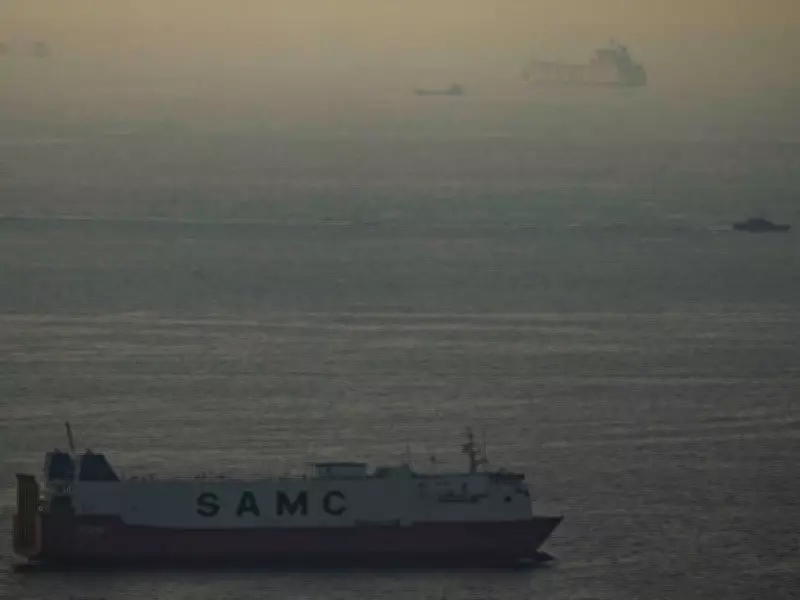
The Strait of Hormuz serves as a vital conduit for approximately 20 percent of global oil exports, making it one of the world's most significant maritime passages. The United States possesses both the capability and preparation to force open this strategic waterway if necessary. American military actions have already substantially degraded Iran's missile firing capabilities along its southern coastline while significantly reducing the operational capacity of Iranian naval vessels and swift attack boats in the region.
Those who assume the Trump administration lacks sophisticated strategic planning have overlooked crucial energy dependency disparities. The United States maintains minimal dependence on Middle Eastern oil supplies, while the European Union receives only six percent of its crude oil and nine percent of its natural gas through the Hormuz Strait. Europe actually sources 16 percent of its petroleum and 45 percent of its natural gas from the United States directly.

China's Vulnerability Exposed
In stark contrast, China imports nearly half of its crude oil through the Strait of Hormuz. The ongoing conflict has reduced oil flow through this critical passage to China by up to 75 percent, creating severe economic pressure. The resulting surge in domestic Chinese gasoline prices would likely trigger widespread public protests in Western nations, highlighting Beijing's precarious position.
While world oil prices theoretically maintain uniformity across markets, the United States possesses the economic resilience to largely ignore price fluctuations if necessary. Europe, with American assistance, could substantially mitigate the impact of oil price volatility. China lacks this strategic luxury, placing Beijing in a vulnerable position as energy costs escalate.
Strategic Calculations and Economic Realities
The United States has deliberately relaxed its interception of so-called ghost-tankers transporting contraband Iranian oil to China, a tactical move designed to alleviate upward pressure on global oil prices. However, Washington retains the capability to halt Persian Gulf oil shipments to China at any moment, providing significant leverage in geopolitical negotiations.
Conventional media narratives often mistakenly assume Iran can close the Strait of Hormuz at will, thereby threatening Western Europe and Gulf state financial security. In reality, European nations face minimal impact from such actions, while Gulf states possess the economic means to inflict substantial financial damage on Iran should their interests be threatened.
Geopolitical Implications and Strategic Positioning
By demonstrating its ability to assure safe passage for tankers through the Strait of Hormuz, the United States accomplishes multiple strategic objectives simultaneously. American allies receive time to reconsider whether their interests align with cooperation with Washington, while China faces a critical decision regarding its geopolitical priorities.
Beijing must determine whether it values access to affordable oil for half its consumption more highly than its opportunistic association with Iran's theocratic regime, even as that government faces significant challenges. This strategic dilemma arrives as China's economic position has shifted dramatically over the past year.
Changing Economic Landscapes
When Donald Trump returned to the presidency one year ago, China appeared to hold strategic advantages in multiple domains. Beijing was profiting substantially from narcotics trafficking through Venezuela, Cuba, and Mexico into the United States, had established dominant positions in several strategic mineral markets, and threatened Western semiconductor chip supplies from Taiwan.

The era of plausible predictions about China overtaking the United States as the world's largest economy has ended. The full extent of China's economic challenges has become increasingly apparent over the past year, with the Chinese economy slowing while the American economy accelerates its growth trajectory, barring short-term commodity price fluctuations.
The Iran conflict has thus emerged as a strategic tool that exposes China's energy vulnerability while minimizing impact on Western economies, fundamentally altering the geopolitical calculus between the world's two largest economic powers.