Trump's Disruptive Davos Performance Shatters Globalist Illusions
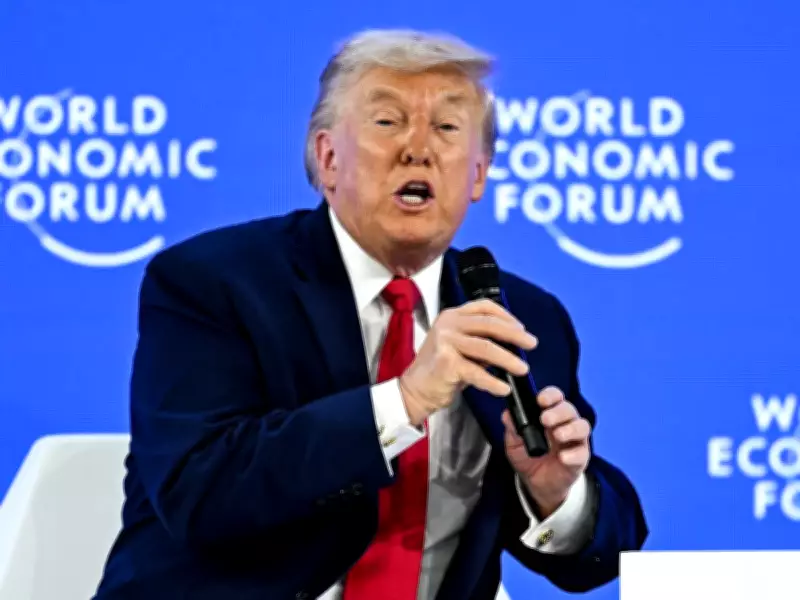
Former U.S. President Donald Trump's appearance at the 2026 World Economic Forum in Davos, Switzerland, unfolded like an unwelcome guest crashing a sophisticated wedding, leaving the assembled global elite visibly uncomfortable and forced to confront long-suppressed truths about international power dynamics.
A Presidential Performance That Revealed Uncomfortable Realities
During his public address to Western political and business leaders, Trump employed his characteristic blunt rhetoric, referring to himself as "daddy" while demanding concessions from NATO allies. His fixation on acquiring "Iceland"—actually meaning Greenland—for "world protection" highlighted his transactional approach to international relations that has consistently unnerved traditional diplomatic circles.
"The problem with NATO is that we'll be there for them 100%, but I'm not sure that they'll be there for us," Trump declared, seemingly overlooking decades of allied cooperation during the Global War on Terror where Washington's partners contributed significant blood and treasure to shared military endeavors.

Canadian Leadership Forced to Acknowledge Populist Critiques
The seismic impact of Trump's approach became particularly evident through the response of Canadian Prime Minister Mark Carney, who delivered his own address to Davos attendees just one day earlier. Carney's remarks suggested that Trump's disruptive behavior had finally compelled Western leaders to stop pretending the Washington-led international order functions fairly for all participants.
"We knew the story of the international rules-based order was partially false, that the strongest would exempt themselves when convenient, that trade rules were enforced asymmetrically," Carney told his audience, acknowledging what populist critics have argued for years about systemic inequities in global governance structures.
The Unmasking of Globalist Rhetoric
Carney's admission that global leaders "participated in the rituals and we largely avoided calling out the gaps between rhetoric and reality" represents a significant departure from traditional diplomatic language. His comments suggest that Trump's confrontational style has effectively torn away the diplomatic veneer that previously obscured power imbalances within international institutions.
The Canadian leader's subsequent attempt to distance himself from "rising populism and ethnic nationalism" while simultaneously adopting populist-adjacent policy positions—including immigration restrictions and diversified trade approaches—reveals the complex political recalibration occurring among Western leaders in response to Trump's influence.
Redefining Global Engagement in a Post-Trump Era
Carney's proposed framework of "diversity as strength" in international relations attempts to salvage global cooperation while incorporating populist concerns about national sovereignty. His emphasis on diversified trade partnerships and more controlled immigration represents a hybrid approach that acknowledges populist critiques without fully embracing populist rhetoric.
This geopolitical shift, accelerated by Trump's unvarnished approach to international negotiations, has forced Western elites to confront uncomfortable truths about power dynamics they previously preferred to obscure behind diplomatic language. The resulting tension between maintaining global cooperation while addressing legitimate populist concerns about sovereignty and fairness represents one of the defining challenges for Western democracies in the coming decade.
Trump's Davos performance, while characteristically disruptive, has inadvertently served as a catalyst for long-overdue conversations about equity and transparency in international relations—conversations that populist movements have demanded for years but that traditional political establishments had largely avoided until confronted with Trump's unconventional diplomacy.