Trump's Gordie Howe Bridge Threat Mirrors History of Contractor Conflicts
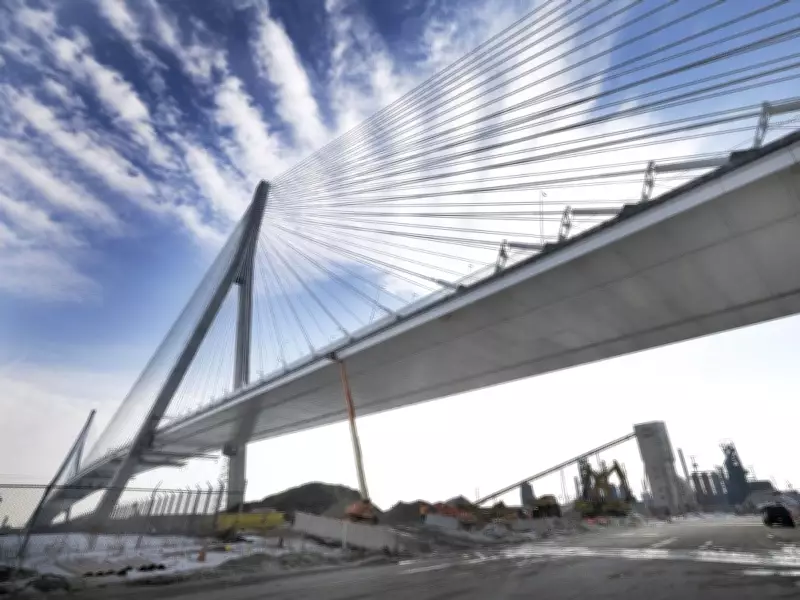
U.S. President Donald Trump's recent declaration regarding the potential refusal to open the newly constructed Gordie Howe International Bridge has sparked significant concern among Canadian officials and taxpayers. This massive infrastructure project, entirely funded by Canadian taxpayers, represents a critical cross-border connection between Detroit and Windsor.
A Pattern of Business Behavior
According to observers, Trump's threat appears consistent with his documented history of business practices involving contractor disputes. Multiple reports indicate a pattern where contractors completed work only to face payment issues or renegotiation demands from Trump's business entities. This historical context adds weight to current concerns about the bridge's operational future.
The legal landscape presents additional challenges for Canadian interests seeking recourse. With the U.S. Department of Justice staffed by Trump appointees and a Senate that critics describe as failing to uphold traditional oversight responsibilities, conventional legal avenues may prove ineffective. This situation creates what one commentator described as "a sad state of affairs" for international cooperation.

Broader Implications for Cross-Border Relations
The bridge controversy extends beyond infrastructure concerns to touch upon fundamental questions about U.S.-Canada relations. As one letter writer noted, Canadians are now experiencing firsthand the adage about keeping friends close and potential adversaries closer. The $5.7 billion project, named after hockey legend Gordie Howe, was intended to symbolize cooperation between the neighboring nations.
Construction on the six-lane cable-stayed bridge began in 2018 and represents one of the largest binational infrastructure projects in North American history. The threat to block its opening comes despite completion milestones being met according to schedule and specifications.
Parallel Healthcare Reform Discussions
Separately in the letters section, healthcare reform proposals emerged as another topic of public discourse. One writer suggested Quebec adopt aspects of the American osteopathic medical model, where osteopaths complete full medical school training and serve as primary care physicians. The proposal emphasizes utilizing physician assistants and nurse practitioners more effectively to alleviate general practitioner workloads.
The healthcare discussion highlights broader concerns about resource allocation, with critics suggesting political priorities sometimes divert from essential service delivery. Recommendations included establishing health minister advisory boards comprising medical professionals from various levels, including representatives from medical schools, to develop more informed healthcare solutions.
Additional Community Concerns
The letters section also addressed other local issues including fall prevention strategies for older adults and enforcement challenges with reserved traffic lanes. Regarding senior safety, one correspondent emphasized that while the human body possesses remarkable healing capabilities, prevention remains paramount when addressing fall-related injuries among aging populations.
Transportation concerns focused on dedicated lane violations along Highway 20 in Dorval and Lachine, where single-occupant gasoline vehicles frequently misuse lanes reserved for buses, taxis, electric vehicles, and high-occupancy automobiles. The lack of consistent enforcement has frustrated compliant drivers who observe regular violations without police intervention.
These diverse community concerns collectively illustrate the range of issues occupying public discourse, from international diplomatic tensions to local healthcare and transportation challenges.